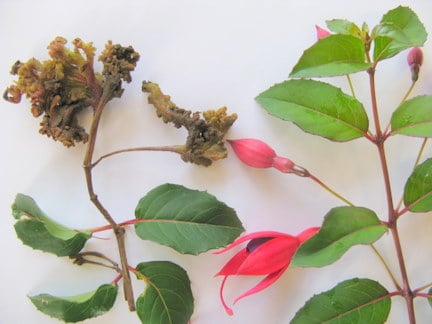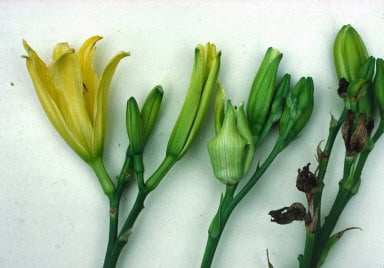
Azalea gall
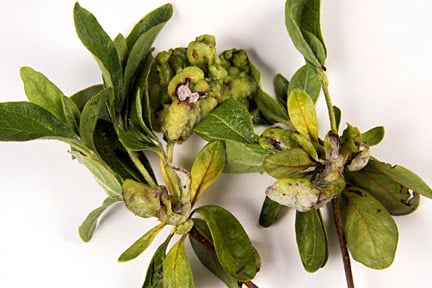
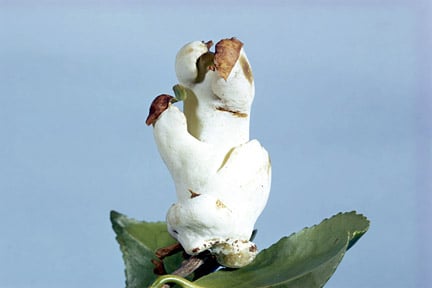
Azalea gall attacks certain rhododendrons and azaleas out of doors and is often seen on indoor pot-grown plants of Rhododendron simsii, the popular Indian azalea, obtained from florists.
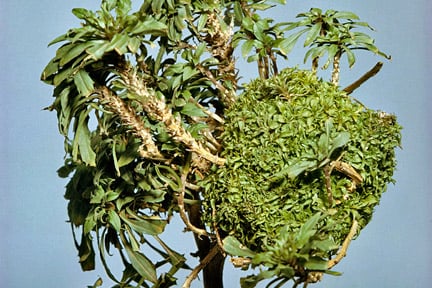
Common name - Leafy gall
Scientific name - Rhodococcus fascians
Plants affected - Mainly herbaceous plants
Main symptoms - Distorted leafy shoots
Caused by - Bacterium
Timing - Generally summer, but depends on plant affected

Leafy gall is a disease caused by the bacterium Rhodococcus fascians, which enters the plant through wounds in roots or stems and stimulates the plant tissues to grow in a disorganised way, producing dense clusters of distorted, leafy shoots.
The disease is not common and seldom damaging. In gardens, Chrysanthemum, Dahlia, Lathyrus (sweet pea), Nicotiana, Pelargonium (geranium) and strawberries are among the plants most commonly attacked. Expect to see this disease in summer.
You may see the following symptoms:
Leafy gall is seldom serious enough to warrant control, but if it is troublesome, carefully sterilise pots, surfaces and tools to help eliminate the causal bacterium, Rhodococcus fascians. All potentially-contaminated growing media (potting ) should be destroyed (or sent for council composting).
There are no chemicals available for the control of leafy gall.
Infection by Rhodococcus fascians (formerly Corynebacterium fascians) has a similar effect to that of crown gall, another bacterial disease, but instead of galls the host tissues produce dense clusters of distorted, stunted shoots at ground level. The bacterium disrupts normal plant levels, in particular auxins and cytokinins, causing the symptoms observed.