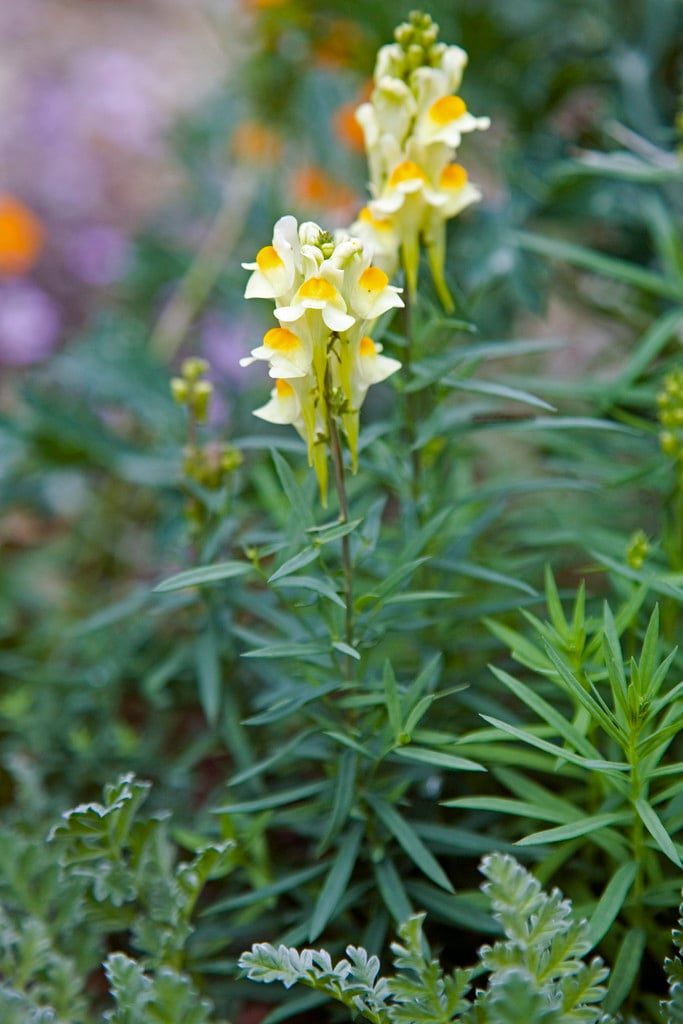
Linaria vulgaris

RHS Plant Profile
common toadflax
common toadflax RHS

Other common names

bread and butter, brideweed, bridewort, butter and eggs, butter haycocks, continental weed, dragon bushes, eggs and bacon, eggs and butter, false flax, flaxweed, gallweed, gallwort, imprudent lawyer, impudent lawyer, Jacob's ladder, lion's mouth, North American ramsted, rancid, ransted, wild flax, wild snapdragon, yellow rod, yellow toadflax, llin y lyffant

Synonyms

Antirrhinum linaria

Plants for pollinators
Herbaceous Perennial

An erect perennial, spreading by runners, with stiff stems bearing narrow, pale green leaves that are arranged in a spiral. The pale yellow flowers, resembling small snapdragons in dense spikes, appear from late spring to mid-autumn

Position

Full sun

Soil Types

Loam, Sand

Max Height

0.1-0.5 metres

Max Spread

0.1-0.5 metres

Size

Time to Maturity
2–5 years
Max Spread
0.1-0.5 metres
Max Height
0.1-0.5 metres

Growing Conditions

Loam Sand
Moisture
Well–drained
pH
Acid or Alkaline or Neutral

Position

Full sun
Aspect
South–facing or West–facing
Exposure
Exposed or Sheltered
Hardiness
H6

Colour & Scent

Season Stem Flower Foliage Fruit
Spring
Summer
Autumn
Winter

Botanical Details

Family
Plantaginaceae
Native to GB/Ireland
Yes
Foliage
Deciduous
Habit
Columnar upright
Genus
Linaria can be annuals, biennials or herbaceous perennials, with simple leaves and terminal racemes of 2-lipped flowers with conspicuous spurs
Name Status
Correct
Plant Range
Europe, SW Asia

How to Grow

Cultivation

Grow in moderately fertile, light, well-drained soil in full sun

Propagation

Propagate by seed in pots in a cold frame in early spring. Propagate by division or softwood cuttings in spring

Suggested planting locations and garden types

  • Cottage and informal garden
  • Wildlife gardens
  • Wildflower meadow
  • Flower borders and beds
  • Underplanting of roses and shrubs

Pruning

After flowering, plants can be cut back to prevent self-seeding

Pests

May be susceptible to aphids

Diseases

May be susceptible to powdery mildews