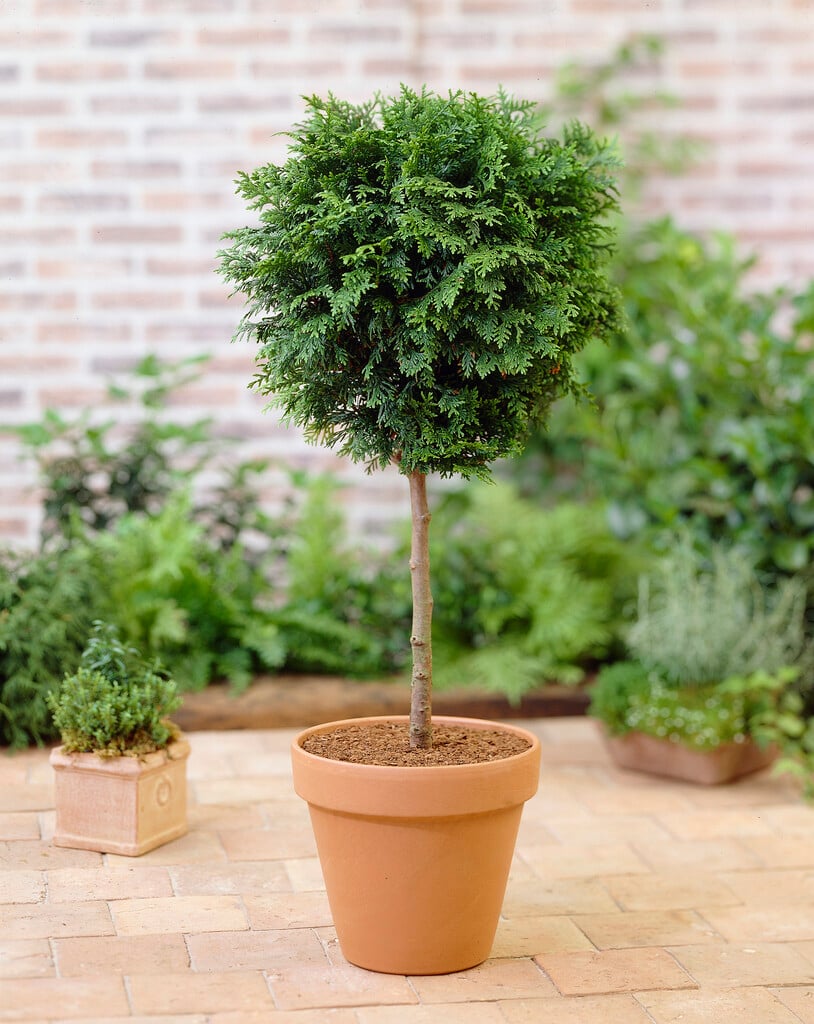
Thuja plicata 'Gelderland'

RHS Plant Profile
western red cedar 'Gelderland'
western red cedar 'Gelderland' visionspictures.com
Award of Garden Merit
Trees Conifers

A large, evergreen, narrowly-pyramidal tree with aromatic, glossy, scale-like, sharply-pointed mid-green leaves, bronze-tinted in winter, are held in large drooping sprays on spreading branches

Position

Full sun, Partial shade

Soil Types

Chalk, Clay, Loam, Sand

Max Height

Higher than 12 metres

Max Spread

wider than 8 metres

Size

Time to Maturity
20–50 years
Max Spread
wider than 8 metres
Max Height
Higher than 12 metres

Growing Conditions

Chalk Clay Loam Sand
Moisture
Moist but well–drained
pH
Acid or Alkaline or Neutral

Position

Full sun Partial shade
Aspect
East–facing or South–facing or West–facing
Exposure
Sheltered
Hardiness
H6

Colour & Scent

Season Stem Flower Foliage Fruit
Spring
Summer
Autumn
Winter

Botanical Details

Family
Cupressaceae
Native to GB/Ireland
No
Foliage
Evergreen
Habit
Columnar upright
Potentially harmful
Harmful if eatenskin allergen. Wear gloves and other protective equipment when handling
Genus
Thuja are fast-growing evergreen trees of narrowly conical habit, with flat sprays of tiny, aromatic, scale-like leaves and small knobbly cones
Name Status
Accepted

How to Grow

Cultivation

Grow in moist but well-drained soil in full sun with shelter from cold, drying winds. See conifer cultivation for further advice

Propagation

Propagate from semi-ripe cuttings

Suggested planting locations and garden types

  • Architectural
  • Cottage and informal garden
  • Low Maintenance
  • Hedging and screens

Pruning

No pruning required; trim hedges in spring and late summer

Pests

May be susceptible to scale insects and conifer aphid

Diseases

May be susceptible to diseases including honey fungus, Phytophthora root rot and thuja blight. See conifers: brown patches for further advice