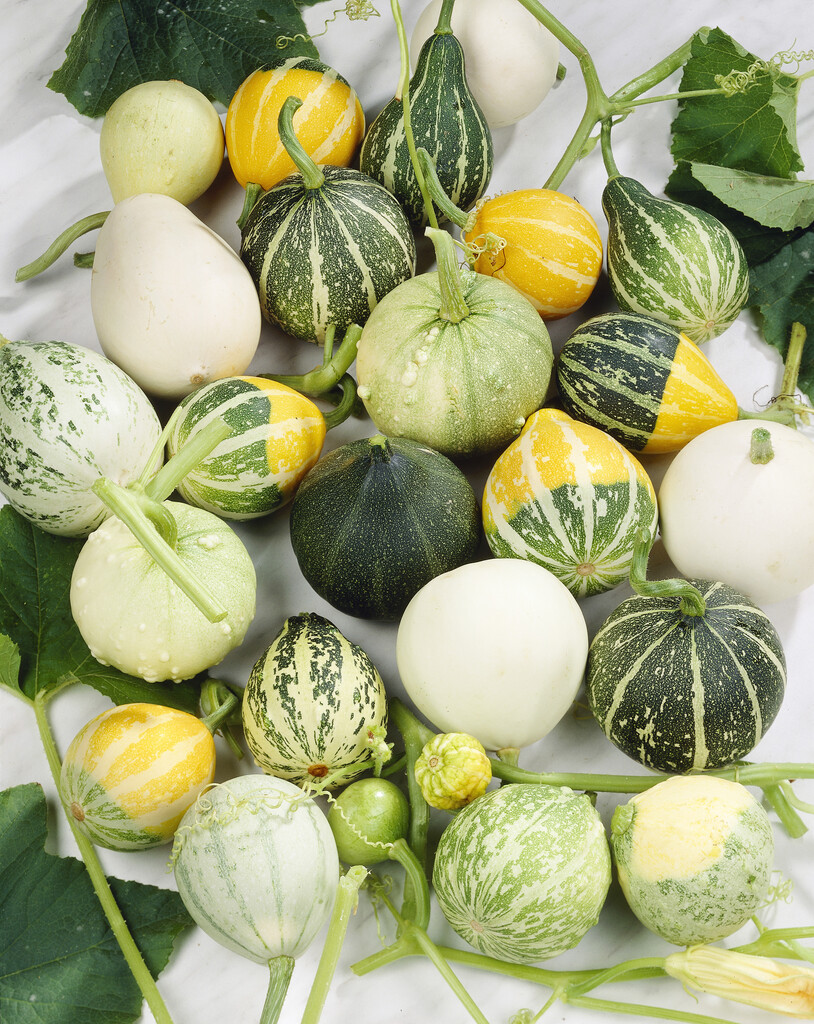
Cucurbita pepo var. ovifera

RHS Plant Profile
apple gourd
apple gourd visionspictures.com

Other common names

bell gourd, bicolor gourd, orange gourd, pear gourd, yellow-flowered gourd, vegetable marrow

Plants for pollinators
Fruit Edible Annual Biennial

An annual which naturally scrambles along the ground and over other low plants, reaching about 3m. It can be trained up a sturdy support. It has green variably round to palmate leaves and yellow flowers. These develop into an array of inedible but decorative fruit in different shapes and colours. These tend to be round or pear-shaped, patterned green and/or yellow and smooth-skinned

Position

Full sun

Soil Types

Chalk, Clay, Loam, Sand

Max Height

0.1-0.5 metres

Max Spread

2.5-4 metres

Size

Time to Maturity
1 year
Max Spread
2.5-4 metres
Max Height
0.1-0.5 metres

Growing Conditions

Chalk Clay Loam Sand
Moisture
Moist but well–drained
pH
Acid or Alkaline or Neutral

Position

Full sun
Aspect
East–facing or North–facing or South–facing or West–facing
Exposure
Sheltered
Hardiness
H1C

Colour & Scent

Season Stem Flower Foliage Fruit
Spring
Summer
Autumn
Winter

Botanical Details

Family
Cucurbitaceae
Native to GB/Ireland
No
Foliage
Deciduous
Habit
Spreading branched, Trailing
Potentially harmful
TOXIC if eatenfruit intended for decoration only. Wear gloves and other protective equipment when handling
Genus
A small genus of climbing or trailing, annual herbaceous fruits. Several edible species are cultivated for food and other uses. Native to Central and South America. Solitary, star-shaped flowers are usually golden-yellow. Leaves are palmately lobed, covered with tiny, prickly hairs
Name Status
Correct

How to Grow

Cultivation

Grow in rich, fertile, well drained soil in full sun. For more advice see cucurbit cultivation

Propagation

Propagate by seed. See sowing vegetable seeds or sowing seeds indoors for further advice

Suggested planting locations and garden types

  • Patio and container plants
  • City and courtyard gardens
  • Wildlife gardens

Pruning

No pruning required

Pests

May be susceptible to slugs and snails

Diseases

May be susceptible to grey moulds and powdery mildews