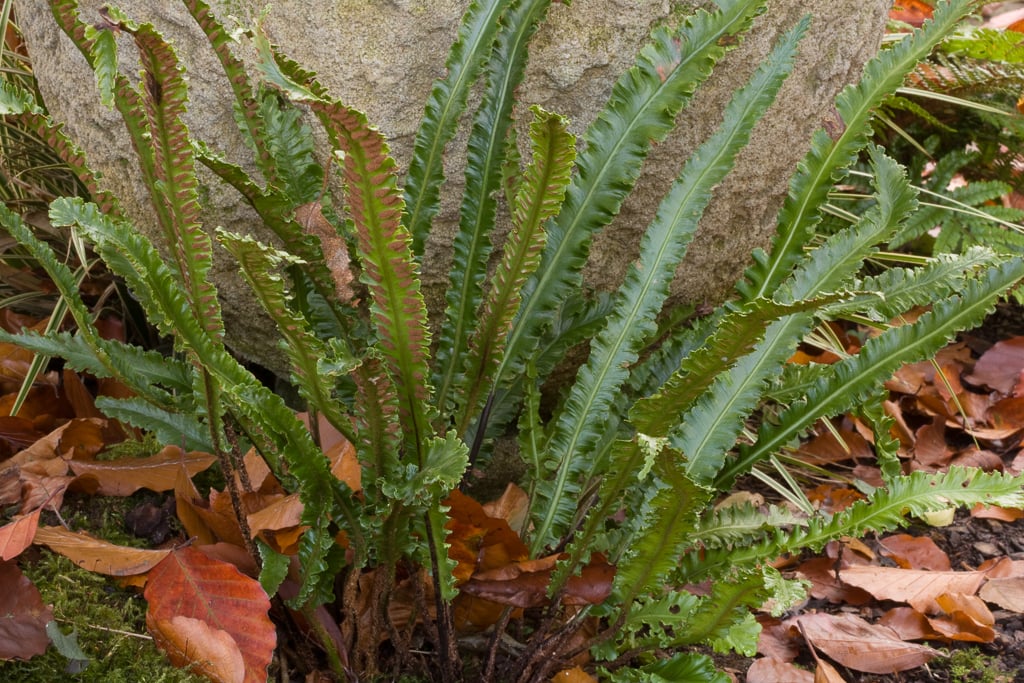
Asplenium scolopendrium Fimbriatum Group

<em>Asplenium</em> <em>scolopendrium</em> Fimbriatum Group John Fielding

Synonyms

Asplenium scolopendrium 'Fimbriatum'
Asplenium fimbriatum

Ferns

An evergreen fern with long, narrow, bright green strap-like blades, but with the unique characteristic of the fronds being delicately fringed along the edge of the leaf blade. Clump-forming and growing to around 50cm

Position

Full shade, Partial shade

Soil Types

Clay, Loam, Sand, Chalk

Max Height

0.1-0.5 metres

Max Spread

0.5-1 metres

Size

Time to Maturity
5–10 years
Max Spread
0.5-1 metres
Max Height
0.1-0.5 metres

Growing Conditions

Clay Loam Sand Chalk
Moisture
Moist but well–drained or Well–drained
pH
Neutral or Alkaline

Position

Full shade Partial shade
Aspect
North–facing or East–facing or West–facing
Exposure
Sheltered
Hardiness
H6

Colour & Scent

Season Stem Flower Foliage Fruit
Spring
Summer
Autumn
Winter

Botanical Details

Family
Aspleniaceae
Native to GB/Ireland
No
Foliage
Evergreen
Habit
Clump forming
Genus
Asplenium are evergreen ferns with short, usually erect rhizomes bearing a rosette of slightly leathery fronds which may be simple, pinnate to 3-pinnate
Name Status
Accepted

How to Grow

Cultivation

Grow in humus-rich, moist but well-drained soil, with added grit, in partial shade. See how to grow ferns for further advice

Propagation

Propagate by division, or propagate by sowing spores as soon as ripe at 15°C

Suggested planting locations and garden types

  • City and courtyard gardens
  • Cottage and informal garden
  • Banks and slopes
  • Flower borders and beds
  • Underplanting of roses and shrubs

Pruning

No pruning required but can remove older fading leaves if necessary

Pests

Generally pest-free

Diseases

Generally disease-free