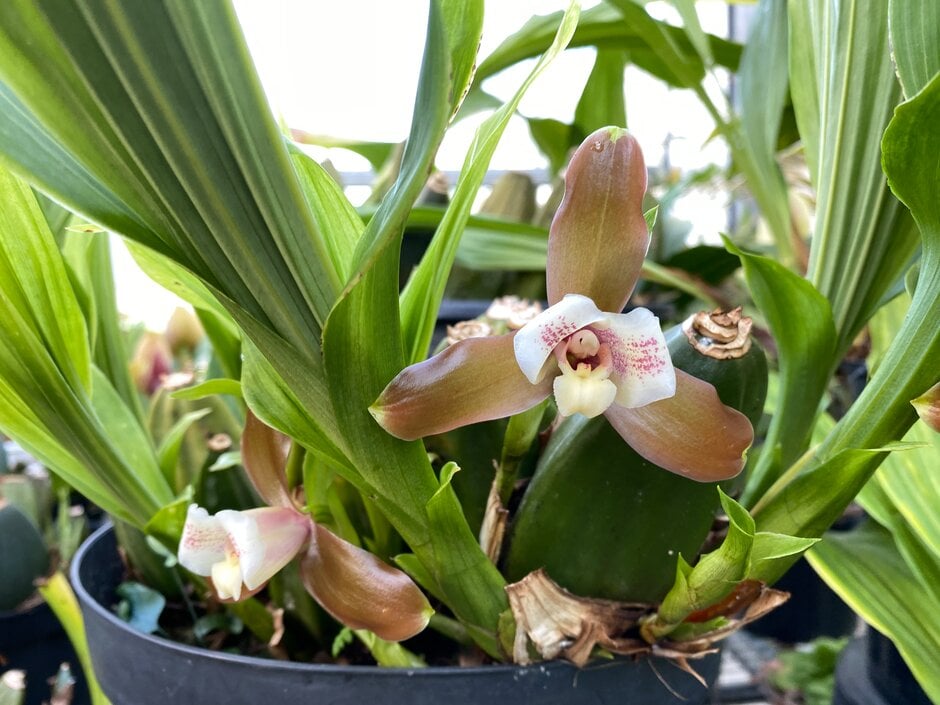
 Valeria Valkova
Conservatory Greenhouse
Position
Partial shade
Max Height
0.1-0.5 metres
Max Spread
0.1-0.5 metres
Valeria Valkova 0.1-0.5 metres
0.1-0.5 metres
Plants are best grown in a pot in an epiphytic, medium grade, bark-based potting mix with added sustainably sourced perlite, moss, or coir. As with many orchids, they grow best when the roots are slightly restricted. Therefore, avoid over-potting or frequent root disturbance. Provide dappled shade and higher humidity in spring and summer, then move the plant to a bright, but cool room in autumn and winter. Cool growing Dendrobiums require longer period of winter rest. Reduce watering and feeding until warmer temperatures initiate flowering and new growth in spring. Average temperatures are 16-24°C in summer and 10-16°C during winter. See indoor orchid cultivation or how to grow dendrobium
Propagation by seed is only possible in a controlled laboratory environment. Mature plants may be divided when the plant overgrows its container. Each division should have at least 3 older pseudobulbs with a sufficient amount of stored energy and water, to support new growth and reduce stress after repotting.
No pruning required. Remove spent flower stems at the base.
May be susceptible to mealybugs and scale insects infestations.
Generally disease free