RHS
RHS 

Appearance
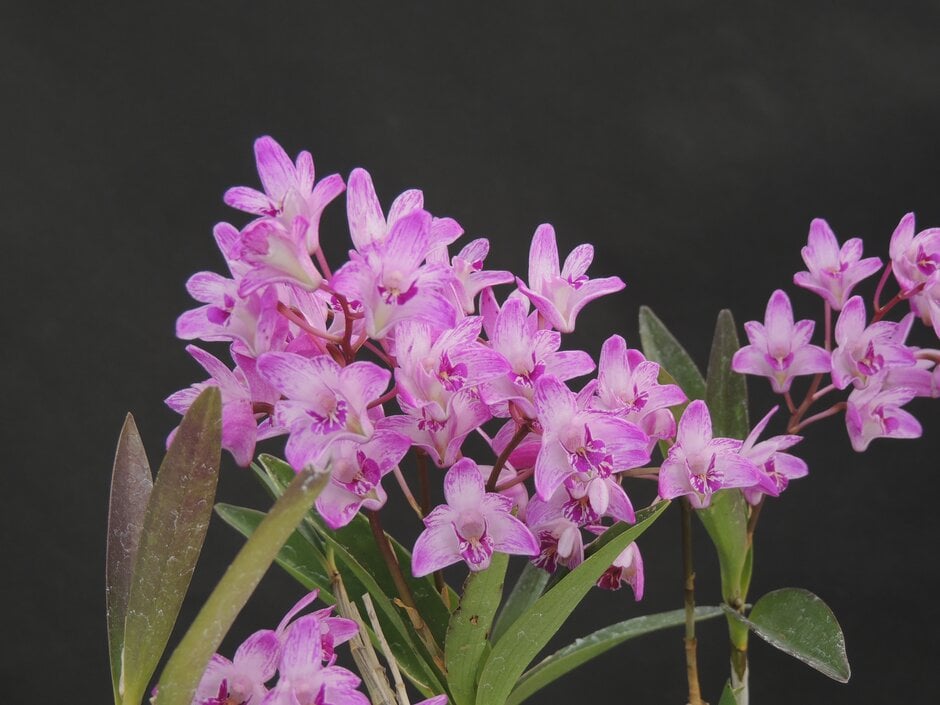
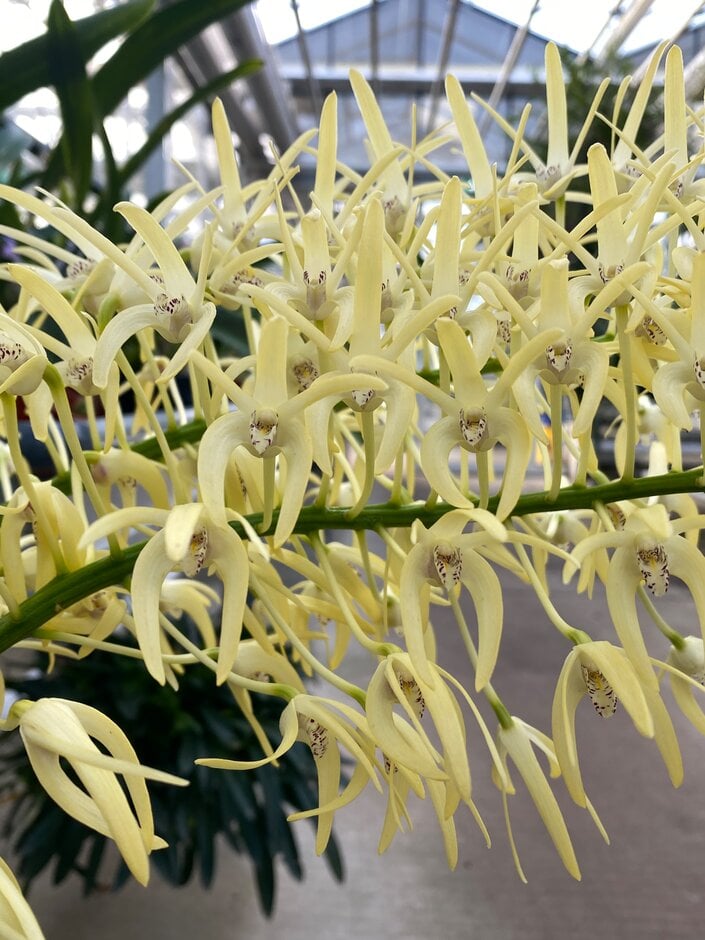
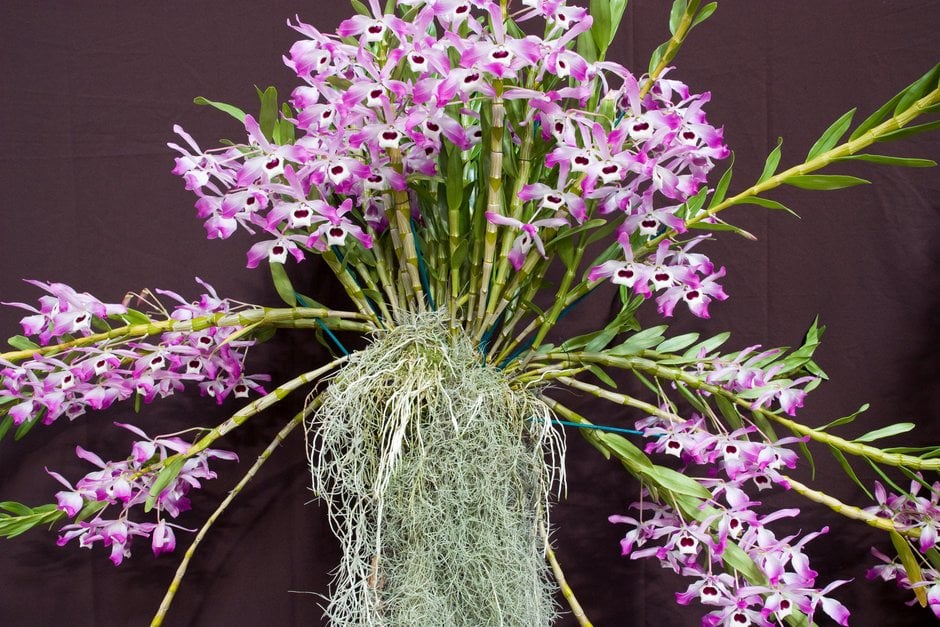
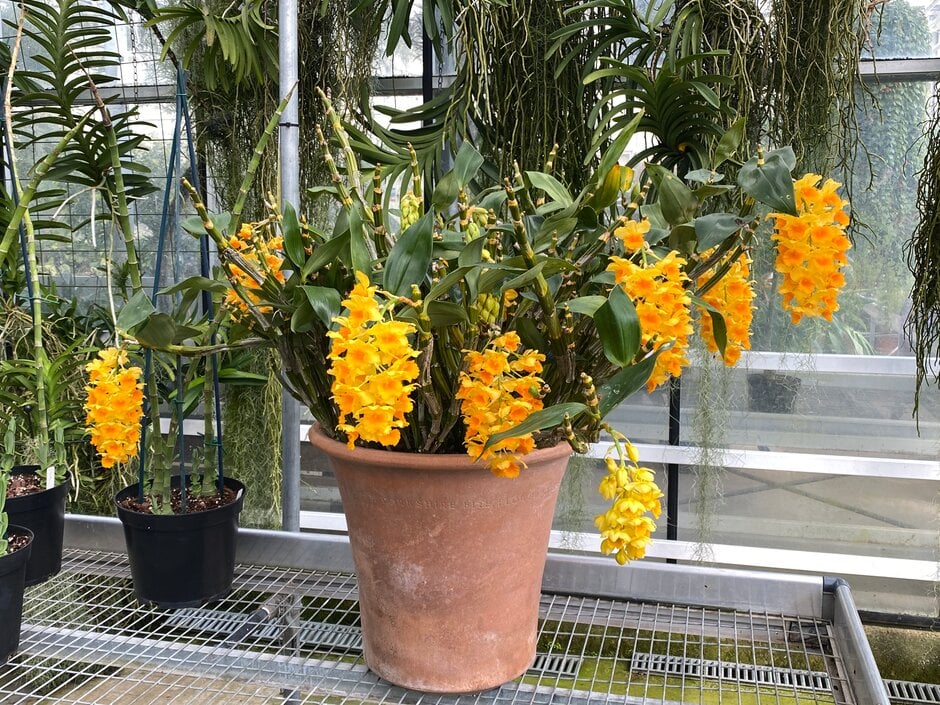
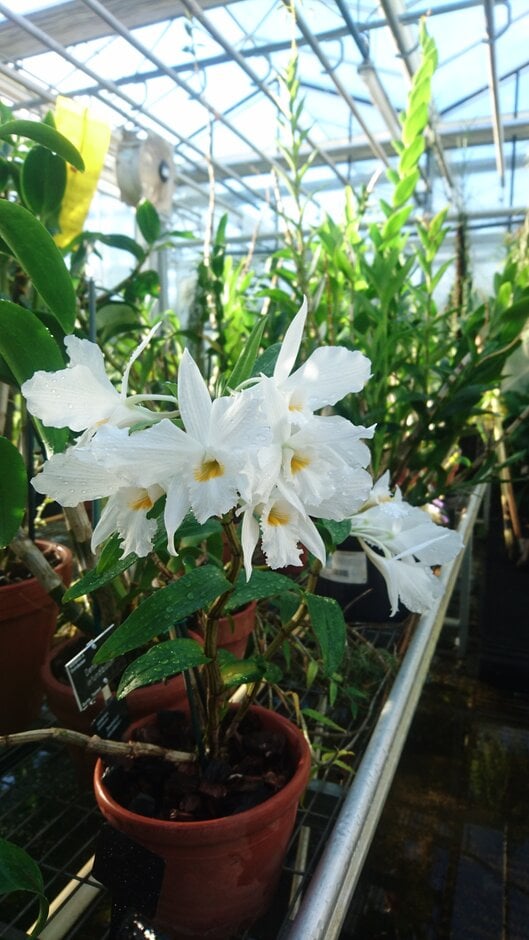
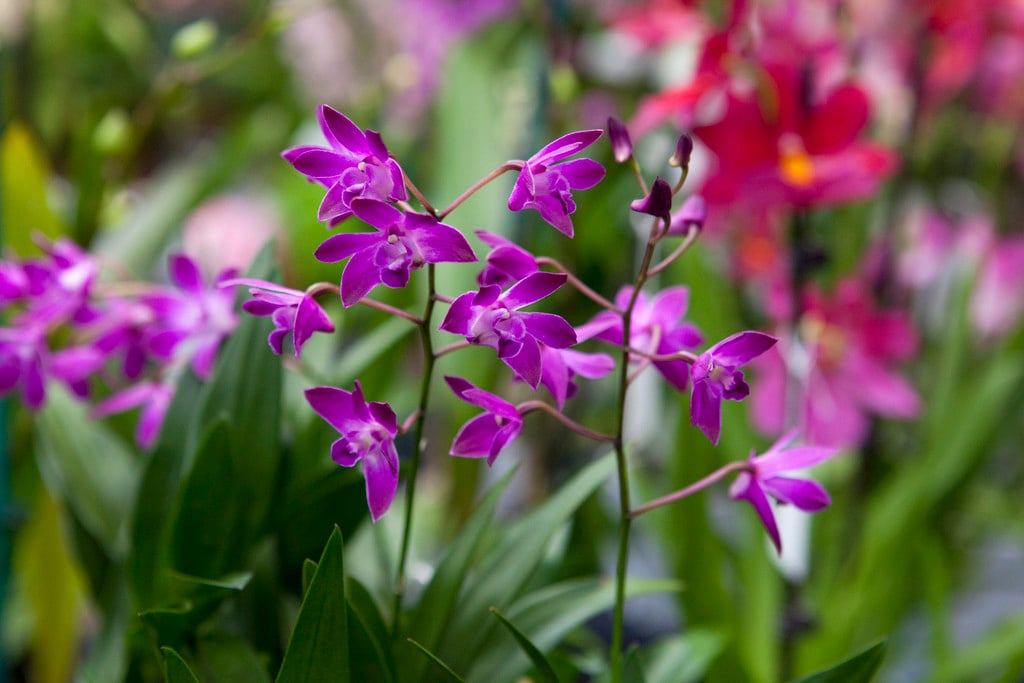
Greatly varying in size, dendrobiums range from only a few centimetres tall to over two metres. Many dendrobiums produce bamboo‑like stems that help them store water and nutrients. Flowering stems emerge from the nodes of these stems. Flowers vary in size, shape and number, and come in a wide range of colours: white, cream, yellow, pink, orange, brown and purple. Some are pleasantly scented.
Preferences
Since they naturally grow in a range of climatic zones, many species need specific growing conditions. The majority of popular houseplant hybrids can be split into two groups: Dendrobium nobile and D. kingianum hybrids prefer cooler growing conditions, whilst descendants of D. phalaenopsis (Phalaenopsis type) or D. antennatum (‘Antelope’ type) need warm, tropical conditions. Almost all dendrobiums require good, bright light.
Dislikes
As with all indoor orchids, dendrobiums won’t tolerate sitting in water. They need to be potted in an airy, bark-based orchid mix. When watering, always ensure that all the water drains away. Cool-growing dendrobiums won’t stand temperatures below 8–10°C. Tropical dendrobiums need a minimum of 15°C throughout the year. Air that is too dry can cause leaf problems and poor growth of new stems.
Did you know?
Dendrobium is the second largest orchid genus, with some varying so much that it is hard to imagine they are related. They are naturally adapted to live on trees as epiphytes (from Ancient Greek epi-, meaning 'upon', and phutón, meaning 'plant') and rocky slopes as lithophytes (from litho-, meaning ‘stone, rock’, and -phyte, meaning ‘plant’). This is why some are called rock orchids.
RHS Growing Guide
FREE
Read our comprehensive free RHS Growing Guide:
How to grow Dendrobium

Introducing Dendrobium
x of x
Showing
x to x
of x