
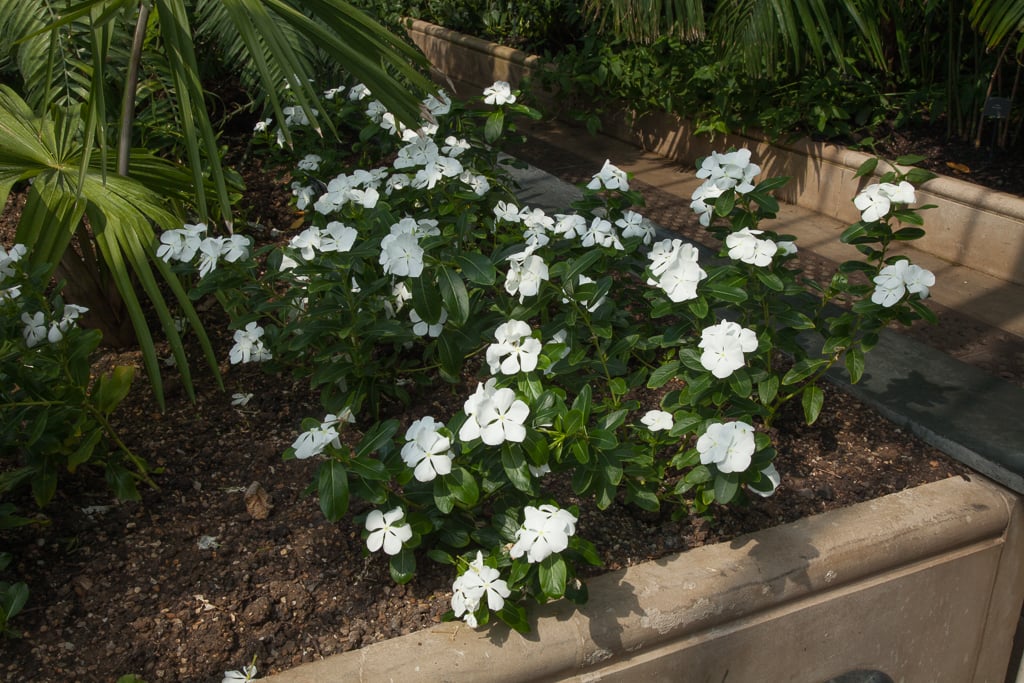
Size
Ultimate height
0.1–0.5 metresTime to ultimate height
2–5 yearsUltimate spread
0.1–0.5 metresGrowing conditions
Moisture
Moist but well–drained, Well–drainedpH
Acid, Alkaline, NeutralColour & scent
| Stem | Flower | Foliage | Fruit | |
| Spring | Green | |||
|---|---|---|---|---|
| Summer | Green | |||
| Autumn | Green | |||
| Winter | Green |
Position
- Full sun
Aspect
South–facing or East–facing
Exposure
Sheltered Hardiness
H1CBotanical details
- Family
- Apocynaceae
- Native to GB / Ireland
- No
- Foliage
- Evergreen
- Habit
- Bushy
- Genus
Catharanthus can be annuals or perennials with simple, paired leaves and solitary or clustered, 5-petalled flowers at the branch tips
- Name status
Accepted
How to grow
Cultivation
Grow under glass in a peat-free, loam-based potting compost with full light and good ventilation. When in growth water moderately and apply a balanced liquid fertiliser monthly. Water sparingly in winter. Can be grown outdoors as summer bedding in most moderately fertile, moist but well-drained soils
Propagation
Propagate by seed sown in early spring at 13 to 18°C or by softwood cuttings in late spring and semi-hardwood cuttings in summer
Suggested planting locations and garden types
- City and courtyard gardens
- Cottage and informal garden
- Gravel garden
- Patio and container plants
- Mediterranean climate plants
- Underplanting of roses and shrubs
- Flower borders and beds
- Garden edging
- Ground cover
Pruning
No pruning required
Pests
May be susceptible to glasshouse whitefly and glasshouse red spider mite
Diseases
Generally disease-free
Get involved
The Royal Horticultural Society is the UK’s leading gardening charity. We aim to enrich everyone’s life through plants, and make the UK a greener and more beautiful place.