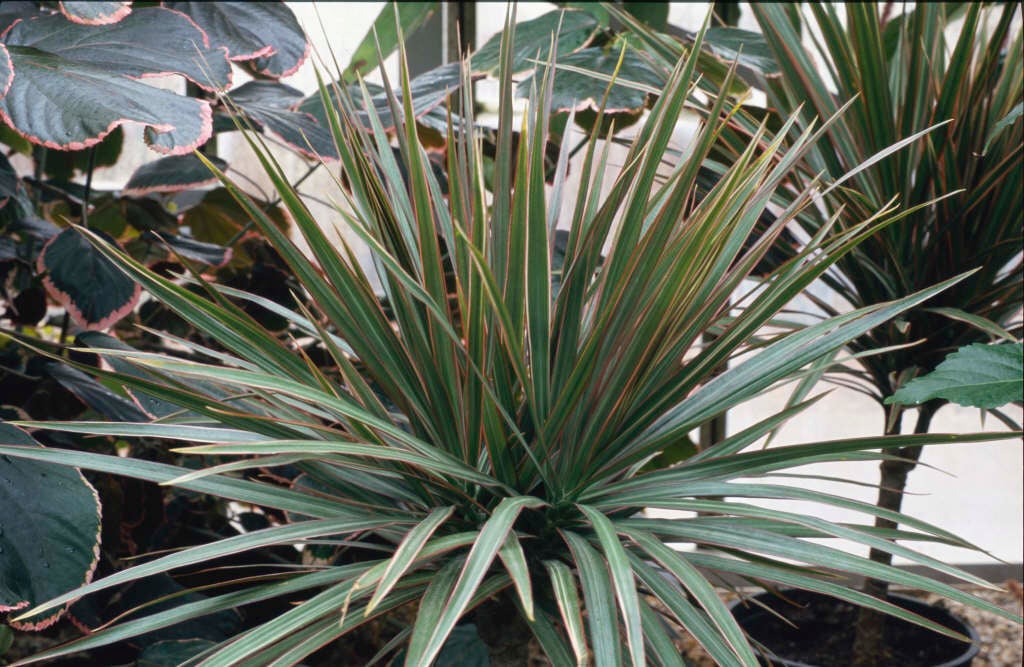
Dracaena marginata 'Tricolor' (v)

RHS Plant Profile
three-coloured Madagascar dragon tree
three-coloured Madagascar dragon tree RHS 2002

Synonyms

Dracaena cincta 'Tricolor'
Dracaena 'Tricolour'

Award of Garden Merit
Conservatory Greenhouse Shrubs Houseplants

An erect, sparsely-branched evergreen shrub with narrow, arching leaves striped with cream, the margins becoming crimson with age

Position

Full sun

Soil Types

Chalk, Clay, Loam, Sand

Max Height

1.5-2.5 metres

Max Spread

1.5-2.5 metres

Size

Time to Maturity
5–10 years
Max Spread
1.5-2.5 metres
Max Height
1.5-2.5 metres

Growing Conditions

Chalk Clay Loam Sand
Moisture
Moist but well–drained
pH
Acid or Alkaline or Neutral

Position

Full sun
Aspect
South–facing or West–facing or East–facing
Exposure
Exposed or Sheltered
Hardiness
H1B

Colour & Scent

Season Stem Flower Foliage Fruit
Spring
Summer
Autumn
Winter

Botanical Details

Family
Asparagaceae
Native to GB/Ireland
No
Foliage
Evergreen
Habit
Bushy
Potentially harmful
Pets (dogs, cats, rabbits, rodents): Harmful if eaten. For further information and contact numbers regarding pets, see the HTA guide to potentially harmful plants
Genus
Dracaena are evergreen trees, the few branches bearing linear to lance-shaped leaves often crowded towards the tips; on mature plants, small greenish-white flowers may be followed by orange or red berries
Name Status
Accepted

How to Grow

Cultivation

Under glass grow in peat-free, loam-based potting compost in full light with shade from hot sun and with moderate humidity. Water freely and apply a balanced liquid fertiliser monthly from spring to autumn and keep just moist in winter. If growth is weak, plants can be cut back to within 15cm of the base in spring. Tolerant of low light levels indoors. See Dracaena for further advice

Propagation

Propagate by semi-hardwood cuttings or leafless stem sections in spring with bottom heat

Suggested planting locations and garden types

  • Patio and container plants

Pruning

No pruning required

Pests

May be susceptible to glasshouse red spider mite and scale insects under glass

Diseases

Generally disease-free