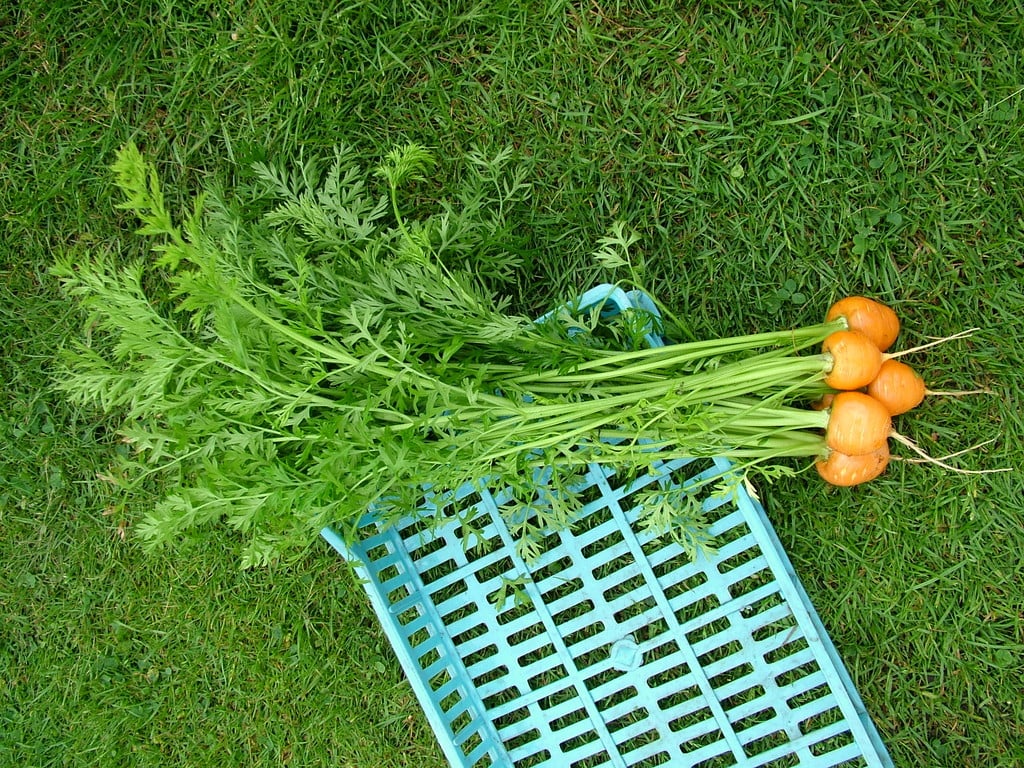
Daucus carota 'Parmex'

RHS Plant Profile
carrot 'Parmex'
carrot 'Parmex' RHS
Plants for pollinators
Annual Biennial

A biennial root vegetable grown as an annual, with bright green, feathery foliage and small sweet rounded roots 5-7cm long.

Position

Full sun

Soil Types

Chalk, Clay, Loam, Sand

Max Height

0.1-0.5 metres

Max Spread

0.1-0.5 metres

Size

Time to Maturity
1 year
Max Spread
0.1-0.5 metres
Max Height
0.1-0.5 metres

Growing Conditions

Chalk Clay Loam Sand
Moisture
Well–drained
pH
Alkaline or Acid or Neutral

Position

Full sun
Aspect
South–facing or West–facing
Exposure
Exposed or Sheltered
Hardiness
H3

Colour & Scent

Season Stem Flower Foliage Fruit
Spring
Summer
Autumn
Winter

Botanical Details

Family
Apiaceae
Native to GB/Ireland
No
Foliage
Deciduous
Habit
Clump forming
Genus
Daucus are more commonly known as wild carrot, a group of herbaceous, biennial (although not always) plants which can reach a height of between 30 to 60cm. The triangular shaped leaves are tripinnate, divided and lacy and flowers begin in pink buds, opening into small and white clustered together in dense umbels. The fruit is small, hairy and lumpy.
Name Status
Accepted

How to Grow

Cultivation

Grow in an open, sunny site with well drained soil. This variety is useful for heavy clay or stony soils which may cause longer carrots to fork. Can also be grown in containers. For more advice see the RHS A-Z Guides to vegetable cultivation

Propagation

Propagate by seed. See sowing vegetable seeds

Suggested planting locations and garden types

  • Cottage and informal garden
  • Wildlife gardens

Pruning

No pruning required

Pests

May be susceptible to carrot fly and slugs, foliage may be susceptible to aphids

Diseases

Generally disease-free