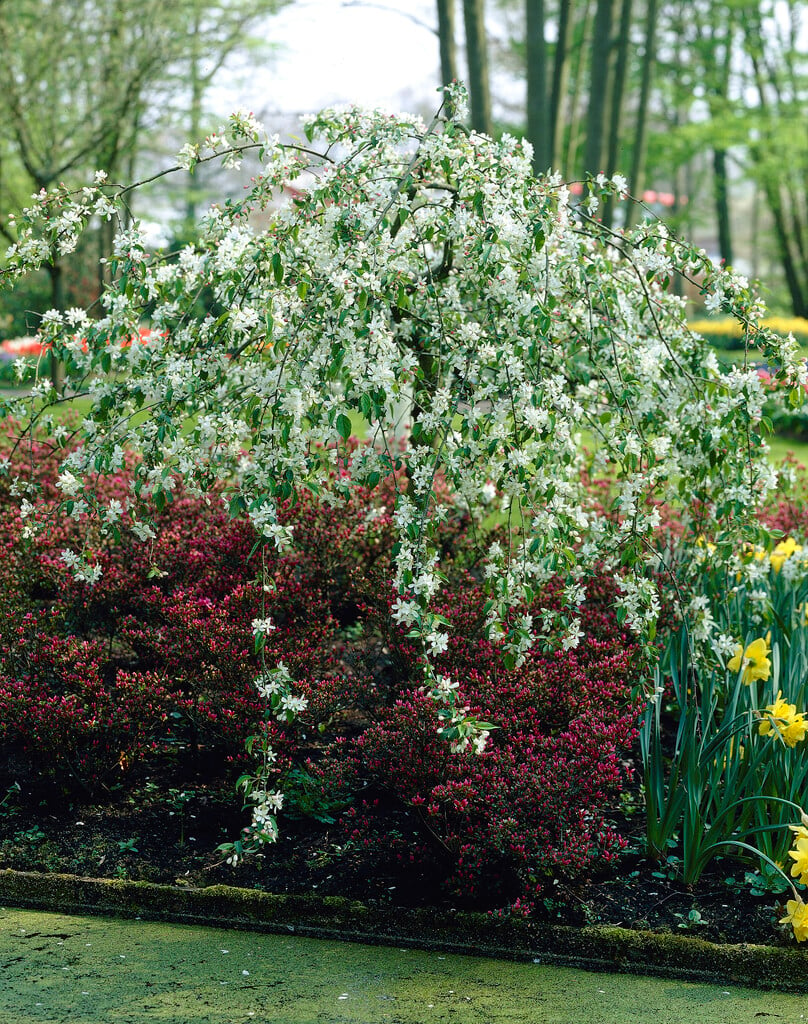
Malus baccata

RHS Plant Profile
Siberian crab apple
Siberian crab apple visionspictures.com

Other common names

Siberian crab

Plants for pollinators
Trees

A vigorous, rounded tree to about 15m with dark green leaves. Abundant white blossom in mid- to late spring is followed by long-stalked, red or yellow fruit, 1cm across

Position

Full sun, Partial shade

Soil Types

Chalk, Clay, Loam, Sand

Max Height

Higher than 12 metres

Max Spread

wider than 8 metres

Size

Time to Maturity
20–50 years
Max Spread
wider than 8 metres
Max Height
Higher than 12 metres

Growing Conditions

Chalk Clay Loam Sand
Moisture
Moist but well–drained
pH
Acid or Alkaline or Neutral

Position

Full sun Partial shade
Aspect
South–facing or West–facing
Exposure
Exposed or Sheltered
Hardiness
H6

Colour & Scent

Season Stem Flower Foliage Fruit
Spring
Summer
Autumn
Winter

Botanical Details

Family
Rosaceae
Native to GB/Ireland
No
Foliage
Deciduous
Habit
Spreading branched
Potentially harmful
Although generally edible when cooked, seeds contain toxins so these should be removed if you are considering eating the fruitusually grown as an ornamental shrub. see the HTA guide to potentially harmful plants for further information and useful contact numbers
Genus
Malus are small to medium-sized deciduous trees with showy flowers in spring and ornamental or edible fruit in autumn; some have good autumn foliage colour
Name Status
Correct
Plant Range
Asia

How to Grow

Cultivation

Best in moderately fertile soil in a sunny position

Propagation

Propagate by seed sown in a seedbed in autumn, or by budding in late summer or grafting in mid-winter

Suggested planting locations and garden types

  • Cottage and informal garden
  • Wildlife gardens
  • Wildflower meadow

Pruning

Pruning group 1

Pests

May be susceptible to aphids, including woolly aphid, fruit tree red spider mite and caterpillars