Ammophila arenaria
marram grass
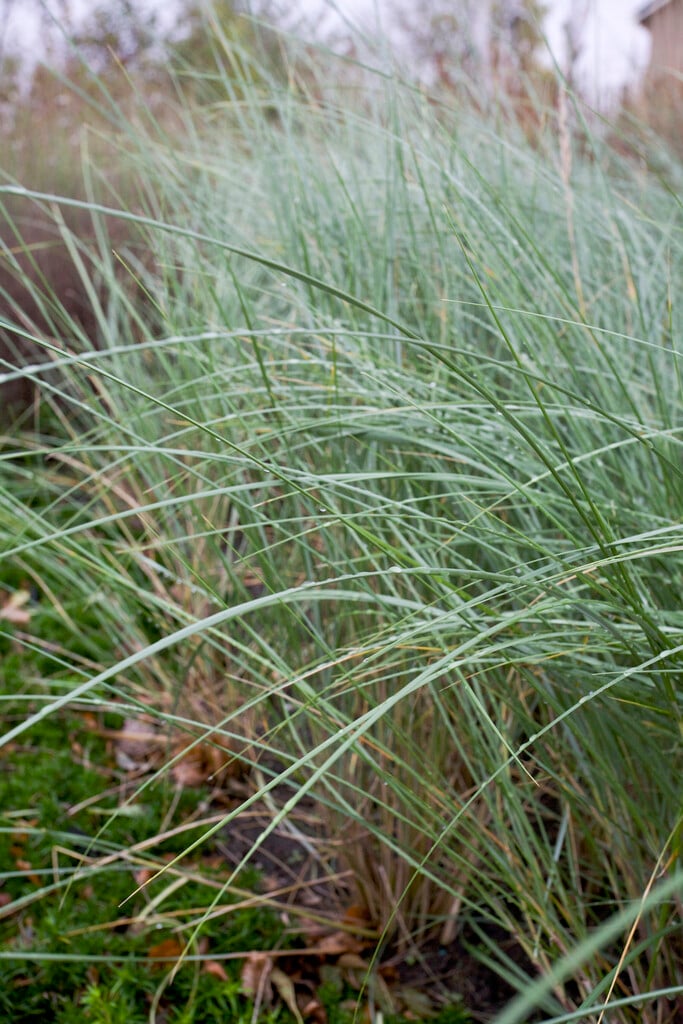
A robust and vigorous native grass, found all around the coast, spreading through tough rhizomes and producing clumps of pale, greyish-green, inrolled foliage that persists all year. Leafy stems up to 1.2m tall produce compact beige flowerheads in summer. Widely planted to help consolidate drifting dunes, and a food plant for several moth caterpillars
Size
Ultimate height
0.5–1 metresTime to ultimate height
2–5 yearsUltimate spread
1.5–2.5 metresGrowing conditions
Moisture
Well–drainedpH
Alkaline, NeutralColour & scent
| Stem | Flower | Foliage | Fruit | |
| Spring | Green Grey Silver | |||
|---|---|---|---|---|
| Summer | Brown | Green Grey Silver | ||
| Autumn | Green Grey Silver | |||
| Winter | Green Grey Silver |
Position
- Full sun
Aspect
East–facing or South–facing or West–facing
Exposure
ExposedDrought resistance
Yes Hardiness
H7Botanical details
- Family
- Poaceae
- Native to GB / Ireland
- Yes
- Foliage
- Evergreen
- Habit
- Matforming, Tufted
- Name status
Correct
- Plant range
- Europe
How to grow
Cultivation
Grows mainly on sand dunes, where it can be the dominant plant. Copes with moving sand and salt wind, and thrives in well-drained soil in an open, sunny position
Propagation
Propagate by seed or by division of rhizomes
Suggested planting locations and garden types
- Coastal
- Low Maintenance
- Banks and slopes
Pruning
No pruning required
Pests
Generally pest-free
Diseases
Generally disease-free
Get involved
The Royal Horticultural Society is the UK’s leading gardening charity. We aim to enrich everyone’s life through plants, and make the UK a greener and more beautiful place.