Size
Ultimate height
0.1–0.5 metresTime to ultimate height
2–5 yearsUltimate spread
0.1–0.5 metresGrowing conditions
Moisture
Well–drainedpH
Acid, Alkaline, NeutralColour & scent
| Stem | Flower | Foliage | Fruit | |
| Spring | Pink | Green | ||
|---|---|---|---|---|
| Summer | Pink | Green | ||
| Autumn | Pink | Green | ||
| Winter | Green |
Position
- Full sun
Aspect
South–facing or West–facing
Exposure
Sheltered Hardiness
H3Botanical details
- Family
- Amaryllidaceae
- Native to GB / Ireland
- No
- Foliage
- Semi evergreen
- Habit
- Tufted
- Genus
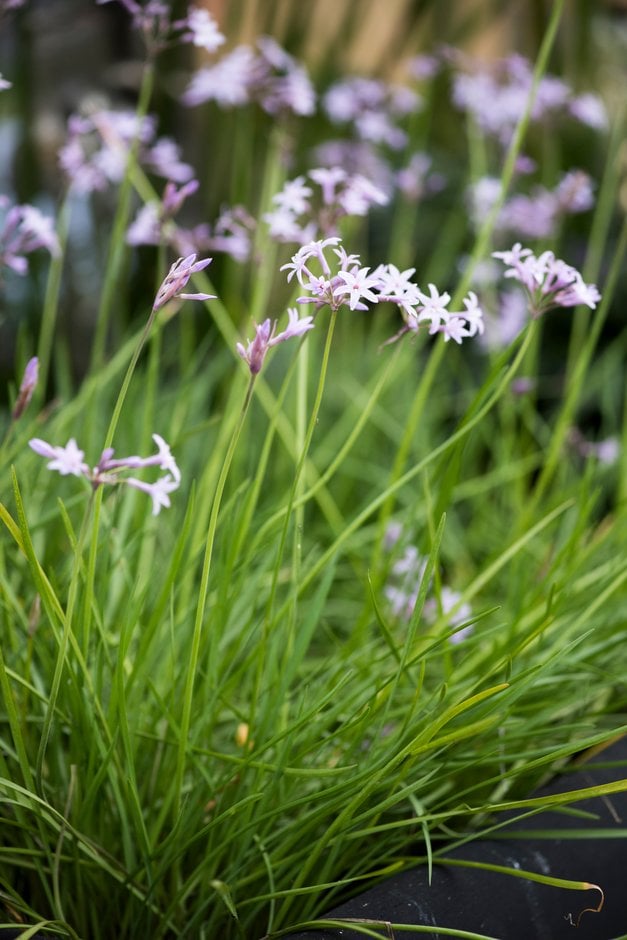
Tulbaghia are bulbous or rhizomatous perennials with linear, onion-scented leaves and umbels of small, star-shaped flowers with a small cup-like corona
- Name status
Accepted
How to grow
Cultivation
Under glass, grow in well-drained, peat-free, loam-based compost in full light. Water freely when in growth, reduce water when in flower and again as leaves wither in autumn. Keep almost dry when dormant. Outdoors grow in moderately fertile, humus rich, loamy soil in full sun and provide a dry winter mulch in frost-prone areas
Propagation
Propagate by division in spring
Suggested planting locations and garden types
- Cottage and informal garden
- City and courtyard gardens
- Patio and container plants
- Mediterranean climate plants
- Flower borders and beds
- Wall side borders
Pruning
Cut faded flowers to the base to prolong flowering
Pests
May be susceptible to aphids and glasshouse whitefly
Diseases
Generally disease-free
Get involved
The Royal Horticultural Society is the UK’s leading gardening charity. We aim to enrich everyone’s life through plants, and make the UK a greener and more beautiful place.