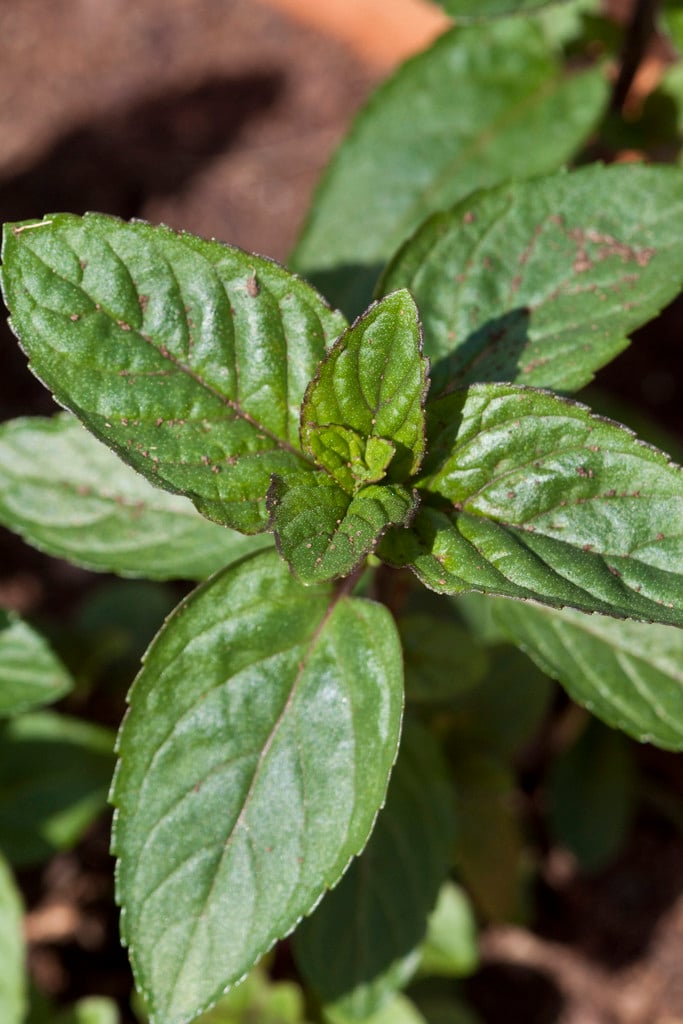
Mentha × piperita

RHS Plant Profile
peppermint
peppermint RHS

Other common names

brandy mint, lily-rail, lily-riall

Synonyms

Mentha × piperita 'Peppermint'
Mentha 'Peppermint'

Herbs - Culinary Herbaceous Perennial

A strongly aromatic, herbaceous perennial with stems and leaves flushed with purple. It produces terminal spikes of tiny, pale purple flowers in late summer

Position

Full sun, Partial shade

Soil Types

Chalk, Clay, Loam, Sand

Max Height

0.5-1 metres

Max Spread

1-1.5 metres

Size

Time to Maturity
2–5 years
Max Spread
1-1.5 metres
Max Height
0.5-1 metres

Growing Conditions

Chalk Clay Loam Sand
Moisture
Moist but well–drained or Well–drained
pH
Acid or Alkaline or Neutral

Position

Full sun Partial shade
Aspect
South–facing or North–facing or East–facing or West–facing
Exposure
Exposed or Sheltered
Hardiness
H7

Colour & Scent

Fragrance Foliage
Season Stem Flower Foliage Fruit
Spring
Summer
Autumn
Winter

Botanical Details

Family
Lamiaceae
Native to GB/Ireland
Yes
Foliage
Deciduous
Habit
Suckering
Genus
Mentha are aromatic, rhizomatous perennials with opposite, toothed leaves and small tubular flowers in spikes of whorls in summer
Name Status
Correct

How to Grow

Cultivation

Grow in moist but well drained soil in full or partial sun. May have to potential to become a nuisance; restrict the root run in a deep container and plunge into the ground, or plant in a well chosen site where it can grow unrestricted. See mint cultivation for more information

Propagation

Propagate by division in spring or autumn

Suggested planting locations and garden types

  • Wildlife gardens
  • Cottage and informal garden

Pruning

Cut back after flowering

Pests

May be susceptible to leafhoppers and caterpillars

Diseases

May be susceptible to powdery mildews and mint rust