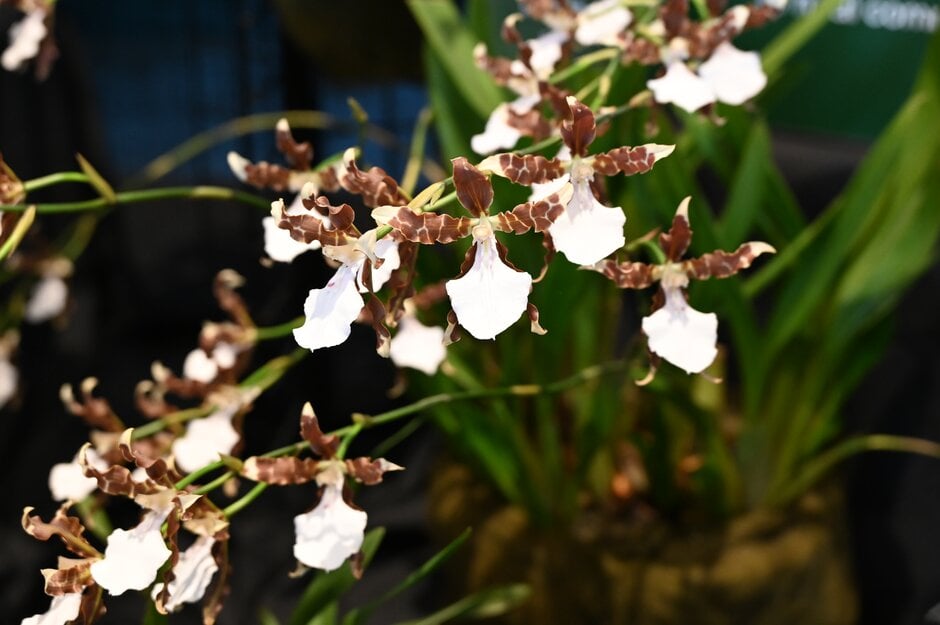
Miltonia cuneata

<i>Miltonia</i> <i>cuneata</i> RHS

An epiphytic orchid to around 60cm in height, endemic to Brazil where it can be found growing in the trunks of trees, with long, strap-like green foliage. Upright spikes of long-lasting, fragrant wedge-shaped flowers with a white lip and chestnut-brown spotted petals appear from late winter to early spring. Suits a warm and humid location indoors or a greenhouse or conservatory

Position

Partial shade

Max Height

0.5-1 metres

Max Spread

0.1-0.5 metres

Size

Time to Maturity
2–5 years
Max Spread
0.1-0.5 metres
Max Height
0.5-1 metres

Growing Conditions

Moisture
Moist but well–drained or Well–drained
pH
Acid or Neutral

Position

Partial shade
Aspect
East–facing or North–facing or West–facing
Exposure
Sheltered
Hardiness
No preference

Colour & Scent

Season Stem Flower Foliage Fruit
Spring
Summer
Autumn
Winter

Botanical Details

Family
Orchidaceae
Native to GB/Ireland
No
Foliage
Evergreen
Habit
Columnar upright
Genus
Name Status
Unresolved
Plant Range
Brazil

How to Grow

Cultivation

Grow in peat-free orchid compost in bright, filtered light, preferably in a humid environment which is kept at around 16-18°C during the day and 1415°C at night. Miltonia require a period of dormancy after the new shoots mature into rounded pseudobulbs. Reduce watering during autumn and winter and do not feed during this time until new spikes appear. See orchid cultivation for further advice

Propagation

Propagate by division of pseudobulbs after flowering

Suggested planting locations and garden types

  • Houseplants
  • Conservatory and greenhouse

Pruning

No pruning required. Remove dead flowers and spent flower spikes, or dead or yellowing leaves close to the base with clean, sterilised shears or scissors to prevent infection

Pests

May be susceptible to glasshouse red spider mite, thrips and mealybugs

Diseases

May be susceptible to root rot