Agapanthus 'Donau'
African lily 'Donau'
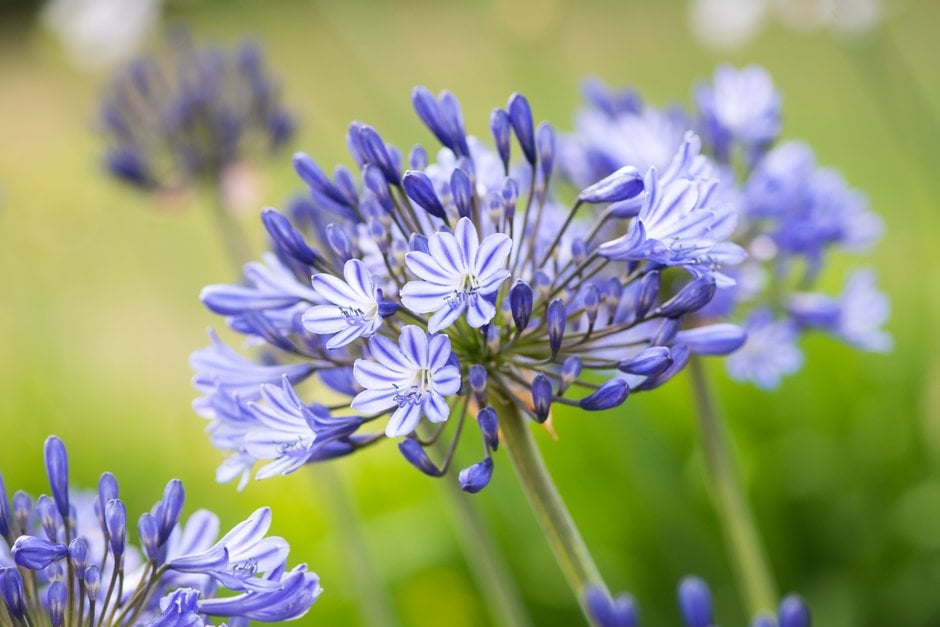
'Donau' is a clump-forming, deciduous perennial with dark green, slightly arching, strap-shaped leaves. Rounded flowerheads up to 13cm across are borne in summer and comprise pale blue flowers with a dark blue central stripe that emerge from dark violet-blue buds
Buy this plant
Size
Ultimate height
0.5–1 metresTime to ultimate height
2–5 yearsUltimate spread
0.1–0.5 metresGrowing conditions
Moisture
Moist but well–drainedpH
Acid, Alkaline, NeutralColour & scent
| Stem | Flower | Foliage | Fruit | |
| Spring | Green | |||
|---|---|---|---|---|
| Summer | Blue | Green | ||
| Autumn | Green | |||
| Winter |
Position
- Full sun
Aspect
West–facing or South–facing or East–facing
Exposure
ShelteredDrought resistance
Yes Hardiness
H4Botanical details
- Family
- Amaryllidaceae
- Native to GB / Ireland
- No
- Foliage
- Deciduous
- Habit
- Clump forming
- Potentially harmful
- Humans/Pets (dogs, cats): harmful if eaten. Wear gloves and other protective equipment when handling. For further information and contact numbers regarding pets, see the HTA guide to potentially harmful plants
- Genus
Agapanthus are clump-forming perennials with narrowly strap-shaped leaves, evergreen in some species, and erect stems bearing umbels of funnel-shaped blue or white flowers
- Name status
Accepted
How to grow
Cultivation
Grow in fertile, moist but well-drained soil in full sun or grow in a container. In cold areas, mulch well overwinter and take containers under cover. See agapanthus cultivation
Propagation
Propagate by division every three to four years in spring
Suggested planting locations and garden types
- Coastal
- Patio and container plants
- Mediterranean climate plants
- City and courtyard gardens
- Cottage and informal garden
- Cut flowers
- Flower borders and beds
- Wall side borders
Pruning
In late autumn remove any remaining leaves, but seedheads can be left as they look attractive over winter
Pests
May be susceptible to slugs and snails and agapanthus gall midge
Diseases
May be susceptible to a virus
Get involved
The RHS is the UK’s gardening charity, helping people and plants to grow - nurturing a healthier, happier world, one person and one plant at a time.