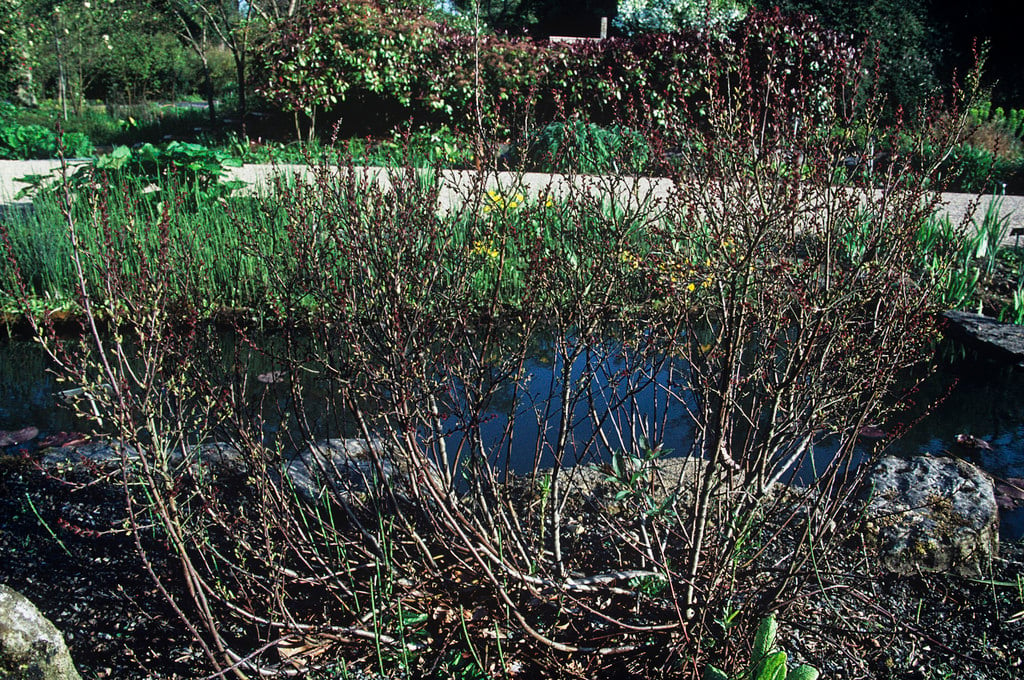
Myrica gale

RHS Plant Profile
bog myrtle
bog myrtle RHS

Other common names

common candleberry, Devonshire myrtle, Dutch myrtle, gale, golden osier, meadow fern, moor myrtle, sweet willow, sweetgale, helygen mair

Shrubs

A deciduous, suckering shrub with highly aromatic foliage. It bears clusters of yellow and brown catkins at the ends of the shoots in spring, followed by small, yellow-brown berries

Position

Full sun, Partial shade

Soil Types

Clay, Loam

Max Height

1-1.5 metres

Max Spread

1-1.5 metres

Size

Time to Maturity
10–20 years
Max Spread
1-1.5 metres
Max Height
1-1.5 metres

Growing Conditions

Clay Loam
Moisture
Poorly–drained
pH
Acid or Alkaline or Neutral

Position

Full sun Partial shade
Aspect
South–facing or North–facing or West–facing or East–facing
Exposure
Exposed or Sheltered
Hardiness
H7

Colour & Scent

Fragrance Foliage
Season Stem Flower Foliage Fruit
Spring
Summer
Autumn
Winter

Botanical Details

Family
Myricaceae
Native to GB/Ireland
Yes
Foliage
Deciduous
Habit
Suckering
Genus
Myrica are deciduous or evergreen trees or suckering shrubs with dark green, usually aromatic, leaves. The flowers are in short catkins though the berries may be more decorative
Name Status
Correct
Plant Range
Europe, N America

How to Grow

Cultivation

Needs a moist, humus-rich soil and tolerates waterlogging

Propagation

Propagate by seed sown in containers outdoors as soon as ripe, by layering in spring, or by softwood cuttings

Suggested planting locations and garden types

  • Coastal
  • Wildlife gardens
  • Cottage and informal garden
  • Low Maintenance
  • Banks and slopes

Pruning

Pruning group 1

Pests

Generally pest-free

Diseases

Generally disease-free