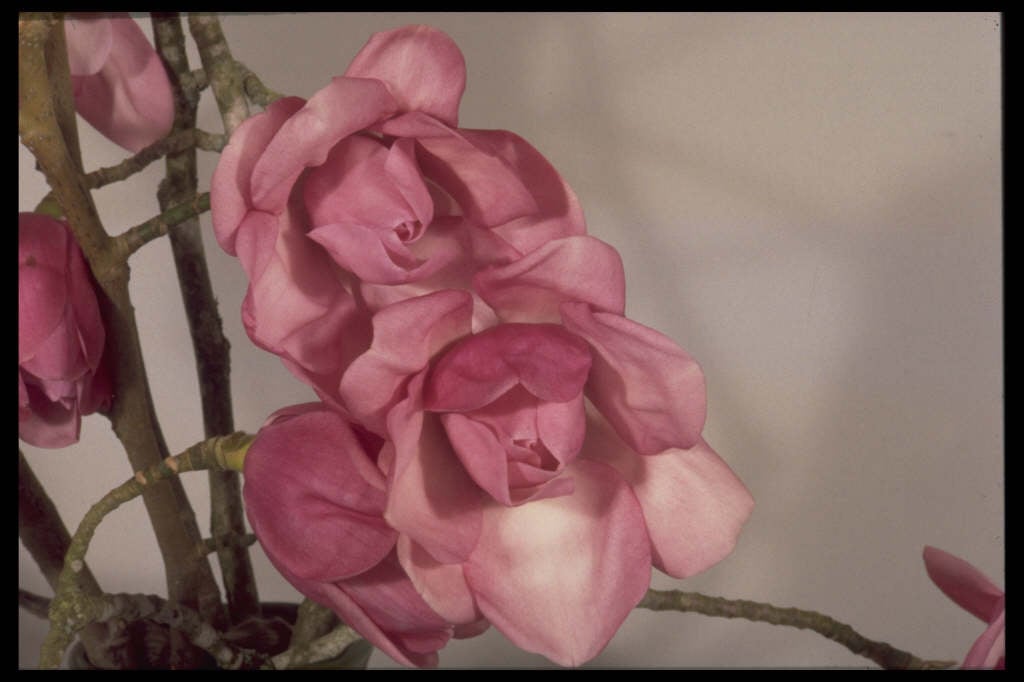
Magnolia 'Phillip Tregunna'

RHS Plant Profile
magnolia 'Phillip Tregunna'
magnolia 'Phillip Tregunna' RHS 1999
Trees

Vigorous upright deciduous tree about 12-15m tall, with broadly oval, large, mid-green leaves to 20cm long, and bearing showy, large, rich purplish-pink flowers to 20cm wide, with 11-12 tepals, paler inside, produced before the leaves in early to mid-spring

Position

Full sun, Partial shade

Soil Types

Clay, Loam, Sand

Max Height

Higher than 12 metres

Max Spread

wider than 8 metres

Size

Time to Maturity
20–50 years
Max Spread
wider than 8 metres
Max Height
Higher than 12 metres

Growing Conditions

Clay Loam Sand
Moisture
Moist but well–drained or Well–drained
pH
Acid or Neutral

Position

Full sun Partial shade
Aspect
East–facing or North–facing or West–facing
Exposure
Sheltered
Hardiness
H5

Colour & Scent

Season Stem Flower Foliage Fruit
Spring
Summer
Autumn
Winter

Botanical Details

Family
Magnoliaceae
Native to GB/Ireland
No
Foliage
Deciduous
Habit
Bushy, Spreading branched
Genus
Magnolia can be deciduous or evergreen trees or shrubs, with large, showy, often fragrant flowers, often opening before the leaves, and sometimes followed by colourful cone-like fruit
Name Status
Accepted

How to Grow

Cultivation

Grow in moist, humus-rich, well-drained neutral to acid soil in sun or partial shade with shelter from cold winds. Late frosts may damage flower buds. Further magnolia cultivation advice

Propagation

Propagate by softwood cuttings in early summer or semi-hardwood cuttings in late summer

Suggested planting locations and garden types

  • Cottage and informal garden
  • Architectural

Pruning

Minimal pruning required, see magnolia pruning. Deciduous magnolias should only be pruned between midsummer and early autumn

Pests

May be susceptible to scale insects, horse chestnut scale and capsid bug

Diseases

May be susceptible to coral spot, phytophthora, grey moulds, honey fungus, a virus or fungal leaf spot