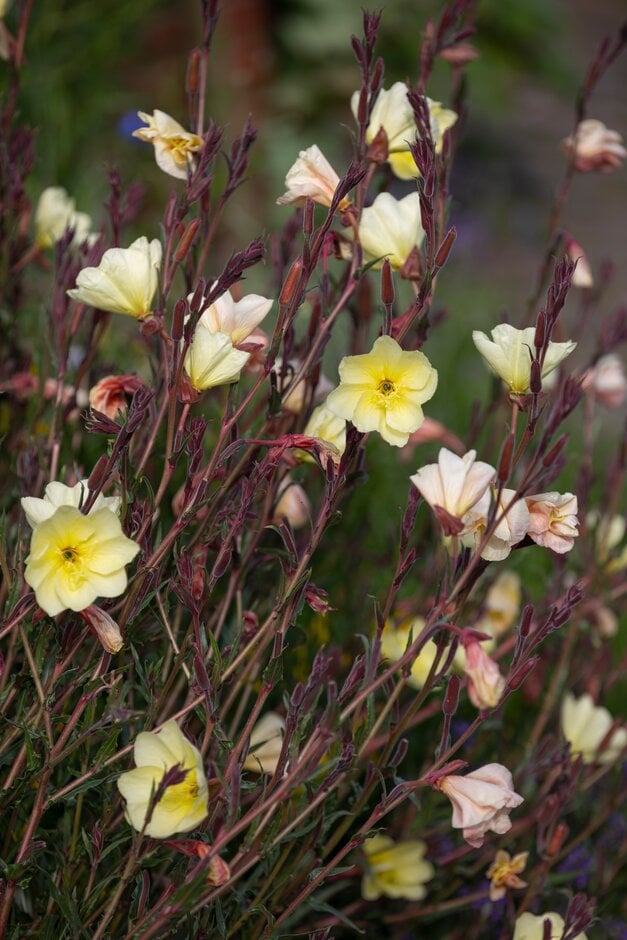
Oenothera 'Apricot Delight'

RHS Plant Profile
evening primrose 'Apricot Delight'
evening primrose 'Apricot Delight' RHS

Synonyms

Oenothera affinis 'Apricot Delight'
Oenothera odorata 'Apricot Delight'

Plants for pollinators
Herbaceous Perennial

An upright perennial producing dark red stems to around 1m tall clothed in narrowly ovate leaves and, from summer into early autumn, bearing a succession of 8cm wide scented flowers that open pale yellow before darkening and changing to shades of orange and pink with age

Position

Full sun

Soil Types

Chalk, Loam, Sand

Max Height

1-1.5 metres

Max Spread

0.1-0.5 metres

Size

Time to Maturity
1–2 years
Max Spread
0.1-0.5 metres
Max Height
1-1.5 metres

Growing Conditions

Chalk Loam Sand
Moisture
Well–drained
pH
Acid or Alkaline or Neutral

Position

Full sun
Aspect
South–facing or West–facing
Exposure
Sheltered
Hardiness
H5
Drought Resistance
Yes

Colour & Scent

Season Stem Flower Foliage Fruit
Spring
Summer
Autumn
Winter

Botanical Details

Family
Onagraceae
Native to GB/Ireland
No
Foliage
Deciduous
Habit
Columnar upright
Genus
Oenothera can be annuals, biennials or perennials, upright or spreading in habit, with simple or lobed leaves and bowl-shaped, white, yellow or pink flowers over a long period in summer
Name Status
Accepted

How to Grow

Cultivation

Grow in an open position in poor to moderately fertile, well-drained soil in full sun

Propagation

Propagate by seed sown in early summer

Suggested planting locations and garden types

  • Cottage and informal garden
  • Gravel garden
  • Wildlife gardens
  • Coastal
  • Flower borders and beds

Pruning

Cut back after flowering

Pests

May be susceptible to slugs

Diseases

Generally disease-free but may be susceptible to powdery mildews and a leaf spot and susceptible to root rot in heavy, wet soils