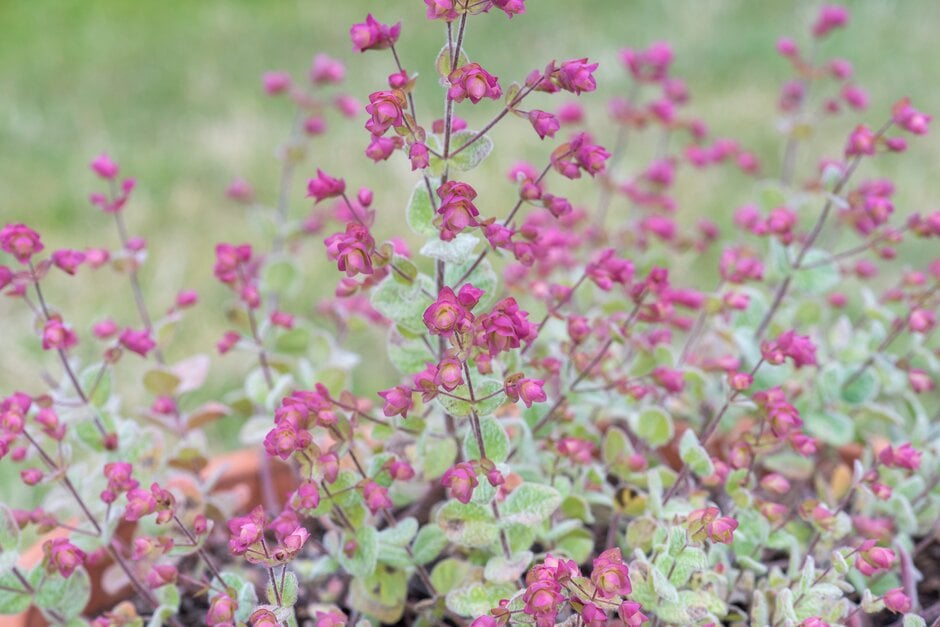
Origanum calcaratum

RHS Plant Profile
dittany of Amorgos
dittany of Amorgos RHS

Synonyms

Origanum tournefortii
Amaracus tournefortii

Plants for pollinators
Herbaceous Perennial

A low-growing perennial with broadly oval to rounded, aromatic deep green leaves covered with fine, sometimes woolly white hairs. In summer, long clusters of pale green rounded bracts flushed with pink are tipped with small, pale pink flowers with long pink stamens

Position

Full sun

Soil Types

Chalk, Loam, Sand

Max Height

0.1-0.5 metres

Max Spread

0.1-0.5 metres

Size

Time to Maturity
2–5 years
Max Spread
0.1-0.5 metres
Max Height
0.1-0.5 metres

Growing Conditions

Chalk Loam Sand
Moisture
Well–drained
pH
Alkaline or Neutral

Position

Full sun
Aspect
South–facing or West–facing
Exposure
Exposed or Sheltered
Hardiness
H3
Drought Resistance
Yes

Colour & Scent

Fragrance Foliage
Season Stem Flower Foliage Fruit
Spring
Summer
Autumn
Winter

Botanical Details

Family
Lamiaceae
Native to GB/Ireland
No
Foliage
Deciduous
Habit
Spreading branched
Genus
Origanum may be herbaceous perennials or deciduous or evergreen sub-shrubs, with aromatic foliage and spikes of small tubular flowers usually with conspicuous bracts
Name Status
Correct
Plant Range
Greece

How to Grow

Cultivation

Grow in poor or moderately fertile, alkaline, well drained soil in full sun with shelter. Dislikes winter wet and may need protection from low temperatures, suitable for growing in a container in an alpine house. See oregano cultivation for further advice This plant was included in the RHS Origanum (oregano and marjoram) trial 2022-2023 https://www.rhs.org.uk/plants/trials-awards/plant-trial-results/origanum

Propagation

Propagate by division in spring, or by basal softwood cuttings in late spring

Suggested planting locations and garden types

  • City and courtyard gardens
  • Cottage and informal garden
  • Mediterranean climate plants
  • Patio and container plants
  • Rock garden
  • Wildlife gardens
  • Coastal
  • Conservatory and greenhouse

Pruning

Cut back in autumn as foliage dies back

Pests

May be susceptible to aphids

Diseases

Generally disease-free