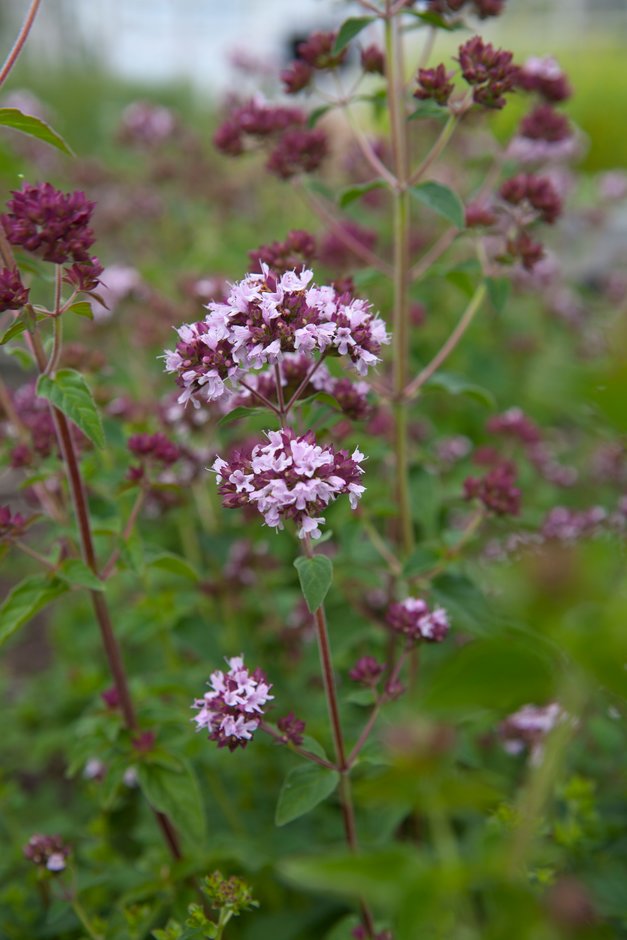
Origanum vulgare

RHS Plant Profile
oregano
oregano RHS

Other common names

English marjoram, grove marjoram, pot marjoram, wild marjoram, wintersweet, penrhudd

Plants for pollinators
Herbs - Culinary Herbaceous Perennial

A bushy, woody-based, aromatic perennial sub-shrub with upright stems, 20-80cm tall with small, opposite leaves. Oval, dark-green leaves are approximately 3cm long. Bears panicle-like, loose clusters of small, 4mm long tubular pink flowers in summer and early autumn. The flowers are loved by bees and pollinators and the leaves are a popular culinary herb

Position

Full sun, Partial shade

Soil Types

Chalk, Loam, Sand

Max Height

0.5-1 metres

Max Spread

0.5-1 metres

Size

Time to Maturity
2–5 years
Max Spread
0.5-1 metres
Max Height
0.5-1 metres

Growing Conditions

Chalk Loam Sand
Moisture
Well–drained
pH
Acid or Alkaline or Neutral

Position

Full sun Partial shade
Aspect
West–facing or South–facing or North–facing or East–facing
Exposure
Exposed or Sheltered
Hardiness
H6

Colour & Scent

Fragrance Foliage
Season Stem Flower Foliage Fruit
Spring
Summer
Autumn
Winter

Botanical Details

Family
Lamiaceae
Native to GB/Ireland
Yes
Foliage
Deciduous
Habit
Bushy
Genus
Origanum may be herbaceous perennials or deciduous or evergreen sub-shrubs, with aromatic foliage and spikes of small tubular flowers usually with conspicuous bracts
Name Status
Correct
Plant Range
Europe, N. Africa

How to Grow

Cultivation

Grow in a any well-drained (preferably alkaline) soil, in full sun or partial shade. See oregano cultivation for further advice This plant was included in the RHS Origanum (oregano and marjoram) trial 2022-2023 https://www.rhs.org.uk/plants/trials-awards/plant-trial-results/origanum

Propagation

Propagate by seed or by division in the autumn or spring

Suggested planting locations and garden types

  • Cottage and informal garden
  • Wildlife gardens
  • Wildflower meadow
  • City and courtyard gardens
  • Mediterranean climate plants
  • Flower borders and beds

Pruning

Cut back old, flowered stems in early spring

Pests

Generally pest-free

Diseases

Generally disease-free