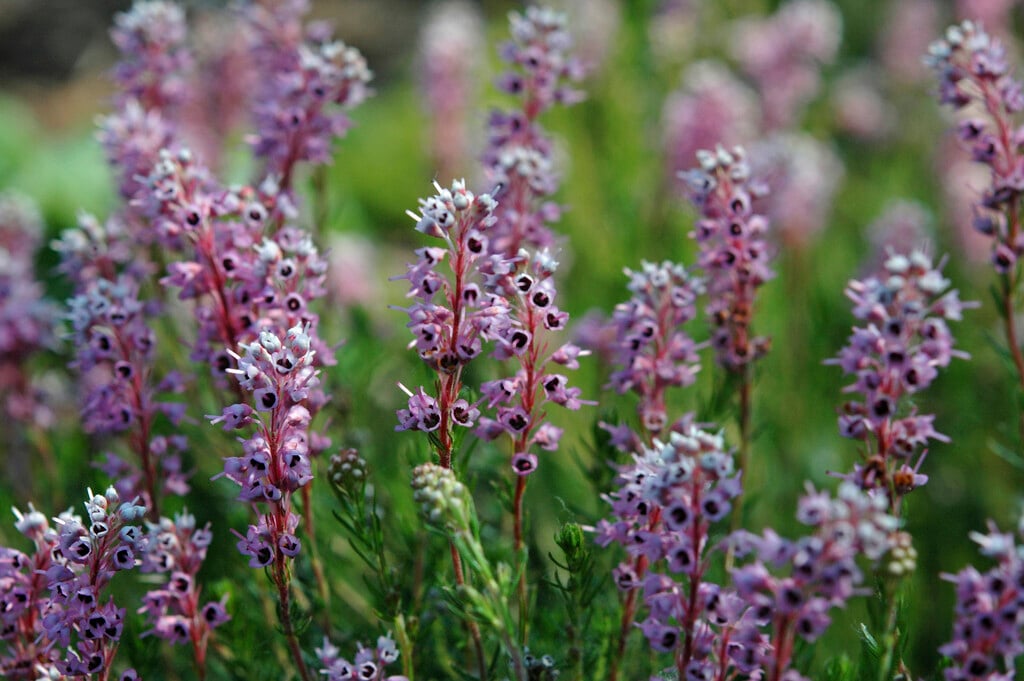
Erica spiculifolia

RHS Plant Profile
spike heath
spike heath visionspictures.com

Synonyms

Bruckenthalia spiculifolia

Plants for pollinators
Shrubs

A compact, low-growing shrub, with whorls of evergreen, glossy, dark green leaves along the stems. From late spring to summer, it bears clusters of small, cup-shaped, pale to deep pink, occassionally white, dense, upright flowers.

Position

Full sun

Soil Types

Clay, Loam, Sand

Max Height

0.1-0.5 metres

Max Spread

0.1-0.5 metres

Size

Time to Maturity
2–5 years
Max Spread
0.1-0.5 metres
Max Height
0.1-0.5 metres

Growing Conditions

Clay Loam Sand
Moisture
Well–drained
pH
Acid

Position

Full sun
Aspect
South–facing or West–facing
Exposure
Exposed or Sheltered
Hardiness
H5

Colour & Scent

Season Stem Flower Foliage Fruit
Spring
Summer
Autumn
Winter

Botanical Details

Family
Ericaceae
Native to GB/Ireland
No
Foliage
Evergreen
Habit
Bushy
Genus
Erica can be prostrate or erect, evergreen shrubs with fine, needle-like leaves in whorls, and racemes or panicles of small, bell-shaped or tubular flowers
Name Status
Correct
Plant Range
Europe Turkey

How to Grow

Cultivation

Grow in well-drained, moderately fertile soil in full sun. See also Hardy heathers cultivation.

Propagation

Propagate by semi-ripe cuttings in mid-to late autumn and by layering.

Suggested planting locations and garden types

  • City and courtyard gardens
  • Cottage and informal garden
  • Patio and container plants
  • Wildlife gardens
  • Rock garden
  • Low Maintenance
  • Banks and slopes
  • Flower borders and beds
  • Ground cover

Pruning

See pruning group 10

Pests

Generally pest-free

Diseases

May be susceptible to fungal diseases, including honey fungus (rarely), and Phytophthora root rot, in wet conditions