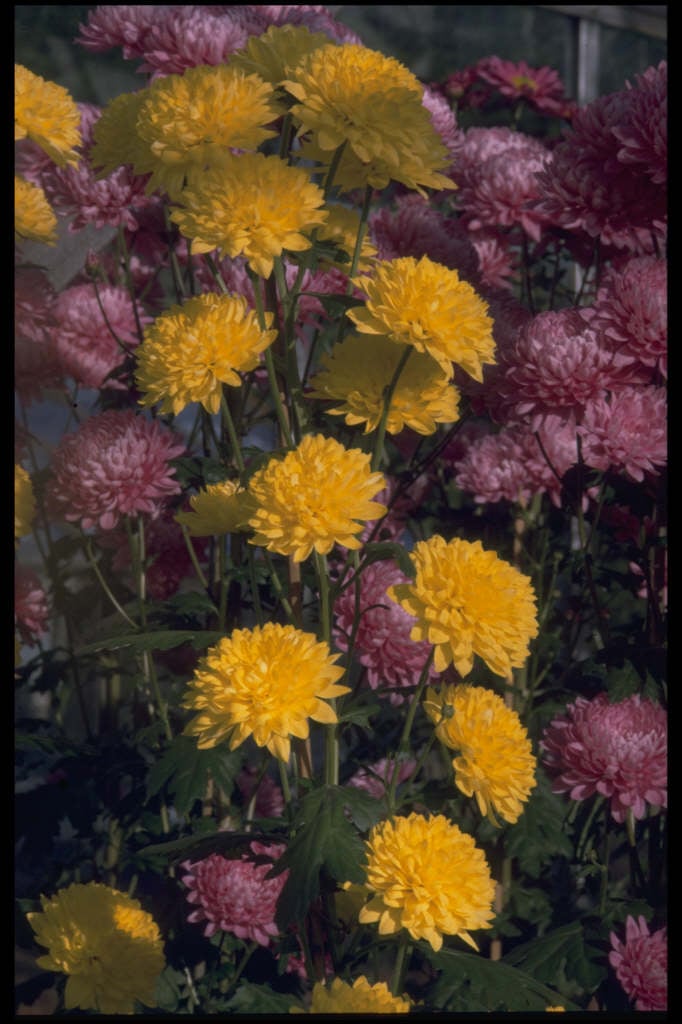
Chrysanthemum 'Robeam' (9c)

RHS Plant Profile
chrysanthemum 'Robeam'
chrysanthemum 'Robeam' RHS 1999

Synonyms

Dendranthema 'Robeam'

Award of Garden Merit
Conservatory Greenhouse Herbaceous Perennial

Grows to 1.2m, with long stems bearing sprays of vivid light yellow flowers to 7cm across in late summer and autumn

Position

Full sun

Soil Types

Loam

Max Height

1-1.5 metres

Max Spread

0.5-1 metres

Size

Time to Maturity
1–2 years
Max Spread
0.5-1 metres
Max Height
1-1.5 metres

Growing Conditions

Loam
Moisture
Moist but well–drained
pH
Acid or Alkaline or Neutral

Position

Full sun
Aspect
South–facing or West–facing
Exposure
Sheltered
Hardiness
H2

Colour & Scent

Season Stem Flower Foliage Fruit
Spring
Summer
Autumn
Winter

Botanical Details

Family
Asteraceae
Native to GB/Ireland
No
Foliage
Deciduous
Habit
Bushy
Potentially harmful
Skin allergen. Wear gloves and other protective equipment when handling
Genus
Chrysanthemum are erect woody-based perennials with aromatic, pinnately lobed leaves and flowerheads of diverse form, from late summer to late autumn
Name Status
Accepted
Horticultural Group
Reflexed Indoor Spray chrysanthemums have branched stems bearing several fully double flowerheads with recurved florets

How to Grow

Cultivation

Grow in a cold frame in a peat-free, loam-based potting compost and move into a warm glasshouse in early autumn. Provide bright filtered light with good ventilation and a minimum temperature of 10°C. During the growing season water moderately and apply a balanced liquid fertiliser weekly

Propagation

Propagate by rooting softwood cuttings in peat-free potting compost at 16°C in spring. Pot on rooted cuttings in late June to early July into 23cm pots and pinch out as soon as established

Suggested planting locations and garden types

  • City and courtyard gardens
  • Cottage and informal garden
  • Coastal
  • Patio and container plants
  • Flower borders and beds
  • Banks and slopes

Pruning

Pinch out growing tips and disbud as required

Diseases

May be susceptible to glasshouse grey moulds, powdery mildews and chrysanthemum white rust