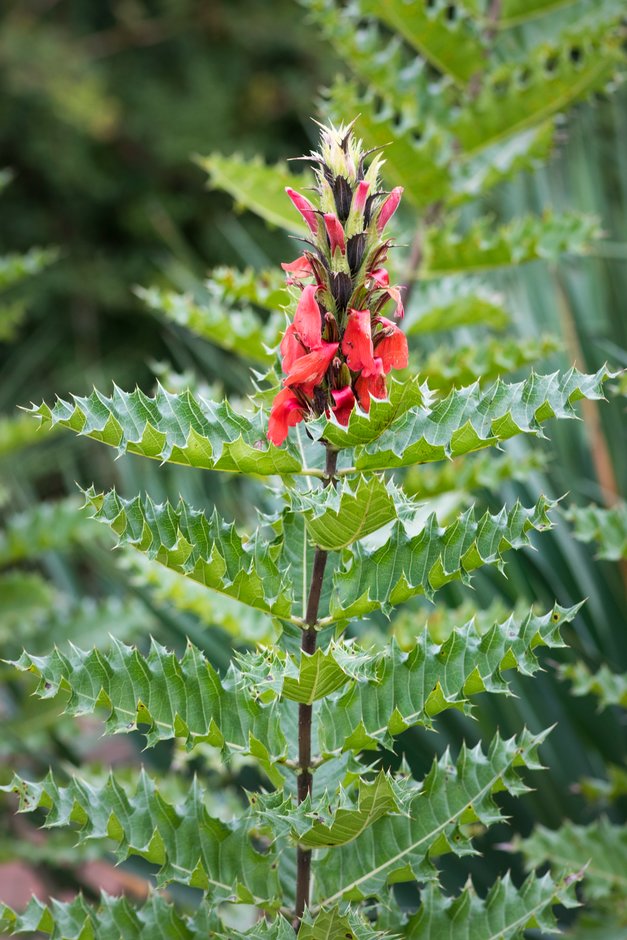
Acanthus sennii

RHS Plant Profile
Ethiopian acanthus
Ethiopian acanthus RHS / Joanna Kossak
Herbaceous Perennial

An upright perennial or sub-shrub with oblong to oval, very spiny, mid-green leaves. Red, large-lippedflowers are produced in short,terminal spikes in mid-summer to early autumn

Position

Full sun, Partial shade

Soil Types

Chalk, Clay, Loam, Sand

Max Height

1-1.5 metres

Max Spread

1-1.5 metres

Size

Time to Maturity
2–5 years
Max Spread
1-1.5 metres
Max Height
1-1.5 metres

Growing Conditions

Chalk Clay Loam Sand
Moisture
Moist but well–drained or Well–drained
pH
Acid or Alkaline or Neutral

Position

Full sun Partial shade
Aspect
West–facing or South–facing or North–facing or East–facing
Exposure
Sheltered
Hardiness
H4
Drought Resistance
Yes

Colour & Scent

Season Stem Flower Foliage Fruit
Spring
Summer
Autumn
Winter

Botanical Details

Family
Acanthaceae
Native to GB/Ireland
No
Foliage
Deciduous
Habit
Columnar upright
Genus
Acanthus are robust herbaceous perennials with handsome, lobed foliage and tall, erect racemes of two-lipped flowers with colourful bracts
Name Status
Correct
Plant Range
Ethiopia

How to Grow

Cultivation

The ideal soil is a deep, fertile, well-drained loam but it will grow in most soils and has good drought tolerance. Has the potential to become a nuisance if not managed well

Propagation

Propagate by division or by root cuttings

Suggested planting locations and garden types

  • Sub-tropical
  • Architectural
  • Cottage and informal garden
  • Low Maintenance
  • Flower borders and beds

Pruning

Cut down old flower stems

Pests

Generally pest-free

Diseases

Powdery mildews may be a problem