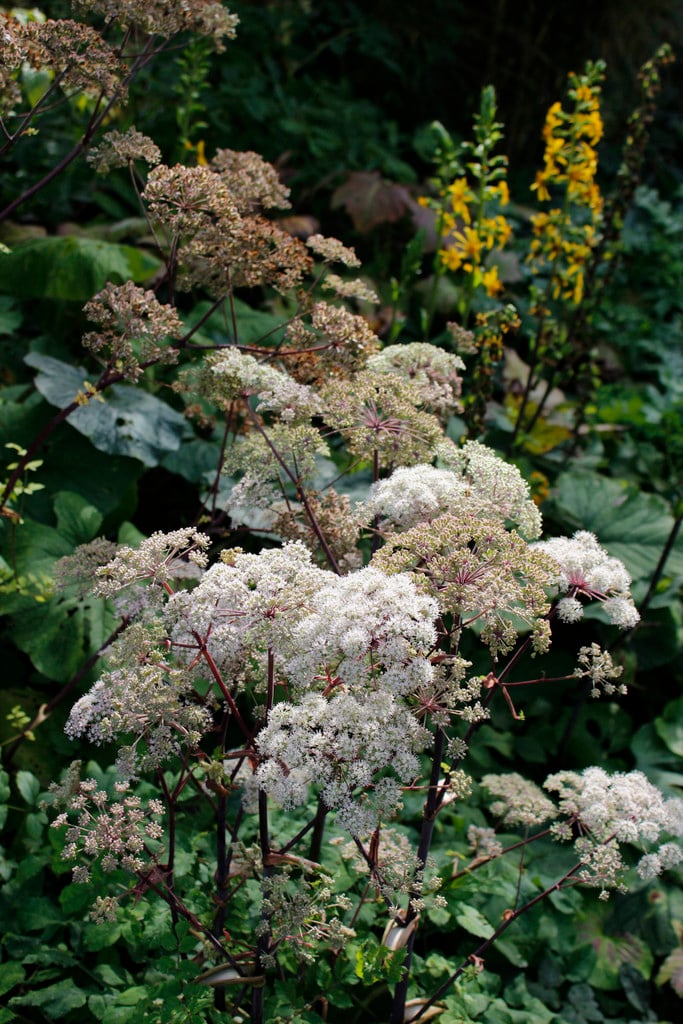
Angelica sylvestris

RHS Plant Profile
wild angelica
wild angelica RHS

Other common names

llys yr angel

Synonyms

Angelica montana
Angelica sylvestris var. elatior
Angelica pancicii

Plants for pollinators
Herbaceous Perennial

A robust biennial or short-lived perennial with rigid, purple stems and light green, highly-divided leaves up to 60cm long. Rounded umbels of tiny white or pink flowers are produced in late summer and early autumn

Position

Full sun

Soil Types

Clay, Loam

Max Height

1.5-2.5 metres

Max Spread

0.5-1 metres

Size

Time to Maturity
1–2 years
Max Spread
0.5-1 metres
Max Height
1.5-2.5 metres

Growing Conditions

Clay Loam
Moisture
Moist but well–drained or Poorly–drained
pH
Acid or Alkaline or Neutral

Position

Full sun
Aspect
West–facing or South–facing
Exposure
Exposed or Sheltered
Hardiness
H5

Colour & Scent

Season Stem Flower Foliage Fruit
Spring
Summer
Autumn
Winter

Botanical Details

Family
Apiaceae
Native to GB/Ireland
Yes
Foliage
Deciduous
Habit
Bushy
Genus
Angelica are large biennials or herbaceous perennials, some monocarpic, with pinnately or palmately divided leaves and small white or purple flowers in large umbels
Name Status
Correct
Plant Range
Europe

How to Grow

Cultivation

Prefers deep, moist, fertile, loamy soil in full sun, but will tolerate a range of conditions

Propagation

Propagate by seed sown in containers in a cold frame as soon as ripe; do not cover as seeds require light to germinate. Transplant seedlings while small; larger plants resent disturbance.

Suggested planting locations and garden types

  • Architectural
  • Coastal
  • Cottage and informal garden
  • Wildlife gardens
  • Flower borders and beds
  • Cut flowers

Pruning

Flowering stems can be cut down in autumn, or leave as winter skeletons and remove in spring

Pests

May be susceptible to aphids, leaf miners, slugs and snails

Diseases

May be susceptible to powdery mildews during dry summers