Anemonella thalictroides 'Betty Blake' (d)
rue anemone 'Betty Blake'
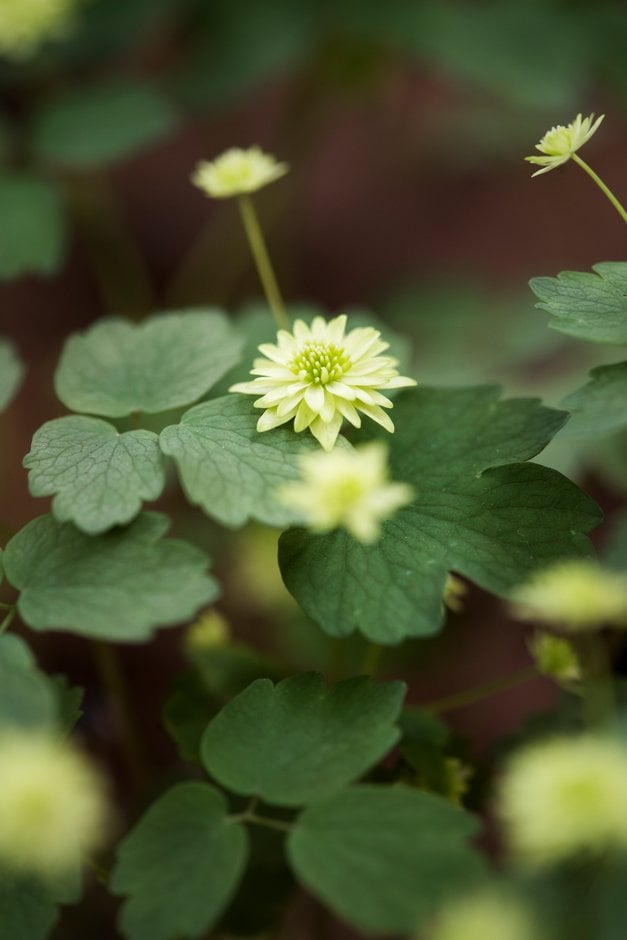
A tuberous, clump-forming perennial to about 10cm high, slowly spreading to 30cm across. Pale yellowish-green, double flowers are produced above the delicate, ferny foliage in spring and early summer
Size
Ultimate height
0.1–0.5 metresTime to ultimate height
2–5 yearsUltimate spread
0.1–0.5 metresGrowing conditions
Moisture
Moist but well–drainedpH
Acid, NeutralColour & scent
| Stem | Flower | Foliage | Fruit | |
| Spring | Green | Green | ||
|---|---|---|---|---|
| Summer | Green | Green | ||
| Autumn | ||||
| Winter |
Position
- Partial shade
Aspect
North–facing or East–facing
Exposure
Sheltered Hardiness
H6Botanical details
- Family
- Ranunculaceae
- Native to GB / Ireland
- No
- Foliage
- Deciduous
- Habit
- Bushy
- Genus
Anemonella are small, clump-forming tuberous perennials with fern-like, divided leaves and small clusters of cup-shaped flowers in spring and early summer
- Name status
Accepted
How to grow
Cultivation
Grow in moist, moderately fertile, humus-rich soil in part shade. Tubers may rot in very wet soils
Propagation
Divide young plants in early spring
Suggested planting locations and garden types
- Cottage and informal garden
- Rock garden
- Underplanting of roses and shrubs
- Flower borders and beds
Pruning
No pruning required
Pests
May be susceptible to damage from slugs
Diseases
Generally disease-free
Get involved
The Royal Horticultural Society is the UK’s leading gardening charity. We aim to enrich everyone’s life through plants, and make the UK a greener and more beautiful place.