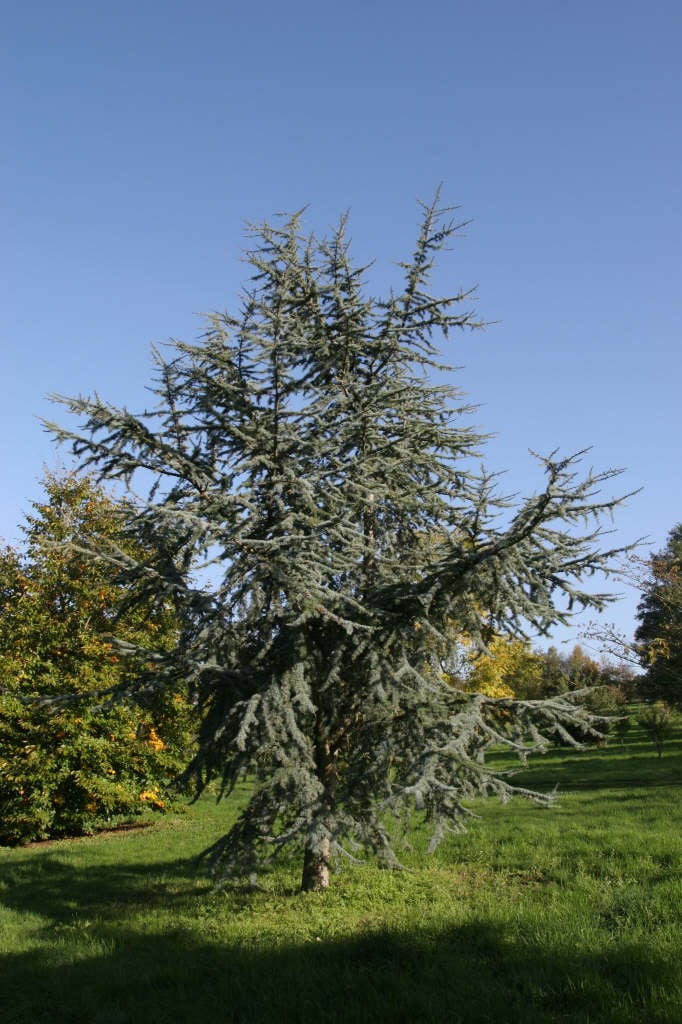
Cedrus atlantica Glauca Group

RHS Plant Profile
blue Atlas cedar
blue Atlas cedar RHS

Other common names

Atlas cedar

Synonyms

Cedrus libani subsp. atlantica Glauca Group
Cedrus atlantica f. glauca
Cedrus atlantica var. glauca

Conifers Trees

Glauca Group are large evergreen conifers, at first conical, later developing a broad crown, with spreading branches bearing silvery blue-green needles to 2.5cm, long, and ovoid cones to 9cm. Variable, and good blue-leaved forms should be sought

Position

Full sun

Soil Types

Chalk, Clay, Loam, Sand

Max Height

Higher than 12 metres

Max Spread

wider than 8 metres

Size

Time to Maturity
20–50 years
Max Spread
wider than 8 metres
Max Height
Higher than 12 metres

Growing Conditions

Chalk Clay Loam Sand
Moisture
Well–drained
pH
Acid or Alkaline or Neutral

Position

Full sun
Aspect
West–facing or South–facing or East–facing
Exposure
Exposed or Sheltered
Hardiness
H6

Colour & Scent

Season Stem Flower Foliage Fruit
Spring
Summer
Autumn
Winter

Botanical Details

Family
Pinaceae
Native to GB/Ireland
No
Foliage
Evergreen
Habit
Spreading branched
Genus
Cedrus are large evergreen trees with needle-like leaves arranged spirally on young shoots, and in whorls on short spur-like side-shoots; ovoid cones break up to release the seeds while still attached to the tree
Name Status
Accepted

How to Grow

Cultivation

Good specimen tree but needs space to reach full potential. Grow in any well-drained soil

Propagation

Propagate by seed or semi-hardwood cuttings

Suggested planting locations and garden types

  • Architectural
  • Low Maintenance

Pruning

No pruning required

Pests

May be susceptible to conifer aphid

Diseases

May be susceptible to honey fungus