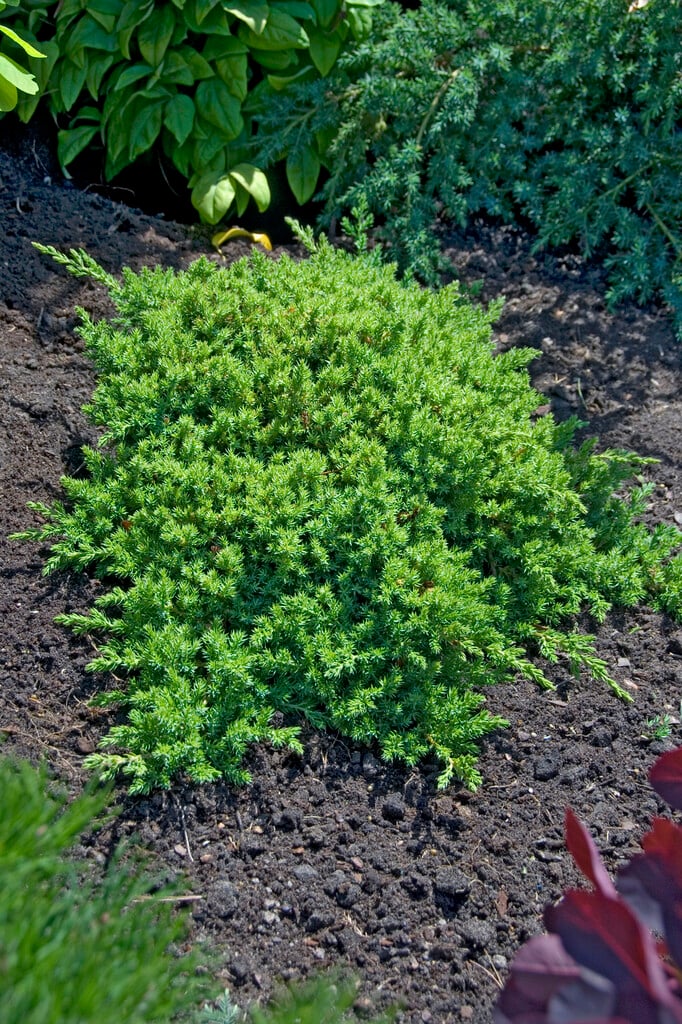
Juniperus communis var. saxatilis

RHS Plant Profile
dwarf juniper
dwarf juniper visionspictures.com

Synonyms

Juniperus horizontalis 'Nana'
Juniperus sibirica
Juniperus horizontalis var. saxatilis misapplied
Juniperus nana
Juniperus communis var. alpina
Juniperus communis var. montana Aiton
Juniperus communis subsp. nana
Juniperus saxatilis
Juniperus alpina

Conifers Shrubs

Robust, slow-growing, prostrate, spreading conifer forming a mat of densely-packed stems bearing upturned or upcurved small, dark green, needle-like leaves up to 1.5cm long

Position

Full sun, Partial shade

Soil Types

Chalk, Loam, Sand

Max Height

0.1-0.5 metres

Max Spread

0.5-1 metres

Size

Time to Maturity
10–20 years
Max Spread
0.5-1 metres
Max Height
0.1-0.5 metres

Growing Conditions

Chalk Loam Sand
Moisture
Well–drained
pH
Acid or Alkaline or Neutral

Position

Full sun Partial shade
Aspect
East–facing or South–facing or West–facing
Exposure
Exposed or Sheltered
Hardiness
H7
Drought Resistance
Yes

Colour & Scent

Season Stem Flower Foliage Fruit
Spring
Summer
Autumn
Winter

Botanical Details

Family
Cupressaceae
Native to GB/Ireland
No
Foliage
Evergreen
Habit
Matforming
Potentially harmful
Skin allergenwear gloves and other protective equipment when handling
Genus
Juniperus can be prostrate or erect, evergreen shrubs or trees with aromatic, scale-like or sharply pointed awl-shaped leaves, and small globose fruits
Name Status
Correct

How to Grow

Cultivation

Grow in any well-drained soil including dry, chalky or sandy soils in full sun or light dappled shade. Good ground hugging conifer, ideal for exposed coastal areas. See conifer cultivation for further advice

Propagation

Propagate by semi-hardwood cuttings

Suggested planting locations and garden types

  • Rock garden
  • Coastal
  • Cottage and informal garden
  • Low Maintenance
  • Banks and slopes
  • Ground cover

Pruning

No pruning required

Pests

May be susceptible to aphids, juniper scale and caterpillars

Diseases

May be susceptible to phytophthora, canker and honey fungus. See also Conifers: brown patches