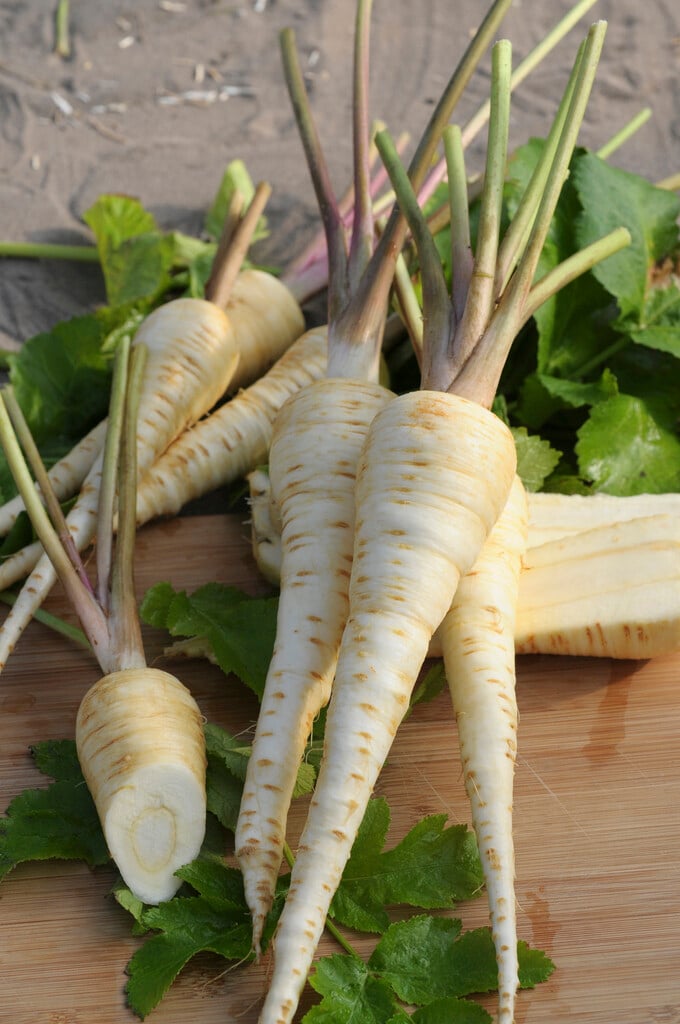
Pastinaca sativa 'Gladiator'

RHS Plant Profile
parsnip 'Gladiator'
parsnip 'Gladiator' visionspictures.com
Award of Garden MeritPlants for pollinators
Annual Biennial

An established leading variety, this is a top-quality parsnip, that is often grown by the exhibitors as it’s so reliable and trouble-free. The long, slender roots are a soft pale cream with consistently smooth, blemish-free skin and a rich, sweet and earthy flavour. It grows well in most soils, is resistant to canker and is generally very healthy. Plants are quick to mature and can produce a crop very early in the season. Sow: Mid-March to mid-May, Harvest: September to February

Position

Full sun, Partial shade

Soil Types

Chalk, Clay, Loam, Sand

Max Height

0.1-0.5 metres

Max Spread

0.1-0.5 metres

Size

Time to Maturity
1 year
Max Spread
0.1-0.5 metres
Max Height
0.1-0.5 metres

Growing Conditions

Chalk Clay Loam Sand
Moisture
Moist but well–drained
pH
Acid or Neutral

Position

Full sun Partial shade
Aspect
East–facing or South–facing or West–facing
Exposure
Sheltered
Hardiness
H5

Colour & Scent

Season Stem Flower Foliage Fruit
Spring
Summer
Autumn
Winter

Botanical Details

Family
Apiaceae
Native to GB/Ireland
No
Foliage
Deciduous
Habit
Columnar upright
Potentially harmful
Harmful to skin with sunlight. Wear gloves and other protective equipment when handling Pets (dogs): Harmful to skin with sunlight - see the HTA guide to potentially harmful plants for further information and useful contact numbers
Genus
A small genus of flowering, biennial plants from the carrot family. The cultivated species of parsnip is well-known for its edible, sweet, cream-yellow taproot. Flowers are produced in umbels, carried at the top of upright stems in second year
Name Status
Accepted

How to Grow

Cultivation

Grow on an open, sunny site with deep, light soil. Keep the soil evenly moist to prevent roots splitting. Add well-rotted manure the previous autumn, especially if growing on a clay or chalk soil. Chalk and clay aren’t ideal for growing parsnips so you could also try deep containers. The ideal soil pH is 6.5-7 so adjust pH where necessary. See parsnip cultivation for more information.

Propagation

Propagate by seed. See sowing vegetable seeds

Suggested planting locations and garden types

  • Cottage and informal garden
  • Wildlife gardens

Pruning

No pruning required

Pests

May be susceptible to carrot fly.

Diseases

Shows good resistance to parsnip canker