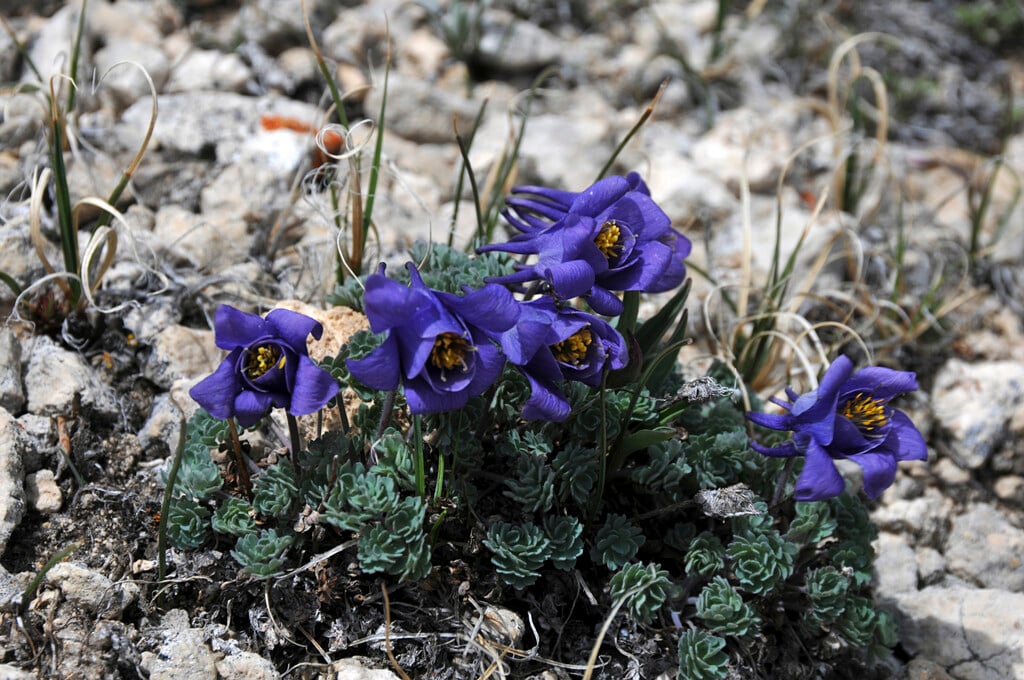
Aquilegia jonesii

<em>Aquilegia</em> <em>jonesii</em> visionspictures.com
Plants for pollinators
Alpine Rockery Herbaceous Perennial

A dwarf alpine, around 10-15cm high, forming a low mound of small, densely packed, lobed and slightly hairy blue-green leaves. Upturned violet-coloured flowers with short spurs, which appear large in comparison to the small leaves, are produced in early summer

Position

Full sun

Soil Types

Chalk, Loam, Sand

Max Height

0.1-0.5 metres

Max Spread

0.1-0.5 metres

Size

Time to Maturity
2–5 years
Max Spread
0.1-0.5 metres
Max Height
0.1-0.5 metres

Growing Conditions

Chalk Loam Sand
Moisture
Well–drained
pH
Acid or Alkaline or Neutral

Position

Full sun
Aspect
South–facing or West–facing
Exposure
Exposed or Sheltered
Hardiness
H5

Colour & Scent

Season Stem Flower Foliage Fruit
Spring
Summer
Autumn
Winter

Botanical Details

Family
Ranunculaceae
Native to GB/Ireland
No
Foliage
Deciduous
Habit
Clump forming
Genus
Aquilegia are clump-forming herbaceous perennials with long-stalked, ternately divided basal leaves and erect, leafy stems bearing bell-shaped flowers with spreading, coloured sepals and petals with spurs, on branched stems
Name Status
Correct

How to Grow

Cultivation

Grow in humus-rich, gritty soil with excellent drainage; not suitable for clay soils. Thrives in areas with cooler conditions in summer. Ideal for containers, scree beds or growing in an alpine house. This species can be shortlived for a perennial. See aquilegia cultivation for more detailed advice

Propagation

Propagate by seed sown in situ, plants cannot be transplanted

Suggested planting locations and garden types

  • Gravel garden
  • Patio and container plants
  • Rock garden
  • City and courtyard gardens
  • Cottage and informal garden
  • Wildlife gardens
  • Wildflower meadow
  • Flower borders and beds

Pruning

No pruning required

Pests

Generally pest-free

Diseases

Generally disease-free