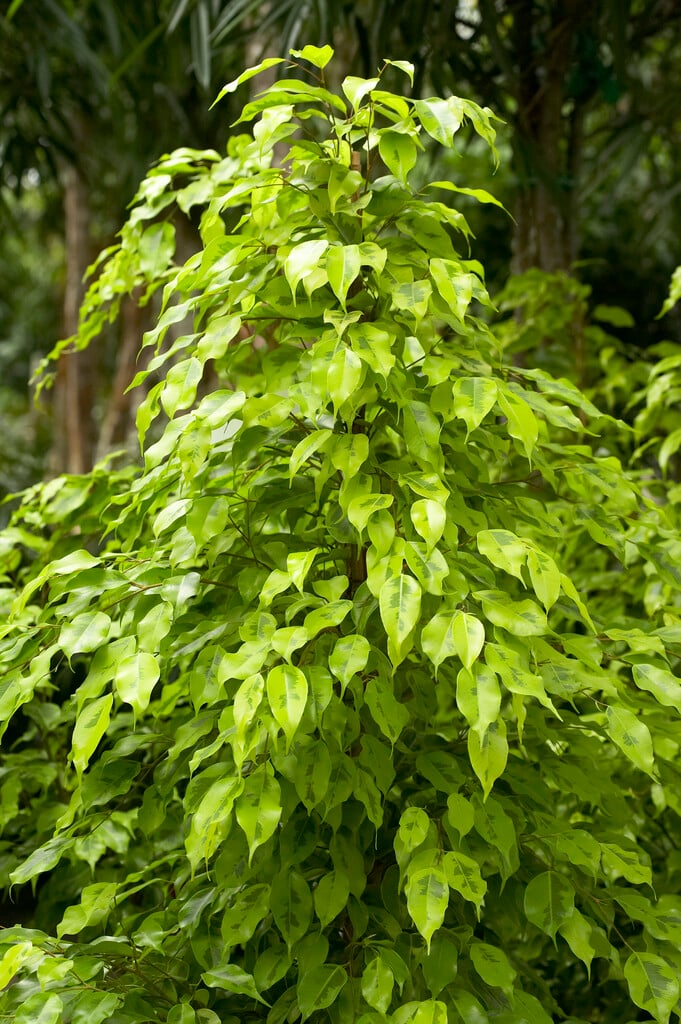
Ficus benjamina 'Reginald'PBR (v)

RHS Plant Profile
weeping fig 'Reginald'
weeping fig 'Reginald' visionspictures.com
Houseplants Trees

An evergreen, weeping fig tree to 4m tall (but usually less), with yellow-green leaves that have irregular dark green markings around the midrib. The brightest colour is on young foliage when positioned in good light

Position

Full sun, Partial shade

Soil Types

Loam

Max Height

1.5-2.5 metres

Max Spread

0.5-1 metres

Size

Time to Maturity
5–10 years
Max Spread
0.5-1 metres
Max Height
1.5-2.5 metres

Growing Conditions

Loam
Moisture
Moist but well–drained
pH
Acid or Alkaline or Neutral

Position

Full sun Partial shade
Aspect
South–facing or West–facing
Exposure
Sheltered
Hardiness
H1C

Colour & Scent

Season Stem Flower Foliage Fruit
Spring
Summer
Autumn
Winter

Botanical Details

Family
Moraceae
Native to GB/Ireland
No
Foliage
Evergreen
Habit
Bushy
Potentially harmful
Humans/Pets (dogs): Skin allergenharmful if eaten. For further information and contact numbers regarding pets, see the HTA guide to potentially harmful plants
Genus
Ficus can be evergreen or deciduous trees, shrubs or climbers, with often leathery, simple, entire or lobed leaves and tiny flowers borne within a hollow receptacle which enlarges to form the fruit
Name Status
Accepted

How to Grow

Cultivation

Grow in peat-free, loam-based compost in bright, indirect light. Water moderately during the growing season and apply a high-nitrogen fertiliser monthly; water sparingly in winter. See ornamental fig cultivation

Propagation

Propagate by semi-ripe cuttings

Suggested planting locations and garden types

  • Houseplants
  • Low Maintenance
  • Conservatory and greenhouse

Pruning

No pruning required, but overly long shoots may be shortened in late winter

Pests

May be susceptible to glasshouse red spider mite, thrips, mealybugs and scale insects under glass

Diseases

May be susceptible to honey fungus