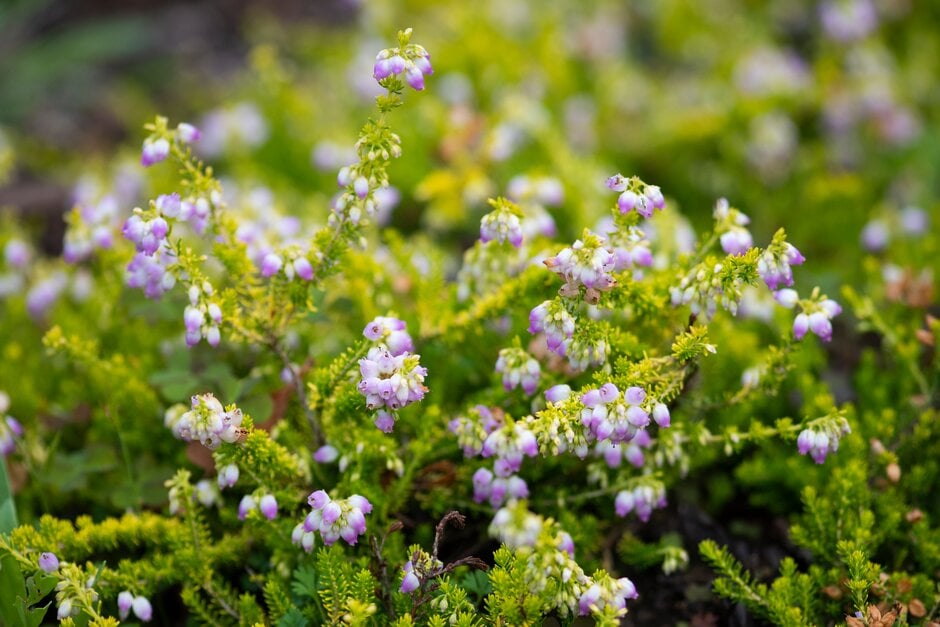
Erica cinerea f. aureifolia 'Goldilocks'

RHS Plant Profile
bell heather 'Goldilocks'
bell heather 'Goldilocks' RHS / Joanna Kossak
Plants for pollinators
Shrubs

A low-growing, spreading, evergreen shrub to 20cm tall with golden to lime-green, needle-like leaves and pale blue-purple flowers with white bases borne from summer into autumn

Position

Full sun

Soil Types

Clay, Loam, Sand

Max Height

0.1-0.5 metres

Max Spread

0.5-1 metres

Size

Time to Maturity
5–10 years
Max Spread
0.5-1 metres
Max Height
0.1-0.5 metres

Growing Conditions

Clay Loam Sand
Moisture
Moist but well–drained or Well–drained
pH
Acid or Neutral

Position

Full sun
Aspect
East–facing or North–facing or South–facing or West–facing
Exposure
Exposed or Sheltered
Hardiness
H7

Colour & Scent

Season Stem Flower Foliage Fruit
Spring
Summer
Autumn
Winter

Botanical Details

Family
Ericaceae
Native to GB/Ireland
No
Foliage
Evergreen
Habit
Matforming
Genus
Erica can be prostrate or erect, evergreen shrubs with fine, needle-like leaves in whorls, and racemes or panicles of small, bell-shaped or tubular flowers
Name Status
Accepted

How to Grow

Cultivation

Gow in a well drained, neutral or acidic soil in full sun. See Hardy heathers for further advice

Propagation

Propagate by semi-hardwood cuttings

Suggested planting locations and garden types

  • Patio and container plants
  • City and courtyard gardens
  • Cottage and informal garden
  • Wildlife gardens
  • Low Maintenance
  • Flower borders and beds
  • Ground cover

Pests

Generally pest-free

Diseases

May be susceptible to fungal diseases, including honey fungus (rarely), and Phytophthora root rot, in wet conditions