Lagenaria siceraria
white-flowered gourd
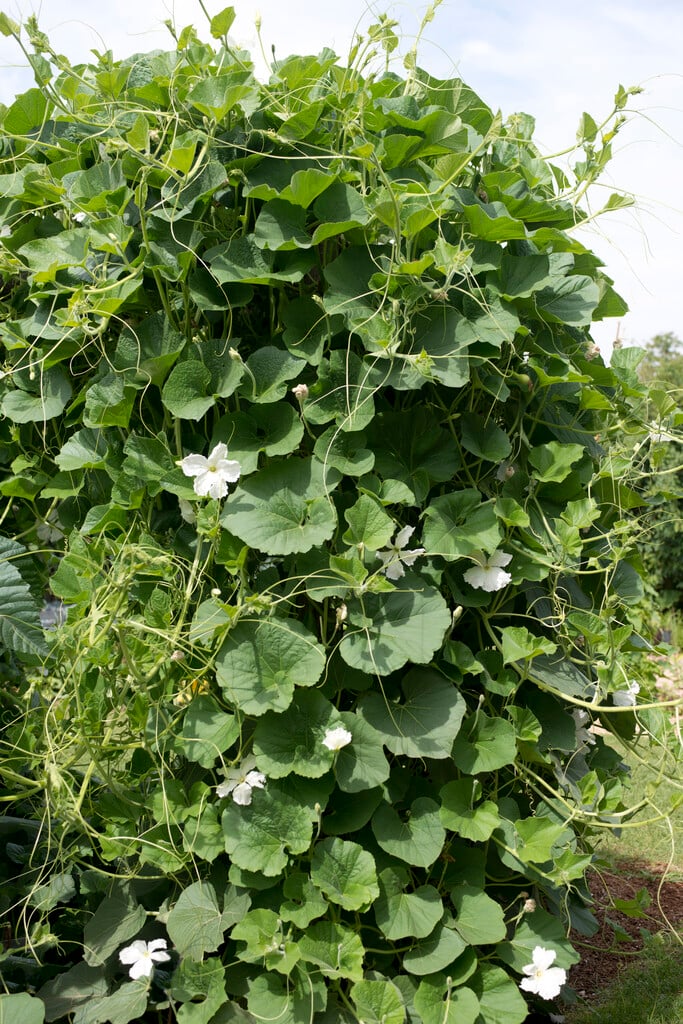
A vigorous, annual climber to around 9m in height with attractive tropical, heart-shaped green foliage. Long, green bottle-shaped gourds appear in summer and autumn and are used for ornamental purposes only. Best when grown up a wall or trellis to avoid the fruits becoming flattened on the ground. The gourds can also be made into attractive bird houses when dried - just drill an access hole and a couple of drainage holes in them
Size
Ultimate height
8–12 metresTime to ultimate height
1 yearUltimate spread
2.5–4 metresGrowing conditions
Moisture
Well–drainedpH
Acid, Alkaline, NeutralColour & scent
| Stem | Flower | Foliage | Fruit | |
| Spring | Green | |||
|---|---|---|---|---|
| Summer | Green White Yellow | Green | Green | |
| Autumn | Green White Yellow | Green | Green | |
| Winter |
Position
- Full sun
Aspect
South–facing or West–facing
Exposure
Sheltered Hardiness
H2Botanical details
- Family
- Cucurbitaceae
- Native to GB / Ireland
- No
- Foliage
- Deciduous
- Habit
- Climbing
- Potentially harmful
- Humans/Pets: TOXIC if eaten, fruit intended for decoration only. For further information and contact numbers regarding pets, see the HTA guide to potentially harmful plants
- Name status
Correct
How to grow
Cultivation
Grow in rich, fertile, well drained soil in full sun. Start indoors from mid-late April, sowing in individual pots with seeds on their side about 1.5cm deep. Harden off before June then transplant outdoors to final growing position. Provide support such as a trellis or fence as the fruit may become flat on one side if left on the ground . See squash cultivation for further advice
Propagation
Propagate by seed. See sowing vegetable seeds or sowing seeds indoors for further advice
Suggested planting locations and garden types
- City and courtyard gardens
- Cottage and informal garden
- Sub-tropical
- Climber and wall shrubs
- Conservatory and greenhouse
- Flower borders and beds
Pruning
Remove dead or damaged leaves and thin crowded vines. To encourage more fruit production, you can prune the main vine which will encourage lateral growth for fruit
Pests
May be susceptible to slugs, snails, aphids and glasshouse whitefly
Diseases
May be susceptible to powdery mildews, downy mildews and cucumber mosaic virus
Get involved
The Royal Horticultural Society is the UK’s leading gardening charity. We aim to enrich everyone’s life through plants, and make the UK a greener and more beautiful place.