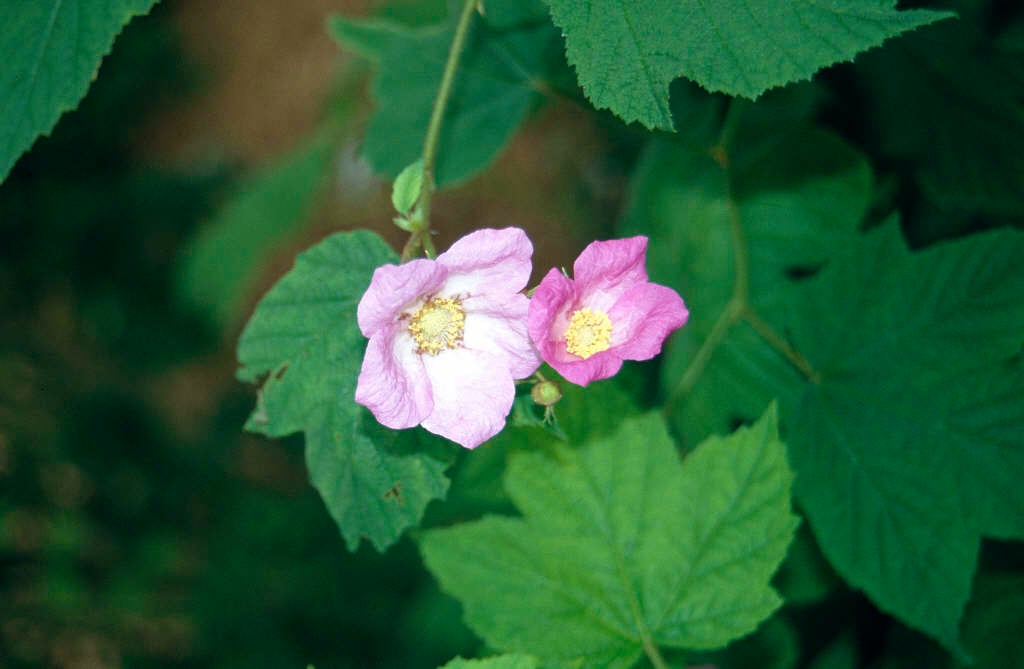
Rubus odoratus
flowering raspberry
A strong-growing deciduous shrub forming a thicket of erect stems with large palmately lobed leaves and from early summer, panicles of purplish-pink flowers with aromatic, glandular sepals, followed by red fruit
Other common names
purple-flowered bramblepurple-flowering raspberry
see moresweet-scented bramble
thimbleberry

Buy this plant
Size
Ultimate height
1.5–2.5 metresTime to ultimate height
5–10 yearsUltimate spread
1.5–2.5 metresGrowing conditions
Moisture
Moist but well–drained, Well–drainedpH
Acid, Alkaline, NeutralColour & scent
| Stem | Flower | Foliage | Fruit | |
| Spring | Green | |||
|---|---|---|---|---|
| Summer | Pink Purple | Green | ||
| Autumn | Pink Purple | Green | Red | |
| Winter |
Position
- Full sun
- Partial shade
Aspect
East–facing or South–facing or North–facing or West–facing
Exposure
Exposed or Sheltered Hardiness
H6Botanical details
- Family
- Rosaceae
- Native to GB / Ireland
- No
- Foliage
- Deciduous
- Habit
- Bushy
- Genus
Rubus can be deciduous or evergreen shrubs, often scrambling with bristly or prickly stems bearing simple, lobed, palmate or pinnate leaves and 5-petalled flowers followed by juicy, sometimes edible fruits
- Name status
Correct
- Plant range
- EN America
How to grow
Cultivation
A vigorous, spineless, thicket forming, deciduous shrub producing tasteless red berries in autumn. Will grow in full sun or partial shade
Propagation
Propagate by division in autumn
Suggested planting locations and garden types
- Cottage and informal garden
- Hedging and screens
- Banks and slopes
Pruning
Pests
Generally pest-free
Diseases
May be susceptible to grey moulds and honey fungus (rarely)
Get involved
The RHS is the UK’s gardening charity, helping people and plants to grow - nurturing a healthier, happier world, one person and one plant at a time.