Salvia elegans

RHS Plant Profile
pineapple sage
pineapple sage RHS

Other common names

pineapple-scented sage

Synonyms

Salvia rutilans

Conservatory Greenhouse Herbaceous Perennial

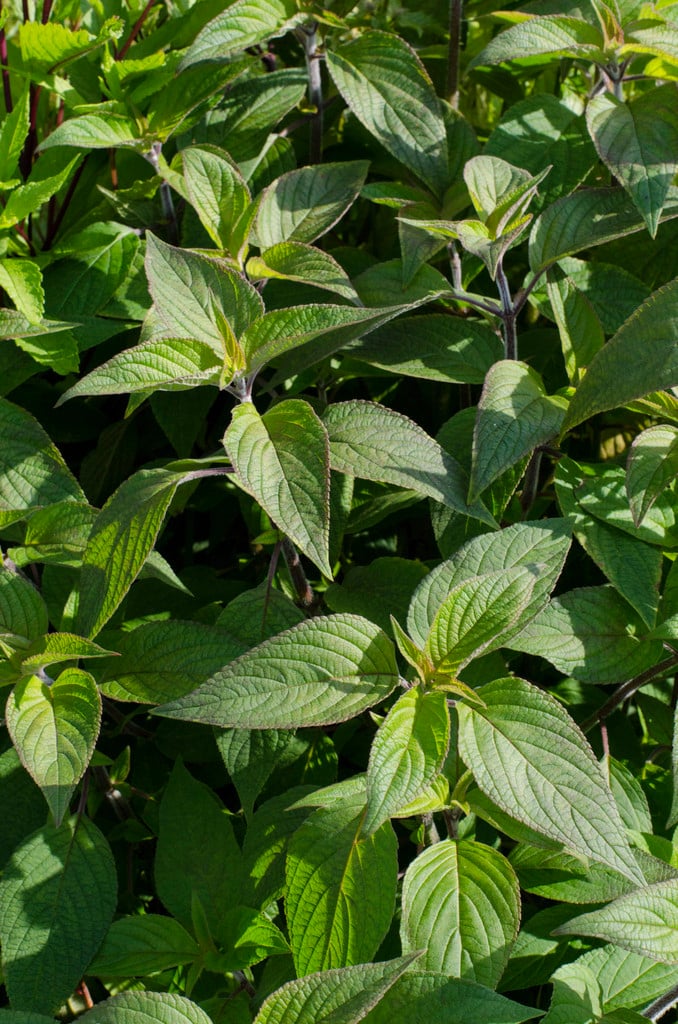
A tender perennial, to 1m tall, with ovate, softly-hairy, aromatic leaves up to 7cm long. The tubular, bright scarlet-red flowers, up to 2.5cm long, are arranged in loose whorls on terminal flower spikes

Position

Full sun

Soil Types

Chalk, Loam, Sand

Max Height

0.5-1 metres

Max Spread

0.1-0.5 metres

Size

Time to Maturity
2–5 years
Max Spread
0.1-0.5 metres
Max Height
0.5-1 metres

Growing Conditions

Chalk Loam Sand
Moisture
Well–drained
pH
Acid or Alkaline or Neutral

Position

Full sun
Aspect
South–facing or West–facing
Exposure
Sheltered
Hardiness
H2

Colour & Scent

Fragrance Foliage
Season Stem Flower Foliage Fruit
Spring
Summer
Autumn
Winter

Botanical Details

Family
Lamiaceae
Native to GB/Ireland
No
Foliage
Deciduous
Habit
Bushy
Genus
Salvia can be annuals, biennials, herbaceous or evergreen perennials, or shrubs. They have paired, simple or pinnately lobed, often aromatic leaves and 2-lipped flowers in whorls, forming simple or branched spikes or racemes
Name Status
Correct
Plant Range
Mexico, Guatemala

How to Grow

Cultivation

Under glass grow in well-drained, peat-free potting compost in full light with shade from hot sun; can be moved outdoors during the summer months. See our video How to care for tender salvia for more advice

Propagation

Propagate from softwood cuttings or semi-ripe cuttings. Not commonly grown from seed

Suggested planting locations and garden types

  • Patio and container plants
  • City and courtyard gardens
  • Coastal
  • Cottage and informal garden
  • Wildlife gardens
  • Wall side borders
  • Bedding
  • Conservatory and greenhouse

Pruning

Cut back spent flower spikes to prolong flowering

Diseases

May be susceptible to honey fungus (rarely), powdery mildews, verticillium wilt and foot and root rots