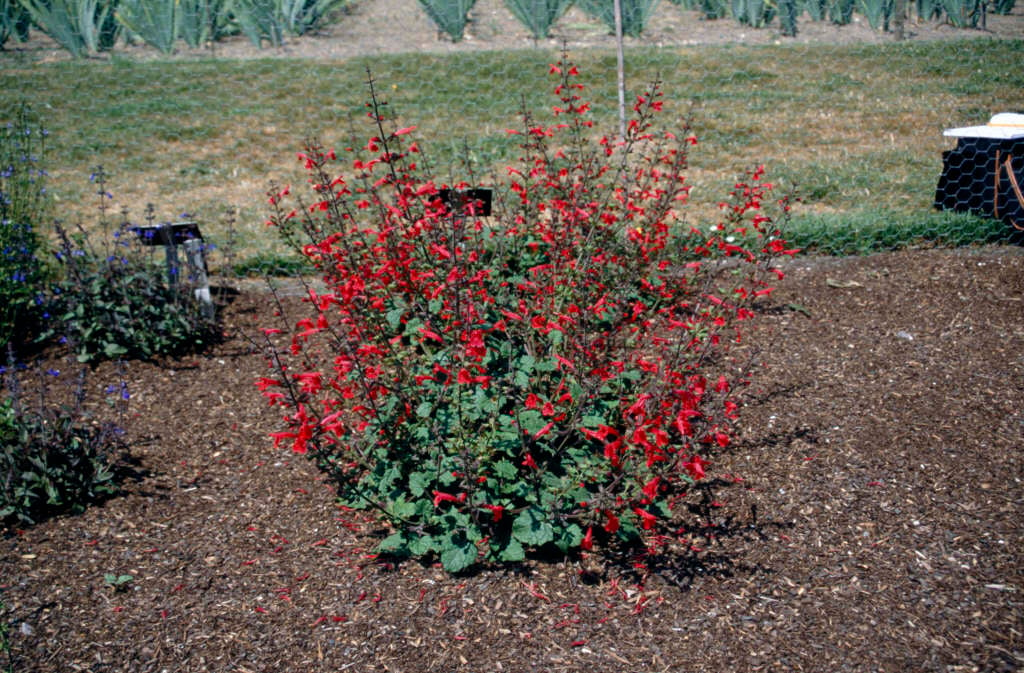
Salvia roemeriana

RHS Plant Profile
dwarf crimson-flowered sage
dwarf crimson-flowered sage RHS 1996

Synonyms

Salvia darcyi misapplied

Plants for pollinators
Herbaceous Perennial

A compact perennial to 60cm, sometimes grown as an annual, with rounded or heart-shaped leaves, and purplish stems each bearing whorls of scarlet, two-lipped flowers 2-3cm in length, from midsummer to late autumn

Position

Full sun

Soil Types

Chalk, Loam, Sand

Max Height

0.5-1 metres

Max Spread

0.1-0.5 metres

Size

Time to Maturity
2–5 years
Max Spread
0.1-0.5 metres
Max Height
0.5-1 metres

Growing Conditions

Chalk Loam Sand
Moisture
Well–drained
pH
Acid or Alkaline or Neutral

Position

Full sun
Aspect
South–facing or East–facing
Exposure
Sheltered
Hardiness
H4

Colour & Scent

Season Stem Flower Foliage Fruit
Spring
Summer
Autumn
Winter

Botanical Details

Family
Lamiaceae
Native to GB/Ireland
No
Foliage
Deciduous
Habit
Clump forming
Genus
Salvia can be annuals, biennials, herbaceous or evergreen perennials, or shrubs. They have paired, simple or pinnately lobed, often aromatic leaves and 2-lipped flowers in whorls, forming simple or branched spikes or racemes
Name Status
Correct
Plant Range
Mexico, USA (Texas)

How to Grow

Cultivation

Grow in light, moderately fertile, humus-rich, well-drained soil. Best in full sun in a sheltered position but can tolerate light partial shade. Or grow in a container under glass

Propagation

Propagate by seed

Suggested planting locations and garden types

  • City and courtyard gardens
  • Coastal
  • Cottage and informal garden
  • Patio and container plants
  • Mediterranean climate plants
  • Wall side borders
  • Flower borders and beds

Pruning

Remove flower spikes as they fade to prolong flowering

Pests

Generally pest-free

Diseases

May be susceptible to honey fungus (rarely), powdery mildews, verticillium wilt and foot and root rots