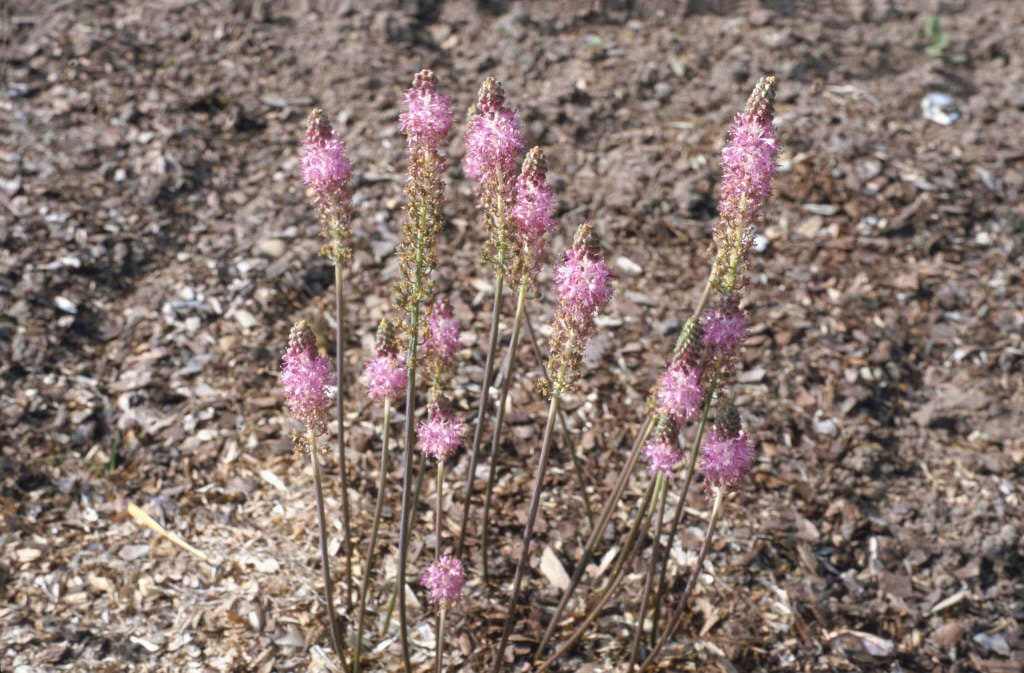
Scilla scilloides

RHS Plant Profile
Chinese squill
Chinese squill RHS 1999

Other common names

Japanese jacinth

Synonyms

Scilla japonica
Scilla chinensis

Bulbs

A slender bulbous perennial to 20cm tall, with rather floppy narrow leaves, and many-flowered racemes of starry, purplish-pink flowers 4mm wide opening with the leaves in late summer and early autumn

Position

Full sun

Soil Types

Chalk, Loam, Sand

Max Height

0.1-0.5 metres

Max Spread

0-0.1 metre

Size

Time to Maturity
2–5 years
Max Spread
0-0.1 metre
Max Height
0.1-0.5 metres

Growing Conditions

Chalk Loam Sand
Moisture
Well–drained
pH
Acid or Alkaline or Neutral

Position

Full sun
Aspect
South–facing or West–facing
Exposure
Exposed or Sheltered
Hardiness
H6

Colour & Scent

Season Stem Flower Foliage Fruit
Spring
Summer
Autumn
Winter

Botanical Details

Family
Asparagaceae
Native to GB/Ireland
No
Foliage
Deciduous
Habit
Bushy
Potentially harmful
Ornamental bulbs - not to be eaten. Wear gloves and other protective equipment when handling. Pets: Ornamental bulbs - not to be eaten - see the HTA guide to potentially harmful plants for further information and useful contact numbers
Genus
Scilla are perennial bulbs with narrow basal leaves and erect stems bearing racemes of star-shaped, flat or bell-shaped flowers which are often blue
Name Status
Correct
Plant Range
China to temp E Asia

How to Grow

Cultivation

Ideal for naturalising in grass or a gravel garden in full sun and a well-drained soil. Plant bulbs two to three times their depth. See bulb cultivation and bulbs: naturalising

Propagation

Propagate by seed, sown in pots in a cold frame when ripe, keep shaded and do not allow to dry out. Alternatively remove offsets in summer. See bulb propagation

Suggested planting locations and garden types

  • Gravel garden
  • Rock garden
  • City and courtyard gardens
  • Coastal
  • Cottage and informal garden
  • Patio and container plants
  • Flower borders and beds
  • Garden edging

Pruning

No pruning required

Pests

Generally pest-free

Diseases

May be susceptible to anther smuts and virus diseases