Iris 'Medway Valley' (MTB)
iris 'Medway Valley'
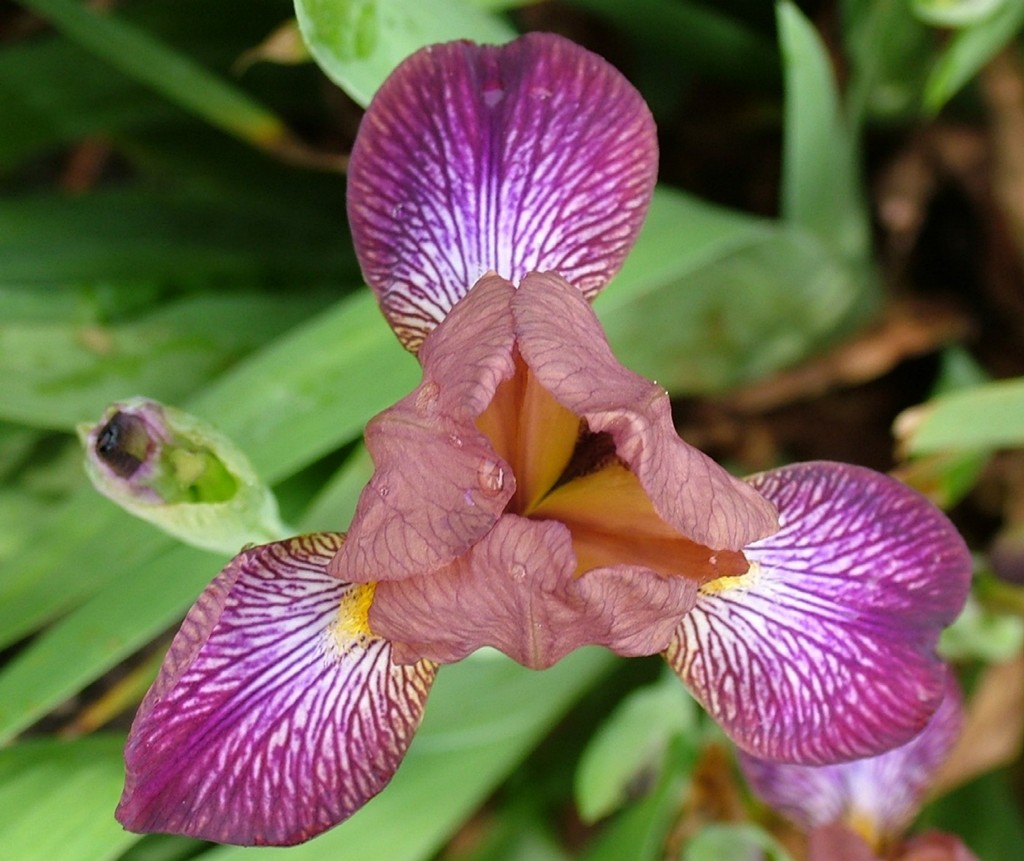
A compact plant with erect, glaucous foliage and straight flower stems to 55cm with usually 4 small, shapely flowers. Standards are cupped, lightly wrinkled, yellow-flushed coffee. Falls are held horizontally, heavily maroon and red-purple veined on a cream background. Beards yellow-orange, conspicuous. Early-mid season. Distinctive colouring and very floriferous, may rebloom even in late autumn
Size
Ultimate height
0.5–1 metresTime to ultimate height
2–5 yearsUltimate spread
0.1–0.5 metresGrowing conditions
Moisture
Well–drainedpH
Acid, NeutralColour & scent
| Stem | Flower | Foliage | Fruit | |
| Spring | Brown Red Orange White | Green Grey Silver | ||
|---|---|---|---|---|
| Summer | Green Grey Silver | |||
| Autumn | ||||
| Winter |
Position
- Full sun
Aspect
South–facing or West–facing or East–facing
Exposure
Exposed or Sheltered Hardiness
H7Botanical details
- Family
- Iridaceae
- Native to GB / Ireland
- No
- Foliage
- Deciduous
- Habit
- Columnar upright
- Potentially harmful
- Harmful if eaten. Wear gloves and other protective equipment when handling. Pets: Harmful if eaten. For further information and contact numbers regarding pets, see the HTA guide to potentially harmful plants
- Genus
Iris may be rhizomatous or bulbous perennials, with narrow leaves and erect stems bearing flowers with 3 large spreading or pendent fall petals, alternating with 3 erect, often smaller, standard petals, in late winter, spring or early summer
- Name status
Accepted
- Horticultural Group
- Miniature Tall Bearded irises are rhizomatous perennials to 65cm tall, with flowers to just 8cm across, bearded on the falls, in spring or early summer
How to grow
Cultivation
Grow in well-drained, fertile, neutral to slightly acid loam in full sun. See bearded iris cultivation
Propagation
Propagate by division of rhizomes from midsummer to early autumn, see dividing irises
Suggested planting locations and garden types
- City and courtyard gardens
- Coastal
- Cottage and informal garden
- Flower borders and beds
- Wall side borders
Pruning
Remove any dying foliage in autumn, old flower stems can be cut down after flowering
Pests
Diseases
May be susceptible to aphid-borne viruses, bacterial soft rot and grey moulds; see Iris diseases
Get involved
The Royal Horticultural Society is the UK’s leading gardening charity. We aim to enrich everyone’s life through plants, and make the UK a greener and more beautiful place.