Not the plant you're looking for? Search over 300,000 plants
Herbaceous Perennial

Size
Ultimate height
0.1–0.5 metresTime to ultimate height
1–2 yearsUltimate spread
0.1–0.5 metresGrowing conditions
Loam
Sand
Moisture
Well–drainedpH
Acid, Alkaline, NeutralColour & scent
| Stem | Flower | Foliage | Fruit | |
| Spring | Green | |||
|---|---|---|---|---|
| Summer | Blue | Green | ||
| Autumn | Green | |||
| Winter | Green |
Position
- Full sun
Aspect
South–facing or West–facing
Exposure
Sheltered Hardiness
H3Botanical details
- Family
- Primulaceae
- Native to GB / Ireland
- No
- Foliage
- Evergreen
- Habit
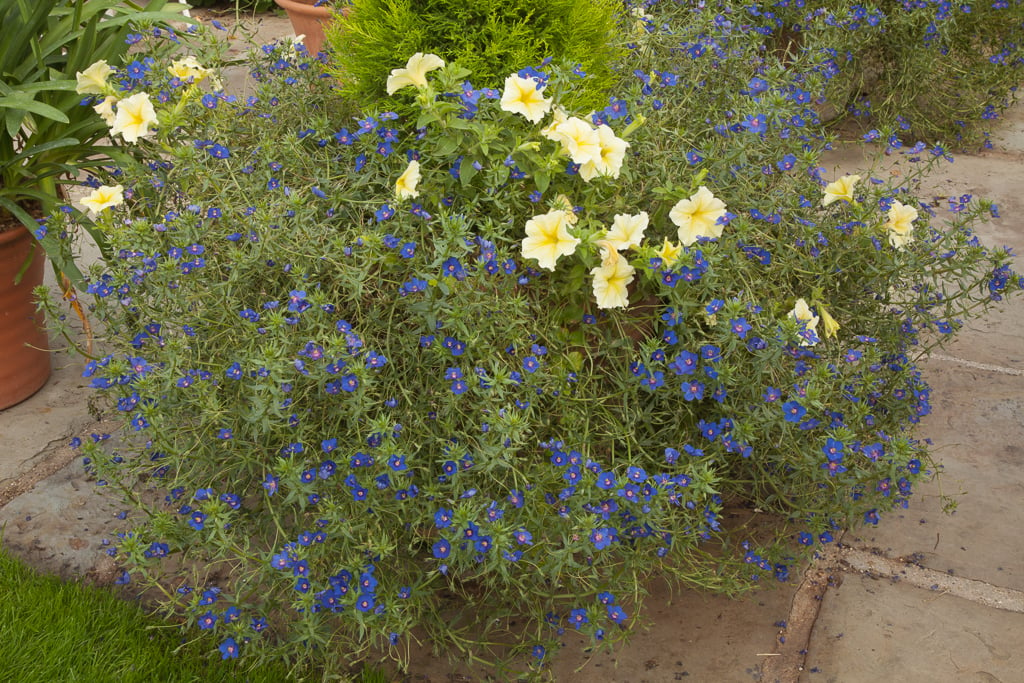
- Bushy, Trailing
- Genus
Anagallis can be annuals or evergreen perennials of creeping habit, with small leaves and solitary, 5-petalled, saucer-shaped flowers
- Name status
Accepted
How to grow
Cultivation
Under glass grow in gritty, peat-free, loam-based potting compost in full light; outdoors grow in moderately fertile, well-drained soil in full sun and overwinter young plants in a cool greenhouse - plant out after the risk of frost has passed
Propagation
Propagate by softwood tip cuttings in spring or early summer; may be short-lived so propagate regularly
Suggested planting locations and garden types
- City and courtyard gardens
- Cottage and informal garden
- hanging basket
- Patio and container plants
- Rock garden
- Coastal
- Mediterranean climate plants
- Conservatory and greenhouse
- Flower borders and beds
- Garden edging
- Underplanting of roses and shrubs
Pruning
Cut back after flowering
Pests
May be susceptible to aphids
Diseases
Generally disease-free
Get involved
The RHS is the UK’s gardening charity, helping people and plants to grow - nurturing a healthier, happier world, one person and one plant at a time.