 RHS
RHS Bulbs

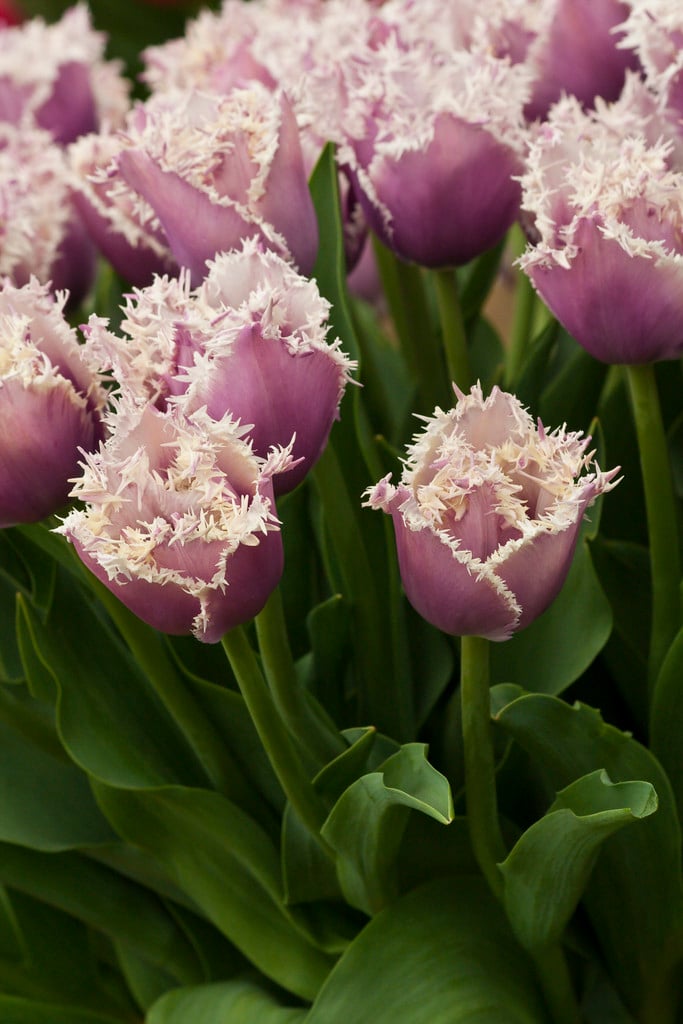
A fringed tulip with grey-green leaves and violet-pink, cup-shaped flowers, with a spiky white fringe, in late spring
Position
Full sun
Soil Types
Chalk, Clay, Loam, Sand
Max Height
0.5-1 metres
Max Spread
0.1-0.5 metres
RHS A fringed tulip with grey-green leaves and violet-pink, cup-shaped flowers, with a spiky white fringe, in late spring
0.5-1 metres
0.1-0.5 metres
| Season | Stem | Flower | Foliage | Fruit |
|---|---|---|---|---|
| Spring | ||||
| Summer | ||||
| Autumn | ||||
| Winter |
Plant 15-20cm deep from mid-autumn to late autumn in beds or containers, in fertile, preferably neutral or alkaline soil that is free-draining but also able to hold moisture when the bulbs are in full growth, in full sun and with shelter from strong winds; lift bulbs in summer after the leaves have died down, and ripen them in a well-ventilated greenhouse; for more advice, see tulip cultivation
Propagate by division of offsets, re-planting the larger bulbs and growing on the smaller bulbs in a nursery bed, or by bulb propagation
No pruning required
May be susceptible to slugs, aphids and stem and bulb eelworm; Squirrels may eat the bulbs
May be susceptible to Tulip fire disease, tulip grey bulb rot, and virus diseases; bulbs in storage may be susceptible to blue mould