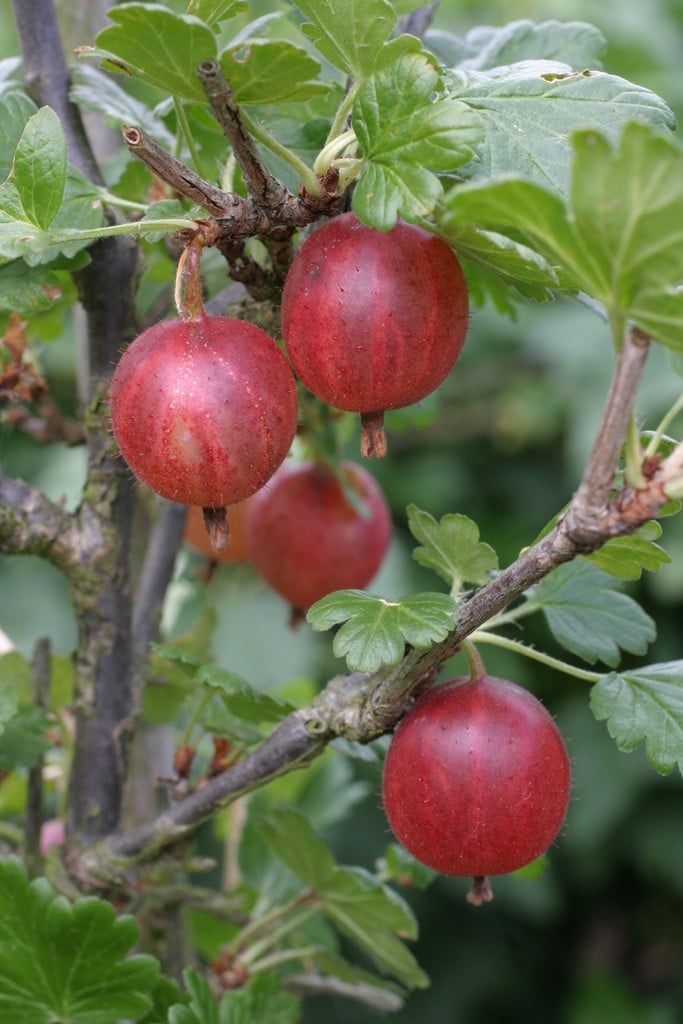
Ribes uva-crispa 'Pax' (D)

RHS Plant Profile
gooseberry 'Pax'
gooseberry 'Pax' RHS

Synonyms

Ribes uva-crispa var. reclinatum 'Pax'

Plants for pollinators
Shrubs Fruit Edible

'Pax' is a red, mid-season, dessert gooseberry; a vigorous, somewhat spreading bush with few thorns, which crops well and has quite a good flavour

Position

Full sun, Partial shade

Soil Types

Chalk, Loam, Sand

Max Height

1-1.5 metres

Max Spread

1-1.5 metres

Size

Time to Maturity
2–5 years
Max Spread
1-1.5 metres
Max Height
1-1.5 metres

Growing Conditions

Chalk Loam Sand
Moisture
Moist but well–drained
pH
Acid or Alkaline or Neutral

Position

Full sun Partial shade
Aspect
South–facing or West–facing
Exposure
Sheltered
Hardiness
H6

Colour & Scent

Season Stem Flower Foliage Fruit
Spring
Summer
Autumn
Winter

Botanical Details

Family
Grossulariaceae
Native to GB/Ireland
No
Foliage
Deciduous
Habit
Bushy
Genus
Ribes can be deciduous or evergreen shrubs, sometimes spiny, with simple, usually palmately lobed leaves and small tubular or bell-shaped, solitary or racemose flowers borne in spring or summer, followed by juicy, sometimes edible berries
Name Status
Accepted
Horticultural Group
Dessert blackcurrants are sweet and juicy and are best eaten picked fresh and raw

How to Grow

Cultivation

Grow in a moist but well-drained soil that has been improved with organic matter. Mildly alkaline (chalky) soils are tolerated. Water well as fruits swell and keep the base of the plants weed and grass-free. Further gooseberry cultivation advice

Propagation

Propagate by hardwood cuttings in winter

Suggested planting locations and garden types

  • Cottage and informal garden
  • Patio and container plants

Pruning

Prune gooseberries in winter and summer as goblet-shaped bushes, standards, fans or a cordon

Pests

May be susceptible to gooseberry sawfly, capsid bug, birds, squirrels and aphids

Diseases

May be susceptible to American gooseberry mildew and gooseberry leaf spot, though this cultivar has some resistance to both