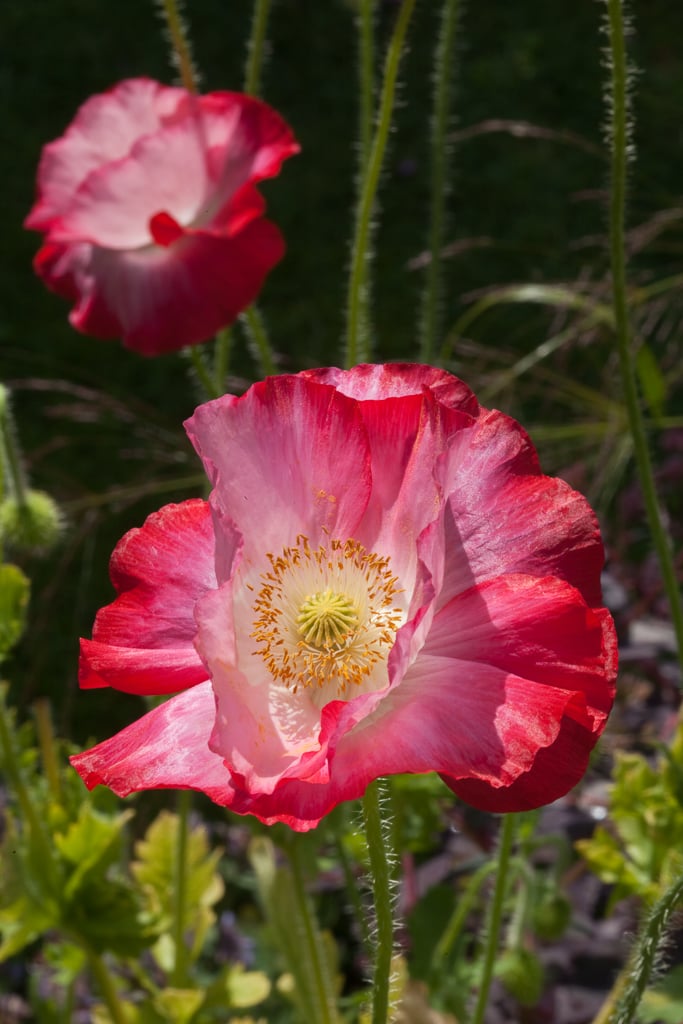
Papaver rhoeas 'Shirley Double Mixture'

RHS Plant Profile
poppy 'Shirley Double Mixture'
poppy 'Shirley Double Mixture' John Fielding
Plants for pollinators
Annual Biennial

A mix of annual poppies, to 60cm high, with divided, light green leaves with fine silvery hairs. In early summer, double flowers with ruffled petals are produced on slender stems, in shades of white, pink, orange and red

Position

Full sun

Soil Types

Chalk, Loam, Sand

Max Height

0.5-1 metres

Max Spread

0.1-0.5 metres

Size

Time to Maturity
1 year
Max Spread
0.1-0.5 metres
Max Height
0.5-1 metres

Growing Conditions

Chalk Loam Sand
Moisture
Well–drained
pH
Acid or Alkaline or Neutral

Position

Full sun
Aspect
South–facing or West–facing
Exposure
Exposed or Sheltered
Hardiness
H7

Colour & Scent

Season Stem Flower Foliage Fruit
Spring
Summer
Autumn
Winter

Botanical Details

Family
Papaveraceae
Native to GB/Ireland
No
Foliage
Deciduous
Habit
Bushy
Genus
Papaver can be annuals, biennials or herbaceous perennials with simple or pinnately divided leaves and short-lived, saucer-shaped, 4-petalled flowers which may be solitary or in racemes
Name Status
Unresolved

How to Grow

Cultivation

Grow in a sunny spot in well drained soil, with plenty of organic matter dug in before sowing

Propagation

Propagate by seed, sown successionally and in situ from early spring. Thin seedlings as required, but they do not like to be transplanted. Leave some plants to seed after flowering to provide replacements for the next year

Suggested planting locations and garden types

  • City and courtyard gardens
  • Coastal
  • Cottage and informal garden
  • Patio and container plants
  • Wildlife gardens
  • Cut flowers
  • Flower borders and beds

Pruning

Deadhead to prolong flowering

Pests

May be susceptible to aphids

Diseases

May be susceptible to downy mildews, powdery mildews, fungal wilts and verticillium wilt