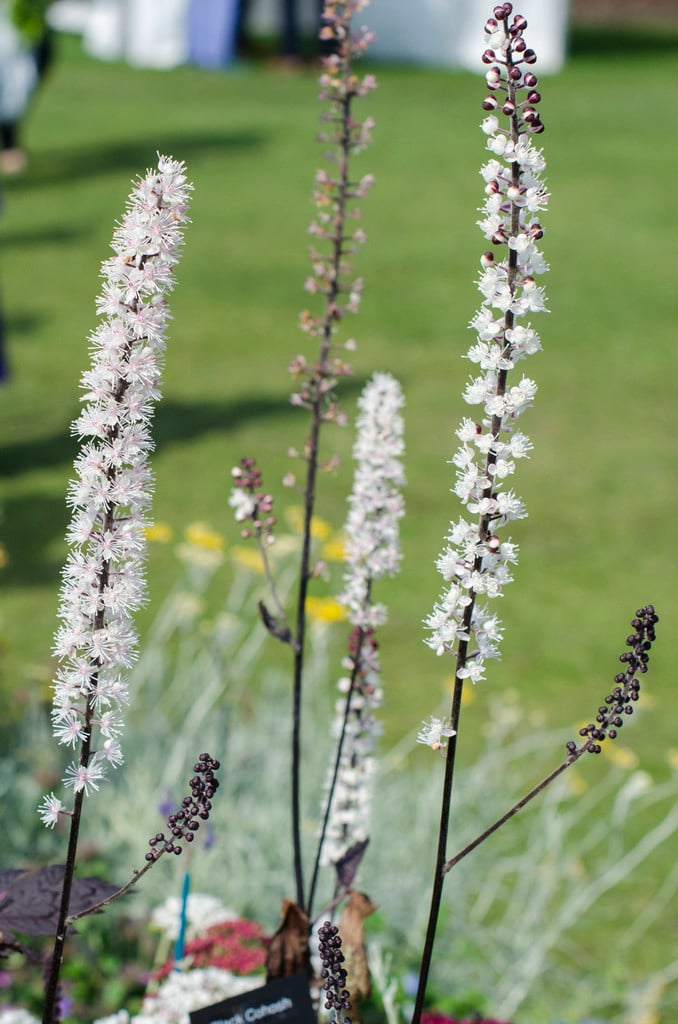
Actaea simplex (Atropurpurea Group) 'Black Negligee'

RHS Plant Profile
baneberry 'Black Negligee'
baneberry 'Black Negligee' RHS

Synonyms

Cimicifuga simplex 'Black Negligee'

Plants for pollinators
Herbaceous Perennial

A herbaceous perennial, to around 1.2m tall, with finely-divided, near-black leaves and scented, creamy-white bottlebrush-like flower spikes in late summer and early autumn

Position

Partial shade

Soil Types

Clay, Loam

Max Height

1-1.5 metres

Max Spread

0.5-1 metres

Size

Time to Maturity
2–5 years
Max Spread
0.5-1 metres
Max Height
1-1.5 metres

Growing Conditions

Clay Loam
Moisture
Moist but well–drained
pH
Acid or Alkaline or Neutral

Position

Partial shade
Aspect
North–facing or West–facing or East–facing
Exposure
Sheltered
Hardiness
H7

Colour & Scent

Fragrance Flower
Season Stem Flower Foliage Fruit
Spring
Summer
Autumn
Winter

Botanical Details

Family
Ranunculaceae
Native to GB/Ireland
No
Foliage
Deciduous
Habit
Bushy
Potentially harmful
Harmful if eaten. Wear gloves and other protective equipment when handling
Genus
Actaea are rhizomatous herbaceous perennials with compound leaves and small creamy-white flowers in short, erect, simple or branched terminal racemes, followed either by poisonous red, black or white berries, or by star-shaped clustered brown follicles
Name Status
Accepted

How to Grow

Cultivation

Grow in cool, moist, moderately fertile soil, enriched with organic matter and mulched. Site in dappled shade. Water thoroughly in dry weather. Flowers are attractive to butterflies

Propagation

Propagate by division in early spring

Suggested planting locations and garden types

  • Wildlife gardens
  • Cottage and informal garden
  • Flower borders and beds

Pruning

Cut back after flowering

Pests

Generally pest-free

Diseases

Generally disease-free