Iris 'Londonderry' (IB)
iris 'Londonderry'
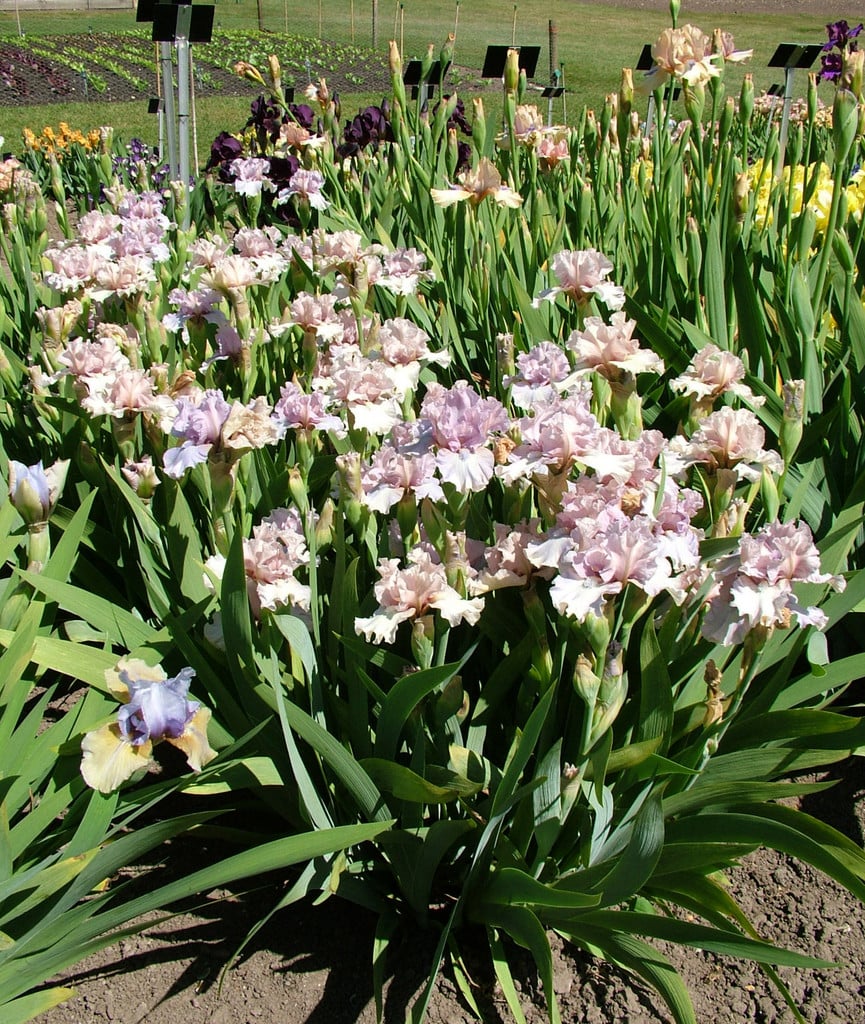
'Londonderry' is a herbaceous perennial to 60 cm high with grey-green leaves and ruffled flowers in early summer of pinkish lilac; the falls with a paler centre, and the blue-white beard tipped with lemon and tangerine in the throat
Size
Ultimate height
0.5–1 metresTime to ultimate height
2–5 yearsUltimate spread
0.1–0.5 metresGrowing conditions
Moisture
Well–drainedpH
Acid, Alkaline, NeutralColour & scent
| Stem | Flower | Foliage | Fruit | |
| Spring | Blue Green | |||
|---|---|---|---|---|
| Summer | Pink Purple | Blue Green | ||
| Autumn | Blue Green | |||
| Winter |
Position
- Full sun
Aspect
South–facing or West–facing
Exposure
ShelteredDrought resistance
Yes Hardiness
H7Botanical details
- Family
- Iridaceae
- Native to GB / Ireland
- No
- Foliage
- Deciduous
- Habit
- Columnar upright
- Potentially harmful
- Harmful if eaten. Wear gloves and other protective equipment when handling. Pets: Harmful if eaten. For further information and contact numbers regarding pets, see the HTA guide to potentially harmful plants
- Genus
Iris may be rhizomatous or bulbous perennials, with narrow leaves and erect stems bearing flowers with 3 large spreading or pendent fall petals, alternating with 3 erect, often smaller, standard petals, in late winter, spring or early summer
- Name status
Unresolved
- Horticultural Group
- Intermediate Bearded irises are deciduous rhizomatous perennials, growing between 40 and 70cm tall, with sword-shaped light glaucous green leaves and erect stems bearing flowers 10-13cm across, bearded on the falls, in late spring and early summer
How to grow
Cultivation
Grow in well-drained neutral to alkaline soil in full sun; it will tolerate acid soil that is reliably well-drained
Propagation
Propagate by division of rhizomes from midsummer to early autumn
Suggested planting locations and garden types
- City and courtyard gardens
- Gravel garden
- Cottage and informal garden
- Cut flowers
- Flower borders and beds
Pruning
Remove any dying foliage in autumn; cut down old flower stems after flowering
Pests
Diseases
May be susceptible to aphid-borne viruses, bacterial soft rot and grey moulds; see Iris diseases
Get involved
The Royal Horticultural Society is the UK’s leading gardening charity. We aim to enrich everyone’s life through plants, and make the UK a greener and more beautiful place.