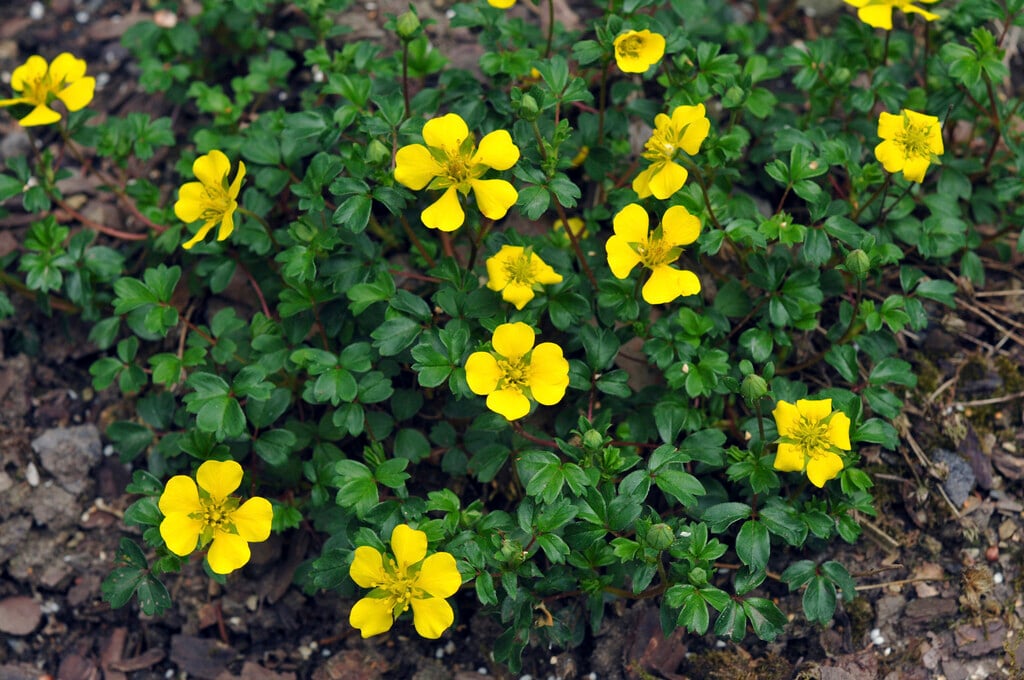
Potentilla eriocarpa
A compact, low-growing, creeping deciduous shrub reaching a height of only around 5cm, with strawberry-like dark green lobed foliage. Open, saucer- shaped bright yellow flowers appear throughout the summer. Ideal for growing through crevices in rock gardens

Buy this plant
Size
Ultimate height
Up to 10cmTime to ultimate height
2–5 yearsUltimate spread
0.1–0.5 metresGrowing conditions
Moisture
Moist but well–drainedpH
Acid, Alkaline, NeutralColour & scent
| Stem | Flower | Foliage | Fruit | |
| Spring | Green | |||
|---|---|---|---|---|
| Summer | Yellow | Green | ||
| Autumn | Green | |||
| Winter |
Position
- Full sun
Aspect
East–facing or North–facing or South–facing or West–facing
Exposure
Exposed or Sheltered Hardiness
H6Botanical details
- Family
- Rosaceae
- Native to GB / Ireland
- No
- Foliage
- Deciduous
- Habit
- Clump forming
- Genus
Potentilla can be herbaceous perennials, deciduous shrubs, or annuals, with palmately or pinnately divided leaves and solitary or clustered, saucer-shaped, 5-petalled flowers appearing over a long period
- Name status
Correct
- Plant range
- China Tibet
How to grow
Cultivation
Grow in well-drained soil in full sun
Propagation
Propagate by seed and semi-hardwood cuttings
Suggested planting locations and garden types
- City and courtyard gardens
- Cottage and informal garden
- Gravel garden
- Rock garden
- Wildlife gardens
- Flower borders and beds
- Garden edging
- Ground cover
Pruning
No pruning required
Pests
Generally pest-free
Diseases
May sometimes be susceptible to honey fungus
Get involved
The Royal Horticultural Society is the UK’s leading gardening charity. We aim to enrich everyone’s life through plants, and make the UK a greener and more beautiful place.