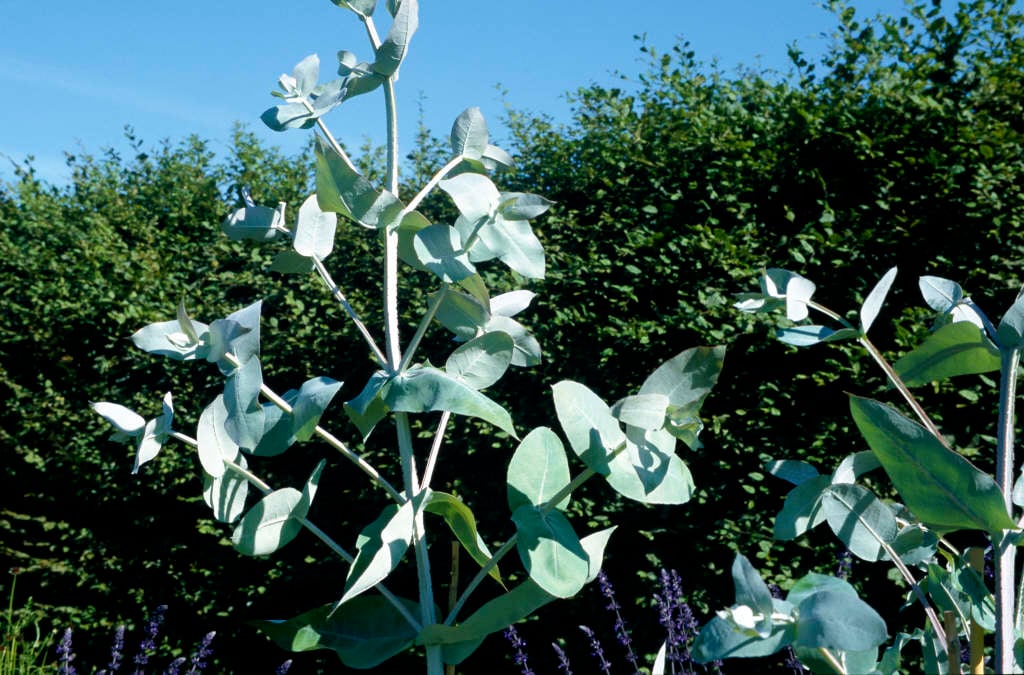
Eucalyptus globulus

RHS Plant Profile
southern blue gum
southern blue gum RHS

Other common names

blue gum, fever gum, fever tree, Tasmanian blue gum

Award of Garden Merit
Conservatory Greenhouse Trees

A fast-growing evergreen tree to 30m or more, with white to cream, yellow or grey bark that sheds in ribbons to reveal light green and brown inner bark. It has highly aromatic foliage, the juvenile leaves ovate and blue-white; adult leaves sickle-shaped. White flowers are borne on mature trees in spring or summer

Position

Full sun

Soil Types

Loam, Sand

Max Height

Higher than 12 metres

Max Spread

4-8 metres

Size

Time to Maturity
5–10 years
Max Spread
4-8 metres
Max Height
Higher than 12 metres

Growing Conditions

Loam Sand
Moisture
Moist but well–drained or Well–drained
pH
Acid or Neutral

Position

Full sun
Aspect
West–facing or South–facing
Exposure
Sheltered
Hardiness
H3

Colour & Scent

Fragrance Foliage
Season Stem Flower Foliage Fruit
Spring
Summer
Autumn
Winter

Botanical Details

Family
Myrtaceae
Native to GB/Ireland
No
Foliage
Evergreen
Habit
Bushy
Genus
Eucalyptus are evergreen trees or large shrubs, often fast-growing, some with attractive bark, most with aromatic foliage, and clusters of small, white, yellow or red flowers
Name Status
Correct
Plant Range
NSW, Victoria, Tasmania

How to Grow

Cultivation

Grow in fertile, neutral to slightly acid soil that does not dry out, in full sun; shelter from cold drying winds

Propagation

Propagate by seed at 13-18°C in spring and summer

Suggested planting locations and garden types

  • Coastal
  • Flower borders and beds

Pruning

Pruning group 1, or for the best display of juvenile foliage use Pruning group 7.

Pests

May be susceptible to eucalyptus gall wasp and eucalyptus sucker

Diseases

May be susceptible to silver leaf, oedema and honey fungus