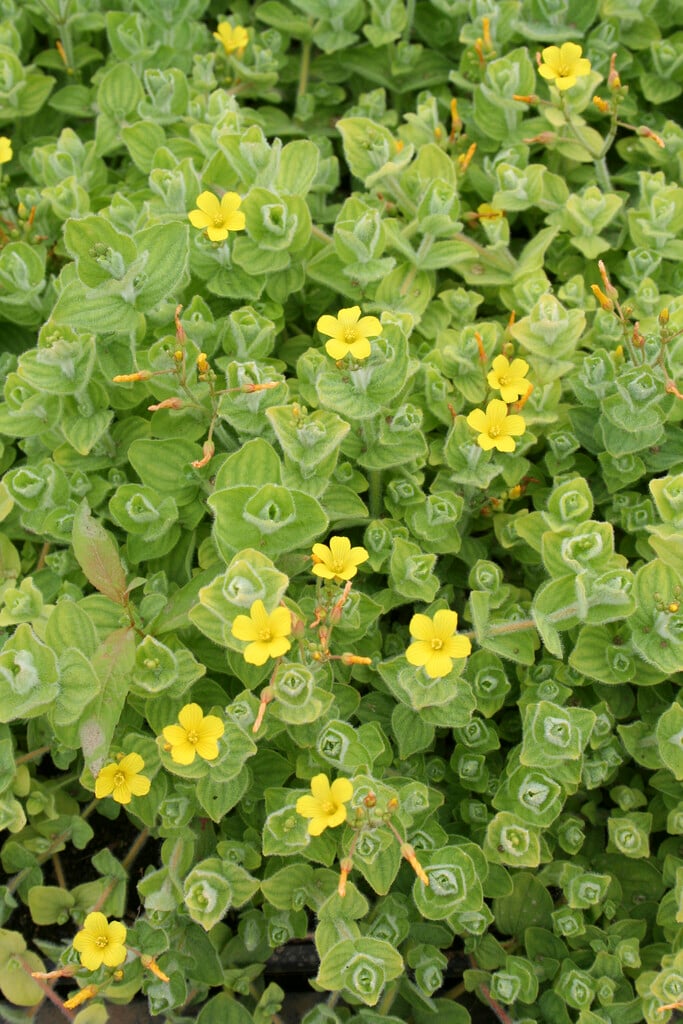
Hypericum elodes
marsh St John's wort
A marsh or submerged, creeping perennial to 15cm tall, with soft, densely woolly grey-green leaves to 1.5cm long. In summer it produces saucer-shaped, bright yellow flowers to 1cm across. Grow in a bog garden or at a pond margin
Synonyms
Elodes palustrisHypericum palustre

Buy this plant
Size
Ultimate height
0.1–0.5 metresTime to ultimate height
1–2 yearsUltimate spread
0.1–0.5 metresGrowing conditions
Moisture
Poorly–drainedpH
Acid, Alkaline, NeutralColour & scent
| Stem | Flower | Foliage | Fruit | |
| Spring | Green | |||
|---|---|---|---|---|
| Summer | Yellow | Green | ||
| Autumn | Green | |||
| Winter |
Position
- Partial shade
Aspect
East–facing or West–facing
Exposure
Sheltered Hardiness
H5Botanical details
- Family
- Hypericaceae
- Native to GB / Ireland
- Yes
- Foliage
- Deciduous
- Habit
- Matforming
- Potentially harmful
- Fruit are ornamental - not to be eaten. Wear gloves and other protective equipment when handling. Pets: Fruit are ornamental - not to be eaten - see the HTA guide to potentially harmful plants for further information and useful contact numbers
- Genus
Hypericum can be annuals, perennials, shrubs or trees, evergreen or deciduous, with usually paired leaves and showy yellow flowers with prominent stamens, followed by capsules, occasionally berry-like
- Name status
Correct
- Plant range
- W Europe
How to grow
Cultivation
Grow at the shallow margins of a muddy-bottomed pool, in dappled shade. See pond plants and bog gardens for further advice
Propagation
Propagate by division in spring
Pruning
No pruning required
Pests
Generally pest-free
Diseases
May be susceptible to a rust and honey fungus (rarely)
Get involved
The RHS is the UK’s gardening charity, helping people and plants to grow - nurturing a healthier, happier world, one person and one plant at a time.