Parthenocissus quinquefolia Star Showers ('Monham') (v)
Virginia creeper [Star Showers]
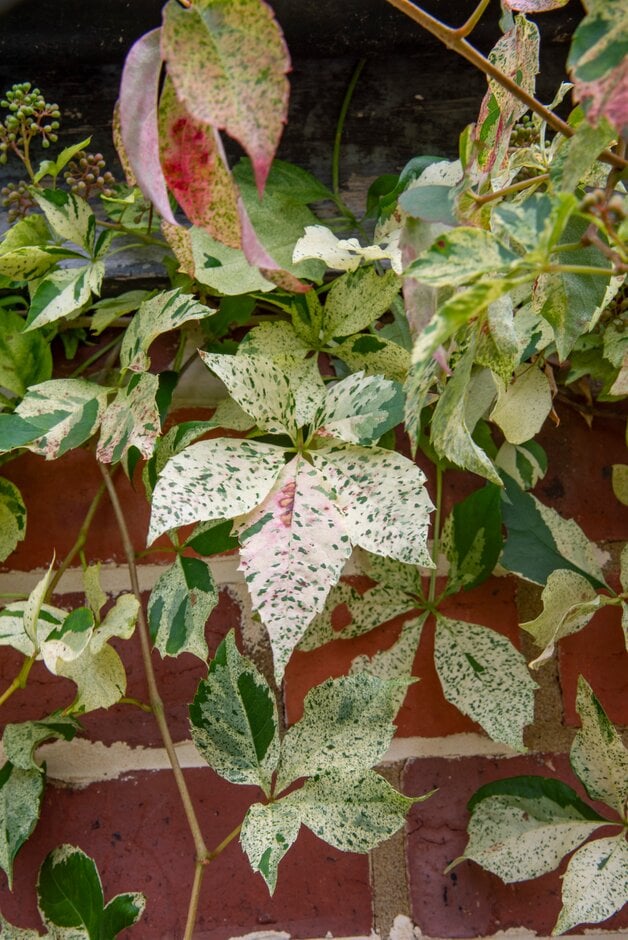
A vigorous, deciduous climber with variegated cream and green divided leaves on clinging vines, which become more pink in colour during the autumn. Parthenocissus quinquefolia are listed on Schedule 9 of the UK Wildlife & Countryside Act as an invasive non-native species. Please see cultivation notes for further details
Synonyms
Parthenocissus quinquefolia 'Monham'Parthenocissus quinquefolia 'Star Showers'
see moreParthenocissus 'Snow Showers'
Size
Ultimate height
4–8 metresTime to ultimate height
5–10 yearsUltimate spread
4–8 metresGrowing conditions
Moisture
Moist but well–drained, Well–drainedpH
Acid, Alkaline, NeutralColour & scent
| Stem | Flower | Foliage | Fruit | |
| Spring | Green Cream | |||
|---|---|---|---|---|
| Summer | Green Cream | |||
| Autumn | Green Cream Pink | |||
| Winter |
Position
- Full shade
- Full sun
- Partial shade
Aspect
East–facing or North–facing or South–facing or West–facing
Exposure
Exposed or Sheltered Hardiness
H6Botanical details
- Family
- Vitaceae
- Native to GB / Ireland
- No
- Foliage
- Deciduous
- Habit
- Climbing
- Potentially harmful
- Harmful if eaten, skin irritant. Wear gloves and other protective equipment when handling Pets: Harmful if eaten, skin irritant - see the HTA guide to potentially harmful plants for further information and useful contact numbers
- Genus
Parthenocissus are vigorous deciduous climbers with either tendrils or disk-like suckers, and lobed or palmate leaves which often colour brilliantly in autumn. Inconspicuous green flowers are sometimes followed by attractive blue or black berries
- Name status
Trade
How to grow
Cultivation
This plant is listed on Schedule 9 of the UK Wildlife & Countryside Act as an invasive non-native species. While this does not prevent it from being sold in the UK, or from being grown in gardens, the RHS encourages those that do grow it to take great care with managing it and with disposing of unwanted material. The RHS also encourages gardeners to find alternative plants to grow to those listed on Schedule 9. For suggested alternative plants see the Plantlife/RHS guide: Gardening without harmful invasive plants
Propagation
Please see cultivation notes
Suggested planting locations and garden types
Pests
May be susceptible to glasshouse red spider mite and vine weevil
Diseases
May be susceptible to honey fungus
Get involved
The Royal Horticultural Society is the UK’s leading gardening charity. We aim to enrich everyone’s life through plants, and make the UK a greener and more beautiful place.