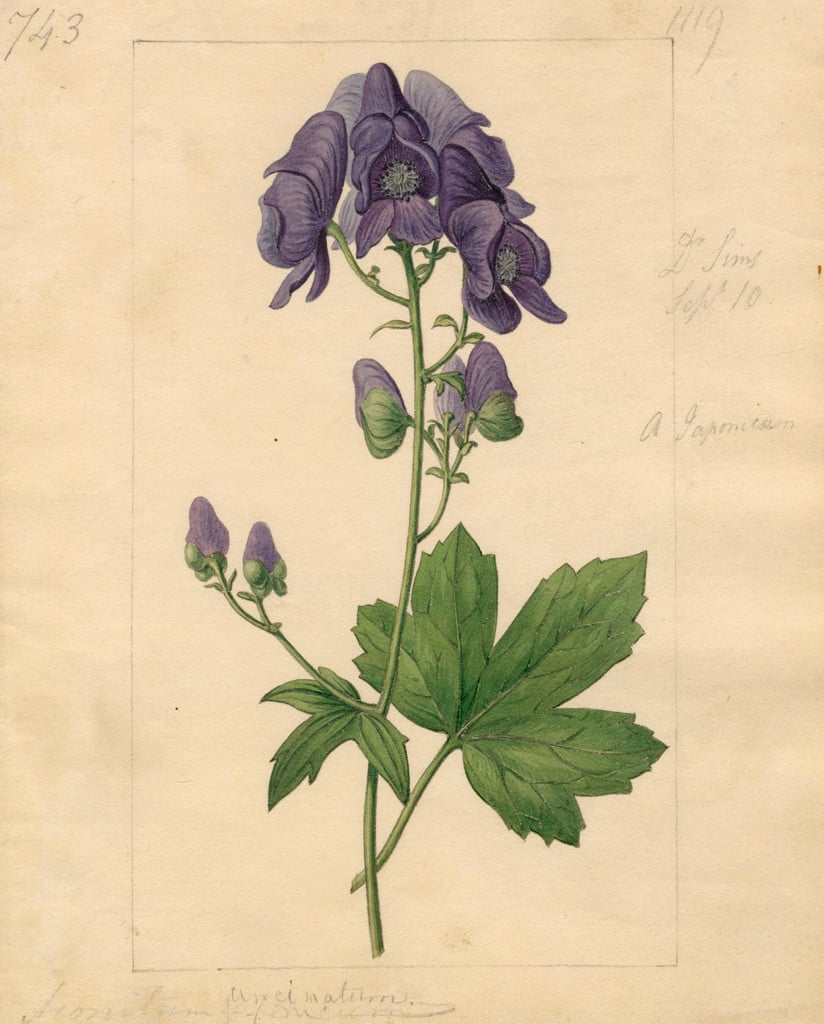
Not the plant you're looking for? Search over 300,000 plants
Herbaceous Perennial
Size
Ultimate height
0.5–1 metresTime to ultimate height
2–5 yearsUltimate spread
0.1–0.5 metresGrowing conditions
Clay
Loam
Moisture
Moist but well–drainedpH
Acid, Alkaline, NeutralColour & scent
| Stem | Flower | Foliage | Fruit | |
| Spring | Green | |||
|---|---|---|---|---|
| Summer | Blue | Green | ||
| Autumn | Green | |||
| Winter |
Position
- Full sun
- Partial shade
Aspect
West–facing or East–facing or North–facing
Exposure
Sheltered Hardiness
H7Botanical details
- Family
- Ranunculaceae
- Native to GB / Ireland
- No
- Foliage
- Deciduous
- Habit
- Clump forming
- Potentially harmful
- TOXIC if eaten, avoid skin contact. Wear gloves and other protective equipment when handling. Pets: TOXIC if eaten, avoid skin contact - see the HTA guide to potentially harmful plants for further information and useful contact numbers
- Genus
Aconitum can be herbaceous perennials or biennials with lobed leaves and racemes or panicles of showy, hooded flowers
- Name status
Correct
- Plant range
- Japan
How to grow
Cultivation
Best grown in moisture-retentive fertile soil in partial shade but sun and most soils are tolerated
Propagation
Propagate by division in autumn or late winter to maintain vigour, although plants can be slow to re-establish. Use gloves when handling plants
Suggested planting locations and garden types
- Cottage and informal garden
- Wildlife gardens
- Flower borders and beds
Pruning
No pruning required except cutting back dead stems; use protective gloves
Pests
May be susceptible to aphids
Diseases
May be susceptible to fungal stem rot, powdery mildews, and Verticillium wilt
Get involved
The RHS is the UK’s gardening charity, helping people and plants to grow - nurturing a healthier, happier world, one person and one plant at a time.