Agapanthus inapertus subsp. pendulus
drooping closed African lily
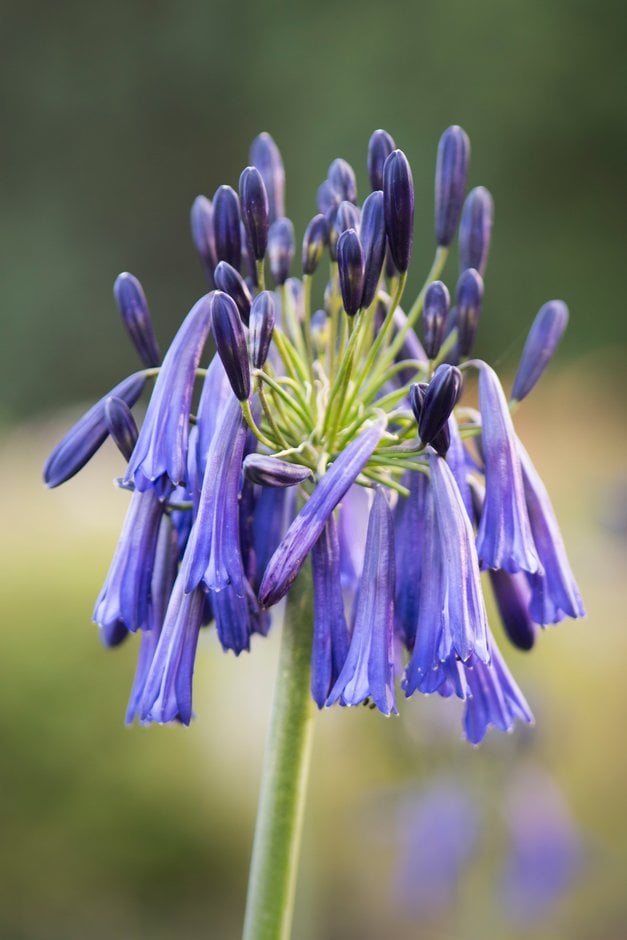
A herbaceous perennial with upright, deciduous, green leaves, 70cm long and 2-3cm wide, and erect stems, 90-180cm high, carrying flowerheads 10cm across of about forty hanging flowers which are up to 4cm long, barely open at the mouth, and usually very dark blue or purplish blue, but may also be pale violet-blue or white, from late summer to early autumn
Size
Ultimate height
1.5–2.5 metresTime to ultimate height
2–5 yearsUltimate spread
0.5–1 metresGrowing conditions
Moisture
Moist but well–drainedpH
Acid, Alkaline, NeutralColour & scent
| Stem | Flower | Foliage | Fruit | |
| Spring | Green | |||
|---|---|---|---|---|
| Summer | Blue | Green | ||
| Autumn | Blue | Green | ||
| Winter |
Position
- Full sun
Aspect
South–facing or West–facing
Exposure
Sheltered Hardiness
H4Botanical details
- Family
- Amaryllidaceae
- Native to GB / Ireland
- No
- Foliage
- Deciduous
- Habit
- Clump forming
- Potentially harmful
- Humans/Pets (dogs, cats): harmful if eaten. Wear gloves and other protective equipment when handling. For further information and contact numbers regarding pets, see the HTA guide to potentially harmful plants
- Genus
Agapanthus are clump-forming perennials with narrowly strap-shaped leaves, evergreen in some species, and erect stems bearing umbels of funnel-shaped blue or white flowers
- Name status
Correct
- Plant range
- S Africa
How to grow
Cultivation
In milder areas, grow outside in moisture-retentive but well-drained soil in full sun, in a sheltered position such as a south-facing or west-facing wall, and provide winter protection with a dry mulch; in colder areas, grow in containers in a peat-free, loam-based compost, water freely when in growth but sparingly in winter, and apply a balanced liquid fertilizer monthly from spring until flowering; for more advice, see Agapanthus cultivation
Propagation
Propagate by division in spring
Suggested planting locations and garden types
- City and courtyard gardens
- Coastal
- Patio and container plants
- Mediterranean climate plants
- Flower borders and beds
- Cut flowers
- Wall side borders
Pruning
No pruning required except cutting back dead flower stems, but allow them to remain until spring, because the seedheads look attractive over winter
Pests
May be susceptible to slugs and snails and agapanthus gall midge
Diseases
May be susceptible to a virus
Get involved
The Royal Horticultural Society is the UK’s leading gardening charity. We aim to enrich everyone’s life through plants, and make the UK a greener and more beautiful place.